News · Jul 2026
Distillation vs Reverse Osmosis: What Decides Between Them at Plant Scale
Distillation versus reverse osmosis is settled at plant scale by two questions before any other: whether the water-quality target is written as…
Read more
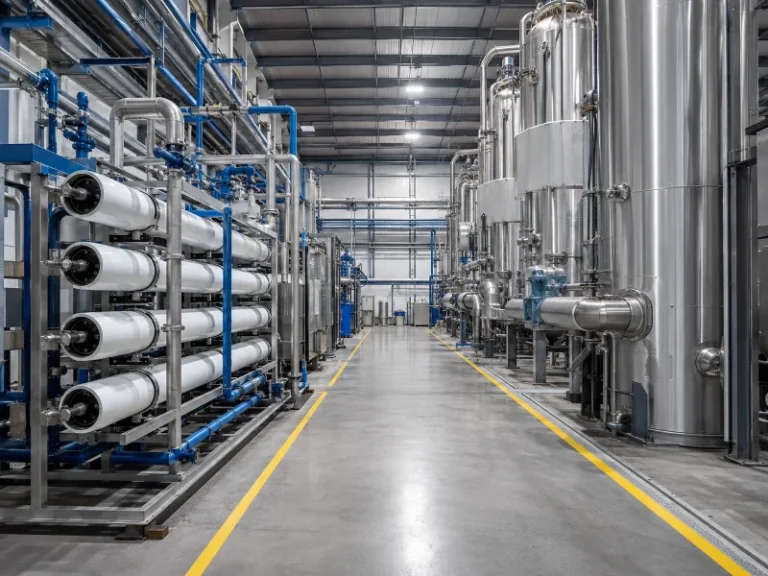
Distillation versus reverse osmosis is settled at plant scale by two questions before any other: whether the water-quality target is written as…
Read more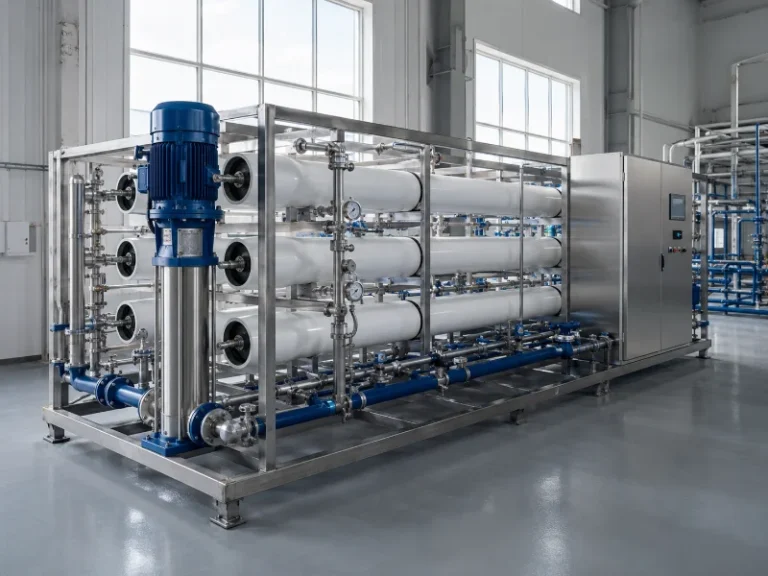
A reverse osmosis application is any process whose separation objective needs broad reduction of dissolved solutes: seawater and brackish desalination, boiler and…
Read more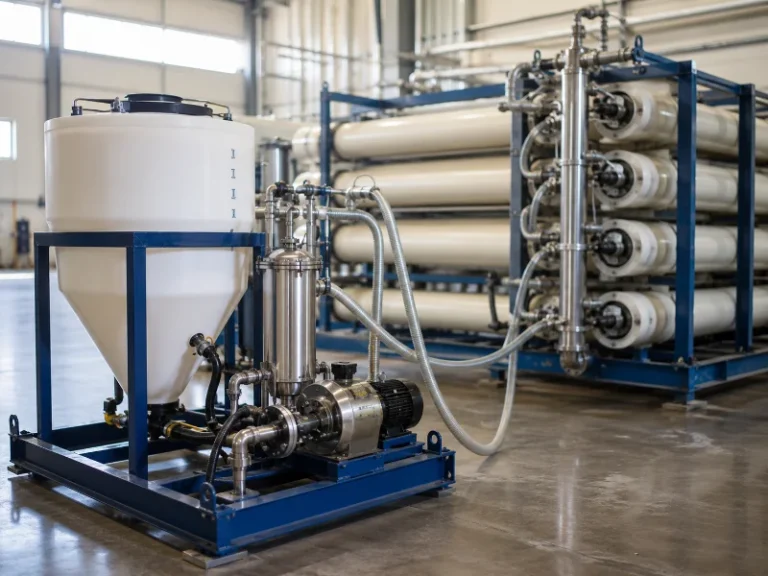
Industrial reverse osmosis cleaning is triggered by normalized data rather than a calendar: clean when normalized permeate flow falls about 10%, normalized…
Read more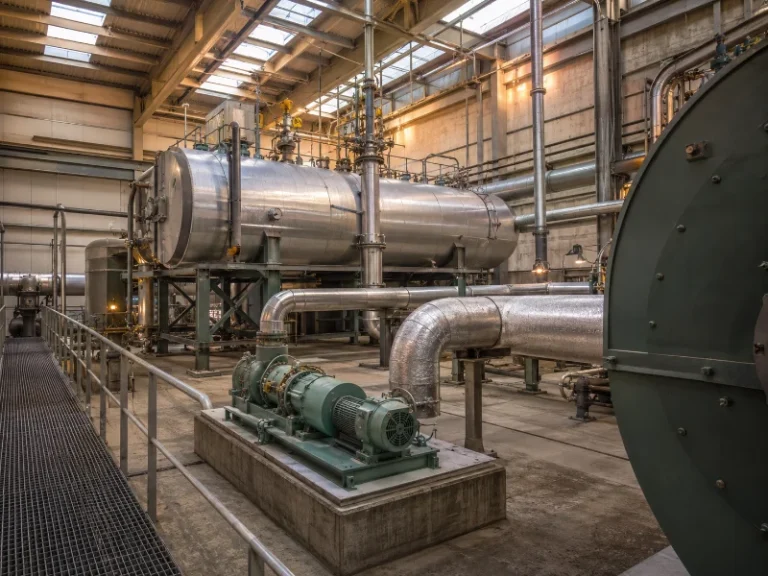
RO water does remove minerals. An RO membrane rejects dissolved ions by charge and size, so calcium, magnesium and sulfate leave with…
Read more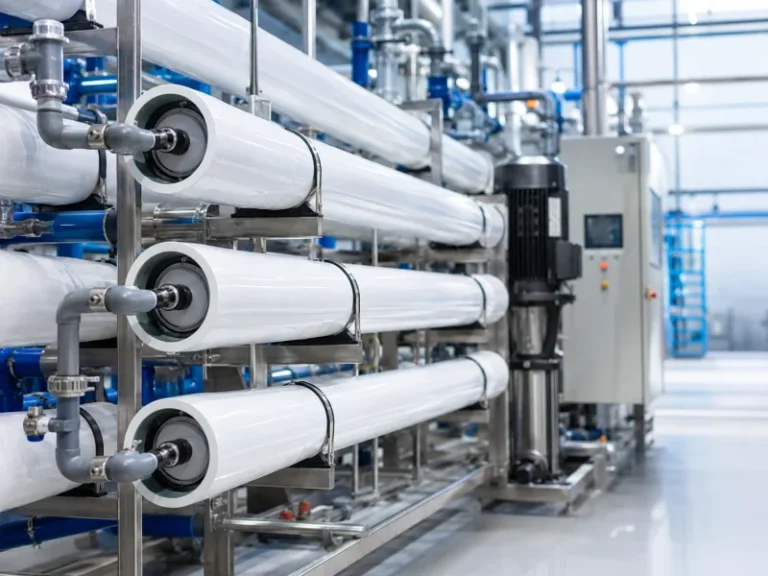
Osmosis and reverse osmosis are opposite processes. Both use a semi-permeable membrane, but reverse osmosis drives water the opposite way under pressure.…
Read more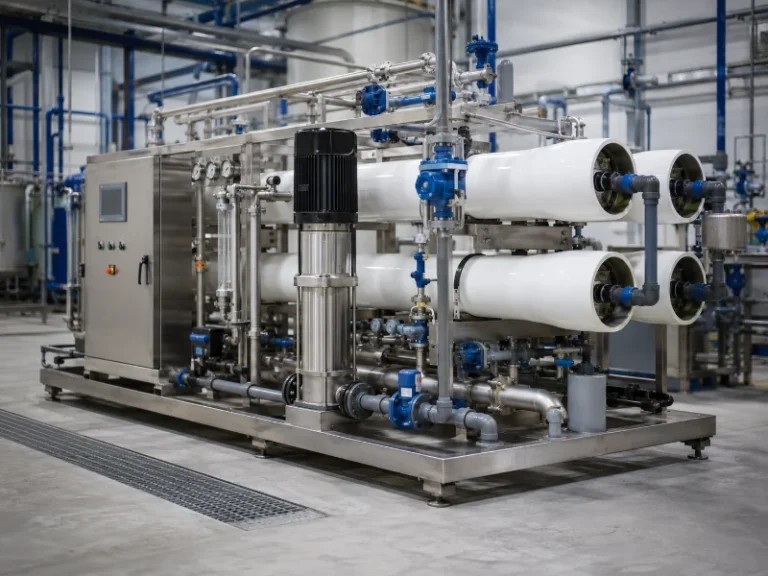
Installing a commercial or industrial reverse osmosis (RO) system is an engineering commissioning task, not a plumbing job. That difference decides whether…
Read more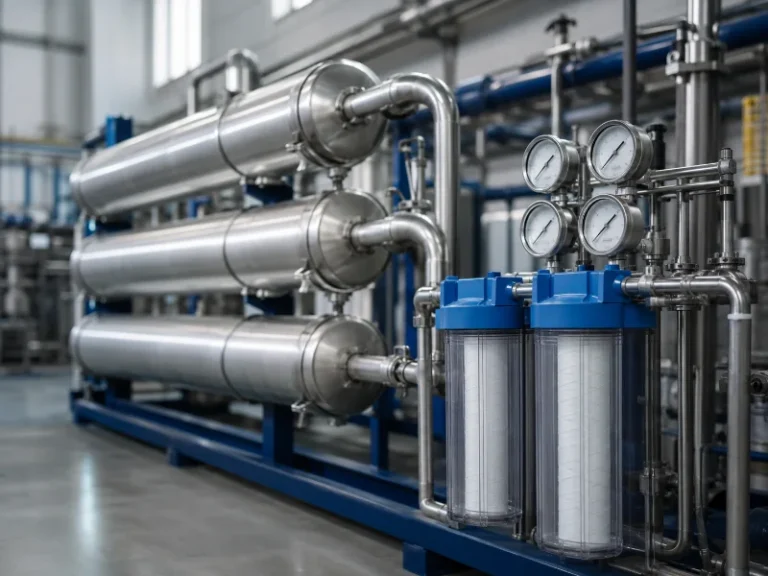
How long reverse osmosis filters last depends on the stage: 6 to 12 months for sediment and carbon pre-filters, about a year…
Read more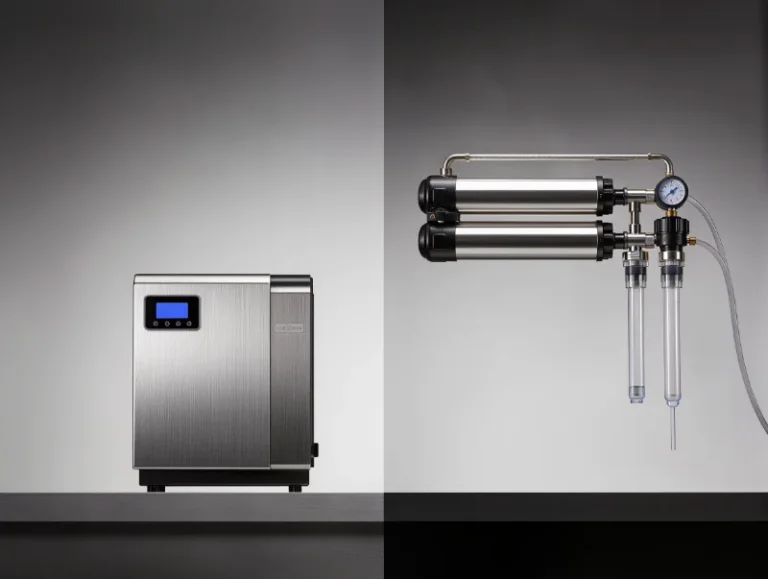
Water ionizer vs reverse osmosis is usually framed as a choice between two competing products. That framing is why so many buyers…
Read more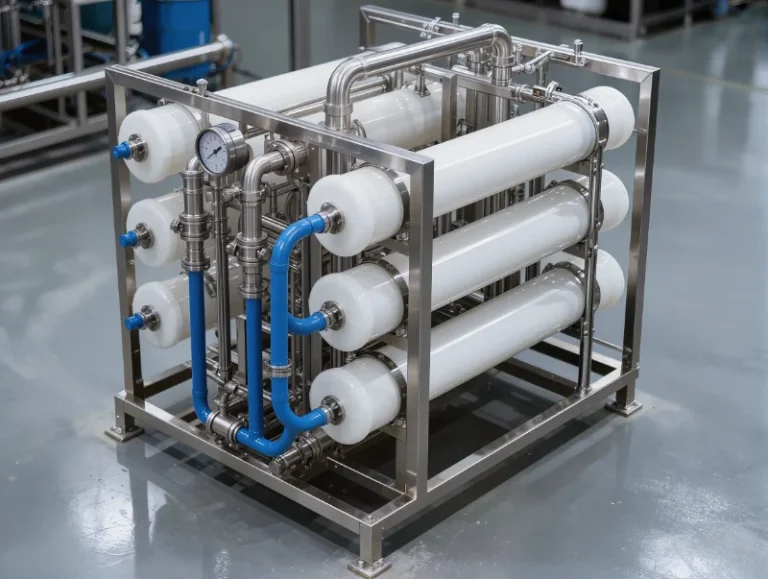
Most point-of-use reverse osmosis systems send five or more gallons of water to the drain for every gallon they purify. Inefficient units…
Read more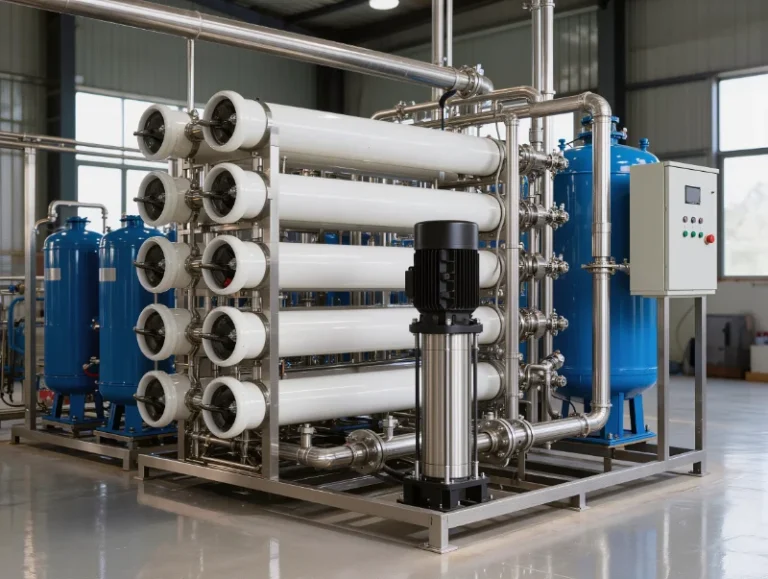
An industrial reverse osmosis system is built from four groups of components: pretreatment, core separation, post-treatment and storage, and instrumentation and controls.…
Read more