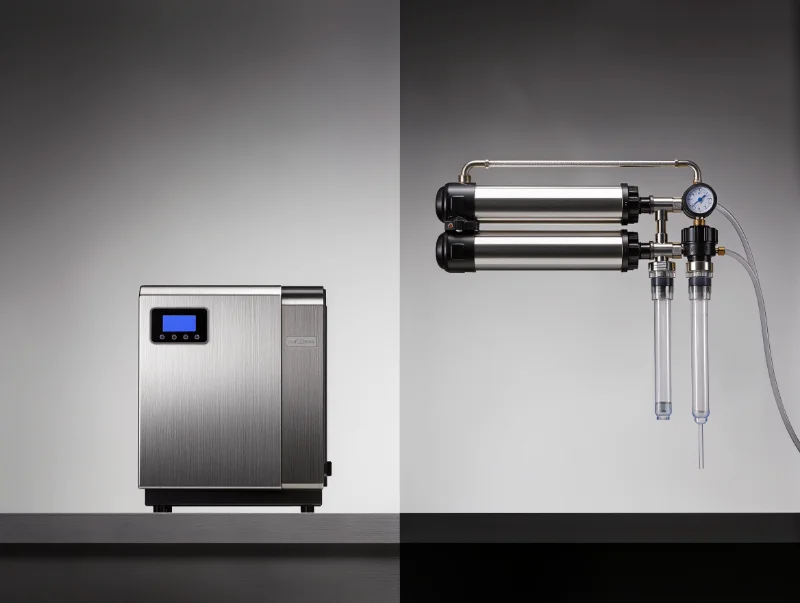
Water ionizer vs reverse osmosis is usually framed as a choice between two competing products. That framing is why so many buyers end up with the wrong equipment. The two devices do different jobs. One removes what is dissolved in water. The other changes the properties of water that has already been filtered. We build reverse osmosis systems, so we have a stake in this comparison. We would rather set out the engineering facts than sell you a health claim.
The short answer: Choose reverse osmosis when your water report names something that has to be reduced. High TDS, nitrate, arsenic, lead, and fluoride all qualify. Choose a water ionizer when the water is already safe and the goal is pH, ORP, or taste. If you want both, the order is fixed: purify first, remineralize second, ionize last.
Water Ionizer vs Reverse Osmosis: Two Different Jobs
Reverse osmosis is a separation process, and a water ionizer is a post-treatment process. Which one you need depends on whether your problem is contamination or water properties. An RO system pushes water through a semi-permeable membrane under pressure, which is how reverse osmosis works at its simplest. The membrane reduces dissolved solids and a wide range of dissolved contaminants. How far it reduces any one of them depends on the membrane, the feed, and the certified performance of the system. The technology label tells you nothing.
A water ionizer works by electrolysis. Water passes over charged plates, which split the stream into an alkaline fraction and an acidic fraction. The alkaline stream carries a raised pH and a negative oxidation-reduction potential. Nothing in that process removes a contaminant by separation. Where an ionizer does reduce something, the carbon pre-filter does the work, not the electrolysis cell.
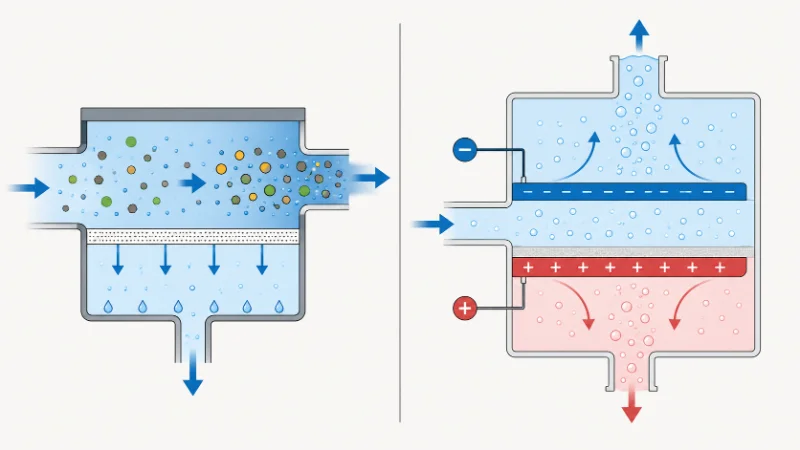
We compare these two on the only basis that holds up: what enters the unit, and what leaves it. A claim you cannot check against a water analysis, a certified reduction claim, or a before-and-after measurement is marketing, not specification.
The Misconception That Drives Most Bad Purchases
Buyers assume an ionizer purifies water, and that single misconception costs them the most when the source water is untested. Feed an ionizer poor-quality tap water and the ionized water still holds whatever was in the source. It comes out alkaline and hydrogen-rich. It may also come out carrying chlorine byproducts, heavy metals, or other impurities an RO membrane would address.
Some ionizers include internal carbon filters. Those filters may reduce chlorine, taste, odor, or selected contaminants. The actual claim depends on the filter media and its certification listing, not on the price of the unit.
The same discipline applies to RO, and this is where most comparisons get lazy. Point-of-use RO systems are certified under NSF/ANSI 58. That standard covers material safety, structural integrity, and TDS reduction as a required claim. Claims for named contaminants such as arsenic, nitrate, lead, fluoride, or VOCs are optional. Each is verified on its own and listed on the performance data sheet. Newer concerns follow the same rule. A reverse osmosis water filter for microplastics has to be judged against test data, not assumed. If you want a specific substance removed, read the certification listing for that substance. The brochure will not tell you.
We see the cost of skipping that step. Buyers who arrive with a contamination problem almost always bought a device that was never built to solve it. We prevent that outcome by asking one question first: what is in your source water?
What the Evidence Says About Ionized Water Claims
Health claims attached to alkaline ionized water are not well supported by current clinical evidence. Any comparison that leans on them stands on soft ground. This is worth stating plainly, because most pages ranking for this search are published by companies that sell ionizers.
A systematic review in BMJ Open examined dietary acid load, alkaline water, and cancer. It found the evidence insufficient to justify promoting an alkaline diet or alkaline water for cancer prevention or treatment. A separate systematic review compared alkaline, oxygenated, and demineralized water against mineral water in healthy people. It found no significant difference in gut microbiota, urine pH, blood parameters, or fitness parameters. It concluded that claims of systemic alkalinization, enhanced immunity, anti-aging, and disease prevention are not supported by robust clinical evidence.
Safety has boundaries too. Published safety reviews of electrolyzed-reduced water report that above roughly pH 9.8, some people develop hyperkalemia. Some markets, including Japan and South Korea, cap the pH of alkaline drinking water from ionizers for that reason. Whether such a limit applies to you depends on the rules of your own market. These reviews also advise that people with impaired kidney function avoid electrolyzed-reduced water without medical supervision.
We are a manufacturer, not a clinic. Whether demineralized water suits you as a long-term drinking source is a medical question for a qualified professional. A system supplier should not answer it. What we can verify is narrower and more useful: what a membrane removes, at what pressure, and under what feed conditions.
Source Water Variables That Decide Which System You Need
Source water chemistry decides which system a site needs, not the marketing category on the box. Each variable below points to a different failure if the wrong technology is chosen. A treated municipal supply with a known contaminant profile is a different problem from a private well with variable nitrates. We review these variables against the application before we recommend any configuration.
| Variable | What it tells you | Decision impact |
|---|---|---|
| TDS / conductivity | Total dissolved load in the feed | High TDS favors RO; very low TDS limits what an ionizer can do |
| Named contaminants (lead, nitrate, arsenic, fluoride, VOCs) | Whether the risk is chemical | Requires a certified reduction claim for that specific substance |
| Source type (municipal, well, surface) | Stability and monitoring level | Wells and surface water need more testing before any purchase |
| Hardness and scaling indices | Fouling and scaling risk | Determines pretreatment and recovery limits |
| Required daily volume | Equipment class | High demand moves the project beyond point-of-use hardware |
| End use (drinking, process, boiler feed) | Required water quality | Process and boiler feed need specifications, not pH adjustment |
A consistent pattern runs through these variables. Where the requirement is a specification, such as a maximum TDS, a rejection rate, or a defined contaminant limit, the answer involves a membrane. Where the requirement is taste, pH, or mouthfeel, the answer involves post-treatment. Hardness sits outside both categories. Scale is a mechanical problem, and a water softener system handles it upstream of either device.
When RO Comes Before an Ionizer
Purification belongs upstream of ionization whenever the source water carries a contaminant that has to be removed. The sequence matters because electrolysis cannot substitute for separation. An ionizer does not always need RO in front of it. On a monitored municipal supply with no contaminant concern, an ionizer with a suitable carbon filter may be all a household wants.
Once RO enters the picture, though, the dependency runs the other way. An ionizer needs dissolved minerals to work. Those minerals act as the electrolytes that let electrolysis occur, and RO permeate carries too few of them. A remineralization cartridge between the two stages restores enough mineral content for the ionizer to function. That is why the order is fixed rather than optional.
| Configuration | What it delivers | Where it fails |
|---|---|---|
| Ionizer alone | Altered pH and ORP on already-safe water | No barrier against dissolved contaminants |
| RO alone | Contaminant reduction to a certified specification | No pH or mineral enhancement without post-treatment |
| RO + remineralizer + ionizer | Purification followed by enhancement | Two systems, two maintenance schedules, higher cost |
We design around that hierarchy rather than argue with it. When a client wants ionized drinking water at a facility, our engineers specify the RO stage against the source water first. The post-treatment stage belongs to the equipment built for it.
When Drinking Water Demand Outgrows a Countertop Unit
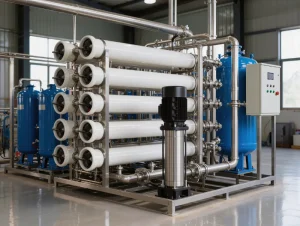
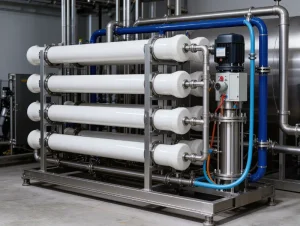
Point-of-use hardware stops being the right answer once daily volume, regulatory duty, or process specification enters the picture. At that point the equipment class changes, not the underlying technology. Volume is the first threshold. A site that needs continuous production, not a filled glass at a tap, needs a feed pump and a membrane array sized for recovery. It also needs storage and a routine for cleaning and monitoring.
Specification is the second threshold. A beverage plant, a hospital, or a municipal supplier works to a written water quality target. Meeting that target takes a documented rejection rate, not an adjustable pH setting. No ionizer is built to hit a contaminant specification, which is where this comparison quietly ends.
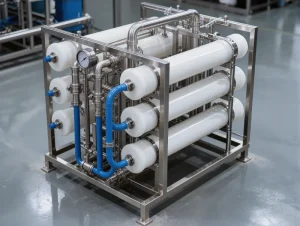
Our engineers review each project before we confirm a configuration for our industrial reverse osmosis water systems. We check the source water, the site electrical standards, and the requirements of the destination market. We fabricate the pressure vessels, membrane housings, skids, and panels in our own workshop, and we pressure-test each system before it ships.
Conclusion
Three questions settle the water ionizer vs reverse osmosis decision. What is dissolved in your source water? What specification does your application have to meet? How much water do you need per day? Answer those in order and the choice usually makes itself. Contamination is a separation problem, and pH is a post-treatment problem. No amount of electrolysis turns one into the other.
We build RO systems, and we still tell buyers on a monitored municipal supply with no contaminant concern that an ionizer may be all they want. What we will not do is claim our membranes deliver a health benefit. The evidence supports claims in neither direction. A supplier who makes them is telling you about their marketing rather than their engineering. Where a real specification exists, the membrane is the only device here that can meet it.
The most useful next step is to send us your source water analysis. That holds whether the duty points toward a commercial RO water filter system or a larger train. Include four things:
- Feedwater TDS or conductivity
- Hardness, silica, iron and manganese, and SDI or turbidity
- Required permeate quality
- Target flow rate and operating hours
Our engineers will review the feed and clarify whether the problem calls for a membrane at all. We confirm a configuration only when the water report supports one.
FAQ
Electrolysis does not remove contaminants. It routes them into one of two streams, and the acidic stream you pour down the drain is a diversion, not a removal step. Whatever reduction an ionizer achieves happens in its carbon filter, upstream of the plates. Ask the manufacturer for that filter’s certification listing and read what it names.
No. Ionized water is defined by what has been altered in it: pH and oxidation-reduction potential. Purified water is defined by what has been taken out of it, and that is verified against a specification. A glass can measure strongly alkaline and still carry every contaminant it started with, because pH says nothing about dissolved solids.
RO membranes cannot tell a wanted ion from an unwanted one, so calcium and magnesium leave with the nitrate. Whether that matters for your diet depends on your total mineral intake and your health situation, which is a question for a medical professional rather than an equipment supplier. From an engineering standpoint, a remineralization stage puts back a controlled mineral dose after the membrane, and it is a standard, well-understood addition to an RO train.
Yes, with a remineralization stage between them. Owners who wire an ionizer straight to an RO tap usually report weak pH swing or an error code, then conclude the ionizer is faulty. The unit is working; the feed simply has too few dissolved ions to carry current. Check the TDS of the water reaching the plates before you troubleshoot anything else.
Well water changes the question, because nobody monitors a private well the way a utility monitors a municipal supply. Test for nitrate, arsenic, hardness, iron, and bacteria before you compare any equipment. A named contaminant in that report calls for a certified reduction claim, and no ionizer offers one. Once the water is verified safe, ionization becomes a preference rather than a safety decision.
Ask the lab for TDS or conductivity, hardness, and a panel covering the contaminants your region is known for. Request the numbers as measured values with units, not as a pass or fail verdict, since a result inside a legal limit can still sit above what a given membrane is specified to handle. A report that only says “meets standards” cannot tell you which device you need.