
Iron and Manganese Removal Water Filter Systems
We size each water filter for iron removal against a full water analysis: inlet pH, dissolved oxygen, and iron concentration together determine whether a single-stage manganese sand filter handles your source water or whether we pair it with a dedicated aeration pre-stage. As a water filtration system for iron removal, our vessels are configured to media type, oxidation strategy, and backwash cycle matched to your specific inlet chemistry and downstream process requirements.
Iron and Manganese Are Gate Conditions, Not Secondary Concerns
Iron and manganese in groundwater are not cosmetic problems; they are upstream threats that compound with every hour of unaddressed flow through downstream equipment. Iron in RO feed water is a serious fouling risk. When soluble ferrous iron oxidizes into ferric hydroxide before or inside the membrane array, the resulting fouling is difficult or impossible to reverse by standard chemical cleaning. The acceptable iron limit depends on iron form, pH, SDI, oxidation potential, and the membrane manufacturer’s feed-water specification. That is why we treat iron removal as a hard gate condition in every industrial water treatment equipment line we configure.
Three consequences are consistent across the groundwater and industrial projects we review:
Membrane and Filtration System Damage
Fe³⁺ floc at 0.3 mg/L collapses membrane SDI performance and blocks pores permanently. Buyers configuring water filters and pre-treatment systems ahead of RO or UF must address iron removal as the first stage.
Boiler and Heat Exchanger Scale
Iron carryover into boiler feedwater can contribute to iron oxide deposits on heat-transfer surfaces, reducing thermal efficiency and increasing tube-wall temperature risk. Acceptable limits depend on boiler pressure and the boiler-water treatment program.
Aesthetic and Product Quality Breach
Many drinking-water guidelines use Fe ≤ 0.3 mg/L and Mn ≤ 0.05 mg/L as aesthetic reference values for staining, color, and taste. Final treated-water targets must follow the destination country’s drinking-water standard and downstream process specification.
How Our Water Filter for Iron Removal Works — Two-Stage Process
Our iron and manganese removal systems use a catalytic oxidation-then-filtration sequence. An aeration pre-stage is included when inlet concentration exceeds the threshold where the filter bed alone cannot sustain the oxidation load, a boundary we confirm from each project’s water analysis before we quote the configuration.
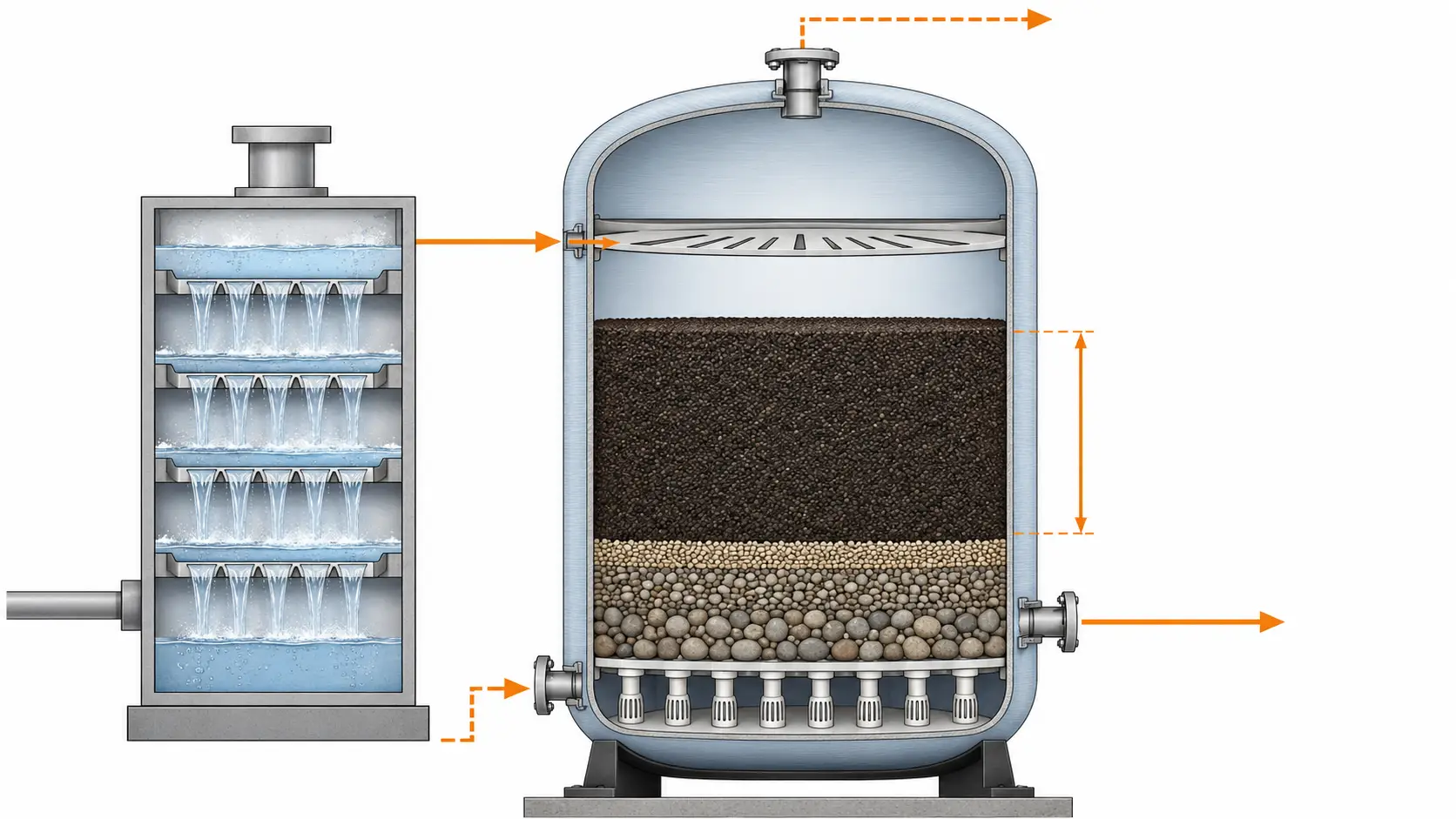
Pre-Aeration (Condition-Triggered)
As an initial sizing guide, when inlet Fe²⁺ exceeds 5 mg/L or Mn²⁺ exceeds 1.5 mg/L, a dedicated aeration pre-stage is reviewed. Impeller aeration suits compact sites; falling-tray delivers higher oxygen transfer where headroom is available. For concentrations at or below these levels, a single-stage configuration may operate without the aeration unit — confirmed from the project water analysis, media selection, and oxidation strategy.
Catalytic Oxidation in the Manganese Sand Bed
The MnO₂ coating on the media surface catalyzes Fe²⁺ to Fe(OH)₃ and Mn²⁺ to MnO₂ precipitation. Chemical dosing requirements depend on the selected media and water chemistry. Some catalytic media operate without chemical regeneration when pH, dissolved oxygen, and contaminant load are within the media’s operating range. Greensand-type media and high-load applications may require an oxidant dosing strategy confirmed during engineering review.
Treated Water Output
Target output range is Fe ≤ 0.3 mg/L and Mn ≤ 0.05 mg/L, aligned with drinking water regulatory limits and RO membrane feed requirements. These are design targets subject to confirmed inlet conditions and water analysis review.
Automated Backwash Cycle
Reverse-flow backwash expands the media bed to the target bed expansion (varies by media type; confirm from supplier datasheet), flushing accumulated iron floc through the drain port. Each cycle runs 5–10 minutes. On high-iron inlet above 5 ppm, backwash frequency increases to every 2–3 days.
Fit Boundary and Selection Logic
Catalytic manganese sand filtration operates within a defined inlet chemistry window. Outside that window, the system requires a modified configuration or an upstream correction stage. These are preliminary review flags; final operating limits depend on the selected media type and water chemistry.
| Parameter | Within Range — Standard Configuration | Outside Range — Action Required |
|---|---|---|
| Inlet Fe²⁺ (initial sizing guide) | ≤ 5 mg/L — single-stage filter | > 5 mg/L — aeration pre-stage reviewed |
| Inlet Mn²⁺ (initial sizing guide) | ≤ 1.5 mg/L — single-stage filter | > 1.5 mg/L — aeration pre-stage reviewed |
| Minimum pH — iron removal | ≥ 6.8 | < 6.8 — pH correction upstream required |
| Minimum pH — manganese removal | ≥ 7.5 | < 7.5 — pH adjustment before filter inlet |
| Dissolved oxygen (DO) | ≥ 2 mg/L for ferrous oxidation | < 2 mg/L — aeration or air injection required |
| Primary inlet concern | Dissolved iron or manganese | Turbidity and suspended solids as primary load — multi media filter handles that loading and may precede this stage |
| Additional inlet factors | H₂S, ammonia, organic matter, alkalinity, ORP | Assessed during water analysis review to confirm media type and oxidation strategy |
| Continuous service | Simplex — batch or lower-demand | Duplex lead-lag or triplex — 24/7 processes requiring uninterrupted output |
Most Common Commissioning Failure: Operating Below pH 6.8
The manganese sand catalyst cannot complete the oxidation reaction at pH below 6.8; iron breaks through into the downstream line and the site may attribute the problem to media quality. The cause is feed water chemistry, not media quality. When the water report shows a borderline pH, we flag it during engineering review and confirm whether pH correction upstream is included in the project scope.
When turbidity and suspended solids are the dominant inlet parameter rather than dissolved iron, a multi-media filter handles the physical particle load first. In many groundwater systems both functions run in sequence: turbidity reduction first, then dissolved-iron oxidation.
Where Iron and Manganese Removal Is the First Decision
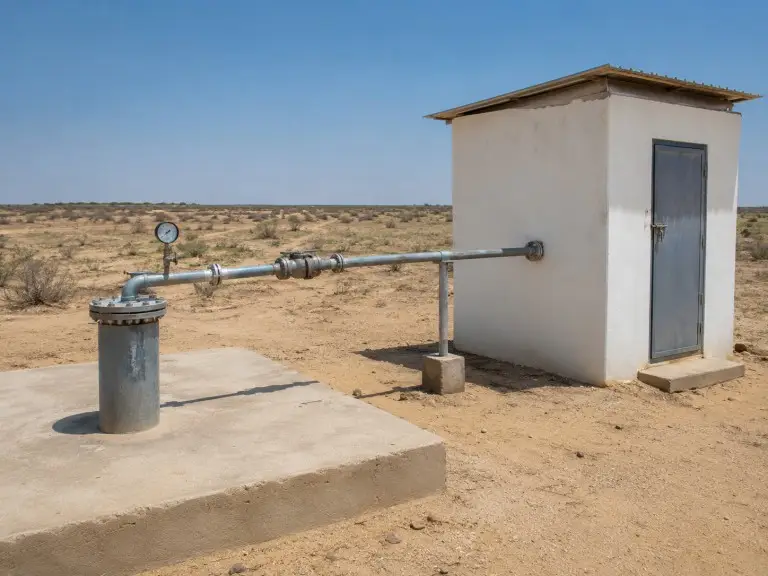
Groundwater and Borehole Supply
Dissolved Fe²⁺ and Mn²⁺ are default contaminants in borehole sources across Southeast Asia and the Middle East, often elevated enough to require dedicated removal. Actual concentration varies by aquifer and must be confirmed by water analysis.
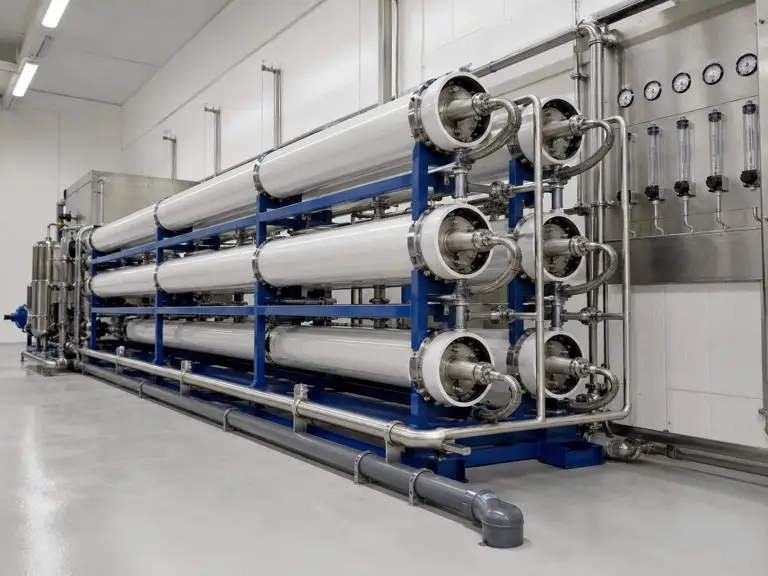
Pre-Treatment for RO and UF Systems
Iron in RO feed above 0.3 mg/L initiates serious membrane fouling risk. We configure iron removal upstream of every RO or UF system, followed by an activated carbon water filter for chlorine and a stainless steel cartridge filter housing for final security polishing.
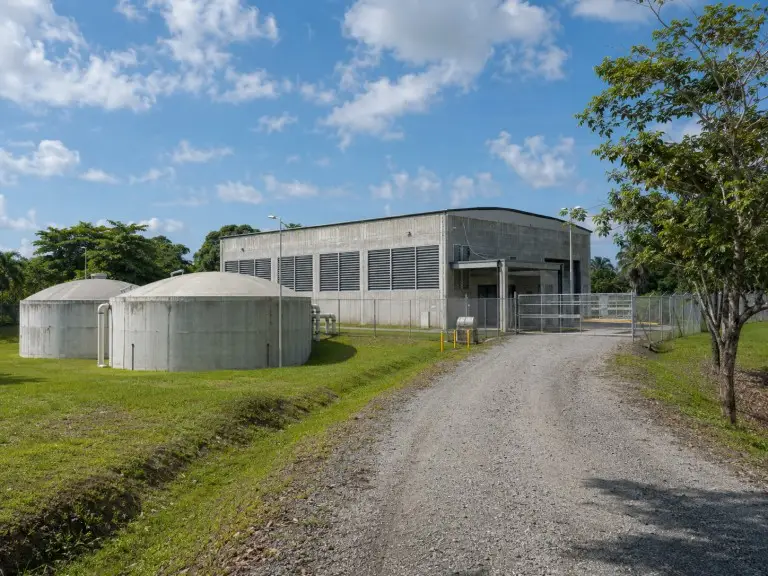
Municipal and Community Drinking Water
Distribution compliance requires Fe ≤ 0.3 mg/L and Mn ≤ 0.05 mg/L. Our municipal and community drinking water configurations are sized to simplex or duplex arrangements depending on flow continuity.
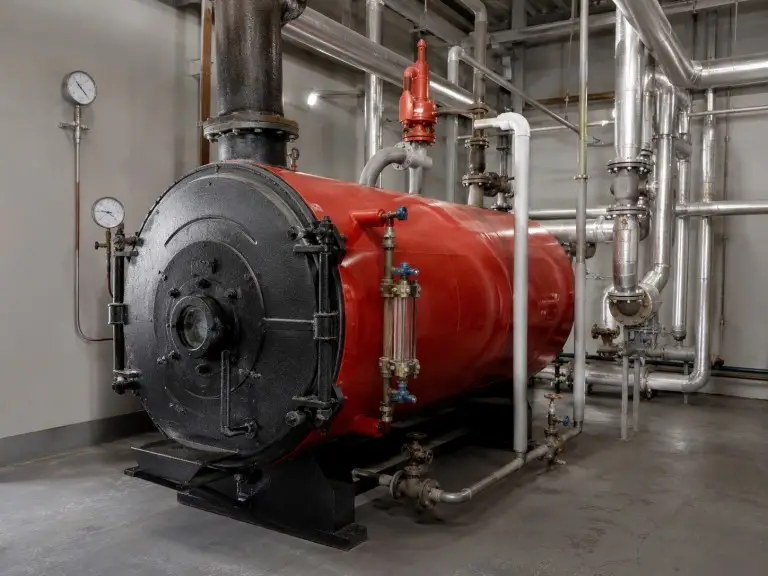
Boiler Feed and Cooling Tower Makeup
Iron carryover into boiler feedwater can contribute to deposits on heat-transfer surfaces, reducing thermal efficiency. Acceptable limits depend on boiler pressure and treatment program. In cooling circuits, Mn²⁺ above 0.05 mg/L can deposit as black scale on fill media.
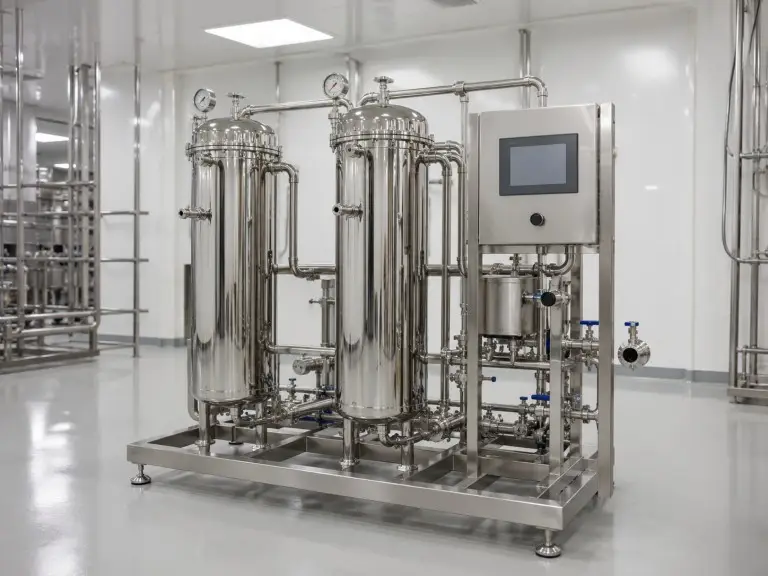
Food and Beverage Processing
Product-contact water specifications may require tighter iron targets than general aesthetic guidelines, driven by color, taste, and buyer quality requirements. Our food and beverage water treatment systems use stainless vessels where required.
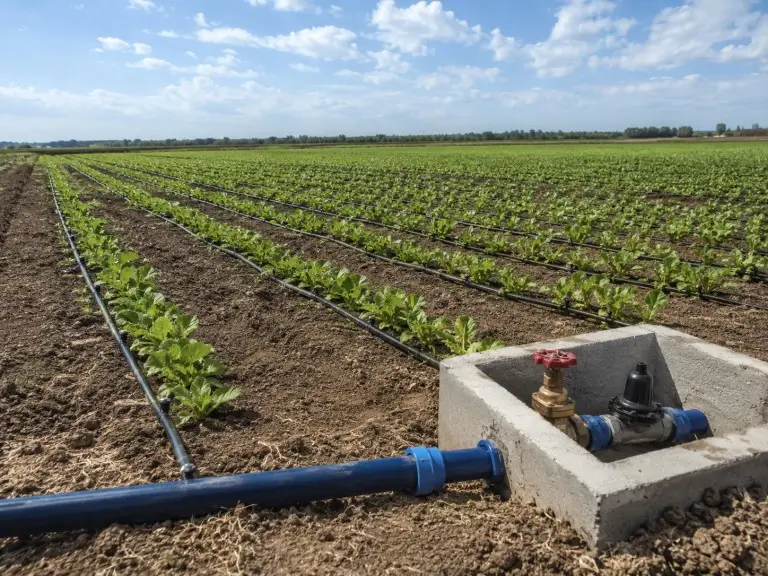
Agricultural Drip and Sprinkler Irrigation
Fe²⁺ precipitates at operating pressure when dissolved iron exceeds 0.3 mg/L, and emitter fouling can begin within one season. Manganese deposits can stain produce surfaces, reducing market value. Simplex configuration is standard for seasonal operation.
Configuration Variables and Technical Reference
| Parameter | Specification |
|---|---|
| Inlet iron — single-stage (no aeration) | Fe²⁺ ≤ 5 mg/L |
| Inlet iron — with aeration pre-stage | Fe²⁺ > 5 mg/L |
| Inlet manganese — single-stage | Mn²⁺ ≤ 1.5 mg/L |
| Inlet manganese — with aeration pre-stage | Mn²⁺ > 1.5 mg/L |
| Minimum inlet pH — iron removal | ≥ 6.8 |
| Minimum inlet pH — manganese removal | ≥ 7.5 |
| Minimum dissolved oxygen for ferrous oxidation | ≥ 2 mg/L |
| Target output iron / manganese | Fe ≤ 0.3 mg/L; Mn ≤ 0.05 mg/L |
| Backwash flow rate | Coated media 10–15 GPM/ft²; solid MnO₂ ore 15–25 GPM/ft² |
| Backwash cycle | Target bed expansion varies by media type (confirm from supplier datasheet); duration 5–10 minutes; high iron frequency every 2–3 days |
| Tank material options | FRP (standard) / carbon steel epoxy-lined / stainless steel 304 or 316 |
| Control valve options | Manual multiport / semi-automatic / fully automatic (timer or ΔP) |
| System configuration | Simplex / duplex lead-lag / triplex continuous |
| Aeration options | Impeller aerator / falling tray / packed tower / venturi air injection |
| Certifications and OEM | CE, ISO 9001; ASME available on request; OEM/ODM available |
Flow rate, vessel diameter, media volume, aeration capacity, and backwash pump sizing are determined per project from the water analysis and daily demand. These parameters require engineering review and are confirmed after we receive your water report and flow requirements.
Five Installation Mistakes That Cost More Than the Filter
Sending High-Iron Feed Directly Into a Single-Stage Filter
Inlet Fe above 5 mg/L without an aeration pre-stage shortens filter run time until backwash cycles consume a disproportionate fraction of daily water output. The correct configuration includes an aeration pre-stage, and we identify this from the water analysis before the system ships.
Undersizing the Backwash Pump
Backwash flow for coated media must reach 10–15 GPM per square foot of vessel cross-section to expand the bed by 15–30%. An undersized pump leaves floc compacted at the base and causes media blinding within weeks regardless of backwash frequency.
Operating Below Minimum Inlet pH
At pH below 6.8, the manganese sand catalyst cannot sustain the oxidation reaction and iron breaks through. At pH below 7.5, manganese removal efficiency drops sharply. Both are feed water chemistry problems detectable from the water report before commissioning.
Specifying Birm on Low-Dissolved-Oxygen Source Water Without Air Injection
Birm’s catalytic mechanism requires dissolved oxygen at or above 2 mg/L. Deep confined aquifer sources frequently arrive with DO below 1 mg/L; without air injection, Birm loses Fe²⁺ removal efficiency and iron passes through the bed.
Omitting Iron Removal Before RO
Iron in RO feed water is a serious fouling risk. When soluble ferrous iron oxidizes into ferric hydroxide before or inside the membrane, the resulting fouling is difficult or impossible to reverse by standard chemical cleaning. Iron removal is reviewed as a pre-treatment stage before every RO system.
Sizing Review Checklist
Final configuration is confirmed after we review your water report, flow requirements, and downstream equipment scope.
- Water analysis report — Fe²⁺, Mn²⁺, pH, dissolved oxygen, turbidity, alkalinity, ORP
- Design flow rate — m³/h or GPM; peak and average values
- Source water type — borehole, surface, municipal, industrial, well
- Continuity requirement — simplex (batch), duplex (24/7), or triplex (high-flow redundancy)
- Downstream equipment — RO, UF, softener, boiler, irrigation, drinking water distribution
- Target output — Fe ≤ 0.3 mg/L; Mn ≤ 0.05 mg/L (or tighter per process requirement)
- Tank material preference — FRP, carbon steel epoxy-lined, SS304, or SS316
- Control valve preference — manual multiport, semi-automatic, or fully automatic (timer / ΔP)