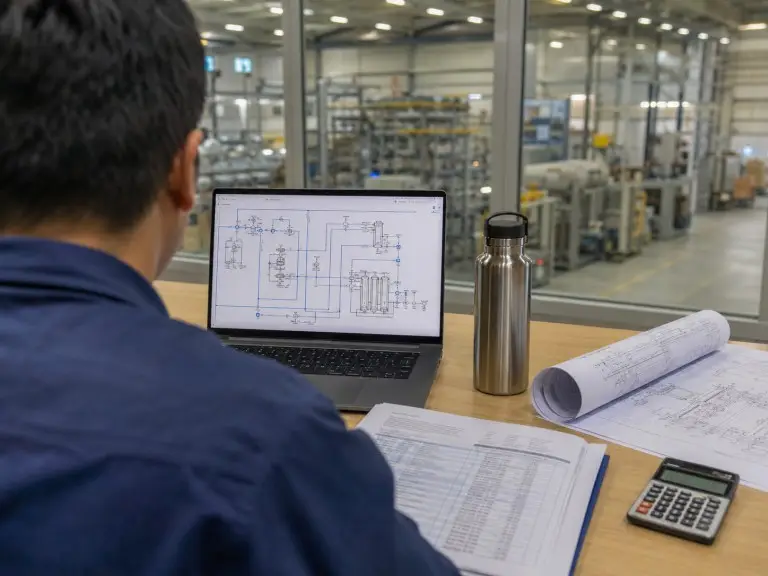
Brackish Water Reverse Osmosis Systems for Groundwater and Borehole Feed
We configure brackish water reverse osmosis systems for feed water in the 1,000-10,000 ppm TDS range, where standard tap water RO membranes are no longer the right pressure class and seawater RO would usually be excessive. Before we specify membranes, pumps, recovery target, or pretreatment, we classify the source water and review the scaling chemistry.
Our BWRO systems are assembled in our Qingdao workshop for industrial, municipal, agricultural, hotel, and export projects — typically 2–7,500+ m³/day capacity range, with skid-mounted or containerized configurations sized to the actual feed water chemistry.
Where Brackish Water RO Fits: Feed Water Boundary
Brackish water RO systems handle feed water that tap water RO membranes are not rated for and seawater RO systems are thermodynamically excessive for. The defining characteristic is elevated dissolved solids from geological contact — saline aquifers, borehole water in arid formations, inland drainage, or municipal blends with aquifer contribution.
Regional feed water pattern. In our project inquiries from the Middle East and Central Asia, feed water in the 1,000–10,000 ppm band commonly combines elevated hardness (> 300 mg/L as CaCO₃) with iron concentrations above 0.3 ppm, requiring additional pretreatment beyond the pressure and membrane decision alone.
| Source Category | Typical TDS Range | Recommended RO Route |
|---|---|---|
| Treated municipal tap or surface water | < 500 ppm | Commercial RO water filter system |
| Brackish groundwater, borehole, or inland saline feed | 1,000-10,000 ppm | Brackish water RO (BWRO) |
| High-TDS brackish or transitional saline feed | 10,000-20,000 ppm | High-pressure BWRO or SWRO route review — feeds above approximately 10,000–12,000 ppm require osmotic pressure, membrane pressure rating, chloride, boron, and corrosion assessment before route assignment |
| Seawater or coastal saline feed | > 20,000-35,000 ppm | Seawater desalination system |
The TDS boundaries above are Hiju preliminary classification targets for source water routing. Final route assignment depends on full water analysis, membrane model, recovery target, temperature, and scaling projection.
Inland Groundwater and Boreholes
Wells or boreholes carrying 1,000–8,000 ppm TDS with elevated hardness exceed tap-water membrane pressure ratings but do not need full seawater-grade materials or 55+ bar operating pressure.
Agricultural Drainage
In arid agricultural zones, salts accumulate in source water or drainage streams. We review TDS, sulfate, hardness, silica, and discharge constraints before setting the recovery target.
Municipal Well Blends
Some municipal networks blend treated surface water with higher-TDS wells. We confirm seasonal source variation so the system is not sized only for the lowest-salinity period.
Industrial Reclaim Streams
Where mineral concentration rises through process use, we classify the feed as brackish or high-TDS before deciding whether BWRO, double-pass RO, or another route is suitable.
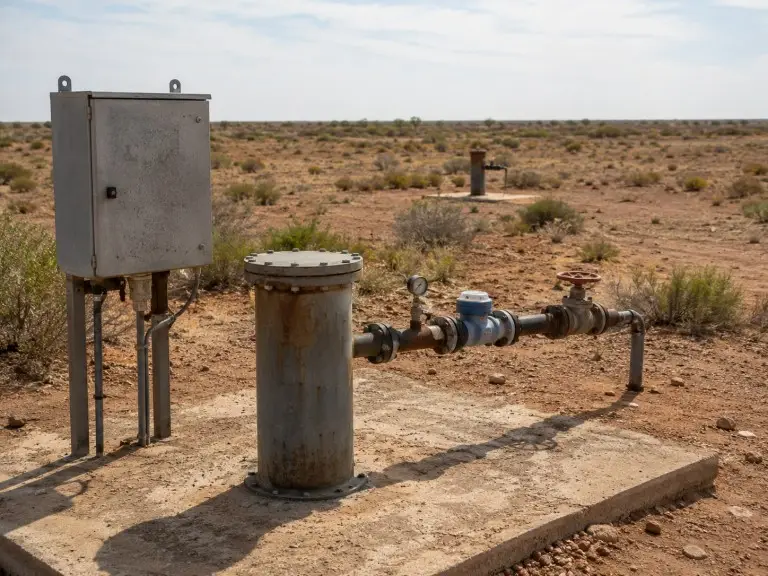
Route review boundary. When feed TDS is consistently below approximately 500 ppm, a tap water RO system usually delivers better energy economics. When salinity approaches seawater-associated levels, or chloride, boron, or bromide become design concerns, the seawater RO route is evaluated before quotation.
Brackish Water RO System Configuration and Capacity
We build brackish water RO plant configurations in skid-mounted, containerized, and modular formats. Configuration is determined by installation environment, transport logistics, power supply, permeate flow requirement, and whether future capacity expansion is part of the project scope.
Skid-Mounted Systems
Skid-mounted systems are the standard configuration for fixed installations with covered plant rooms. They integrate directly with upstream pretreatment equipment and downstream storage, polishing, or distribution.
Containerized BWRO Units
Containerized BWRO units are built for remote sites, temporary supply projects, or deployments where fast mobilization and potential relocation are requirements. Container format reduces civil infrastructure requirements and simplifies export logistics.
Modular Skid Expansion
Modular skid expansion allows the first operating train to be installed at a lower capacity with additional membrane trains added as demand increases. Expansion scope is evaluated early to avoid undersized pump headers, manifolds, and product-water handling.
| Capacity Range | Typical Membrane Format | Typical Configuration | Notes |
|---|---|---|---|
| 2-50 m³/day | 4040 elements | Skid-mounted | Small commercial, community supply, hotel |
| 50-500 m³/day | 8040 elements | Skid or containerized | Industrial process water, medium municipal |
| 500-2,000 m³/day | 8040 multi-train | Multi-skid or multi-container | Large industrial plant, EPC projects |
| 2,000-7,500+ m³/day | 8040 multi-train modular | Multi-container or plant scale | Municipal, power generation, large industrial |
The ranges above are Hiju preliminary design targets for brackish groundwater RO projects. Final membrane count, vessel arrangement, pump sizing, and system footprint depend on feed water chemistry, recovery target, product water quality standard, site conditions, and operating temperature.
Pre-Treatment Design for Brackish Feed Water
We finalize pretreatment specification only after reviewing the feed water analysis, because brackish water reverse osmosis membranes face scaling and fouling vectors — hardness, silica, iron, manganese, and SDI — that vary by source and cannot be reliably addressed with a standard package.
Hardness and Carbonate Scaling
CaCO₃ and CaSO₄ scaling are the most common membrane fouling causes in brackish groundwater. We assess the Langelier Saturation Index at design recovery and temperature, then size antiscalant dosing to actual ion concentrations — our preliminary design range is 0.5–4 mg/L, subject to water analysis. Feeds with extreme hardness (our internal trigger is > 500 mg/L as CaCO₃) may require an upstream softener stage.
Silica
Silica concentrates on the reject side in proportion to recovery rate. The concentrate-side silica load at design recovery must stay below the solubility limit for the operating temperature and pH — our preliminary design ceiling is 120–150 ppm at 25 °C, confirmed against the actual feed analysis. When it approaches that threshold, we specify pH-adjusted operation or a silica-compatible antiscalant.
Iron and Manganese
Iron and manganese oxidize on membrane surfaces and cause rapid, difficult-to-reverse fouling. Our Hiju design target is iron below 0.05 ppm and manganese below 0.05 ppm at the cartridge filter inlet, verified against the feed water report. Feed water exceeding these thresholds requires oxidation and media filtration upstream — typically greensand or pyrolusite-based.
SDI and Turbidity
Standard BWRO operation requires SDI below 5 at the membrane inlet; SDI below 3 is the preferred design target. We use multimedia filtration followed by a 5 µm cartridge filter as standard. Turbid sources or seasonal variation may require coagulation or flocculation upstream.
Chlorine and Organic Load
Polyamide BWRO membranes should not be exposed to residual oxidants. For design safety, we remove free chlorine before the membrane inlet and verify dechlorination by ORP or free-chlorine testing when required. Where organic loading or biological risk is elevated, we assess biofouling control options including upstream disinfection, carbon or biological filtration, non-oxidizing biocide programs compatible with the selected membrane, periodic sanitization, and monitoring strategy.
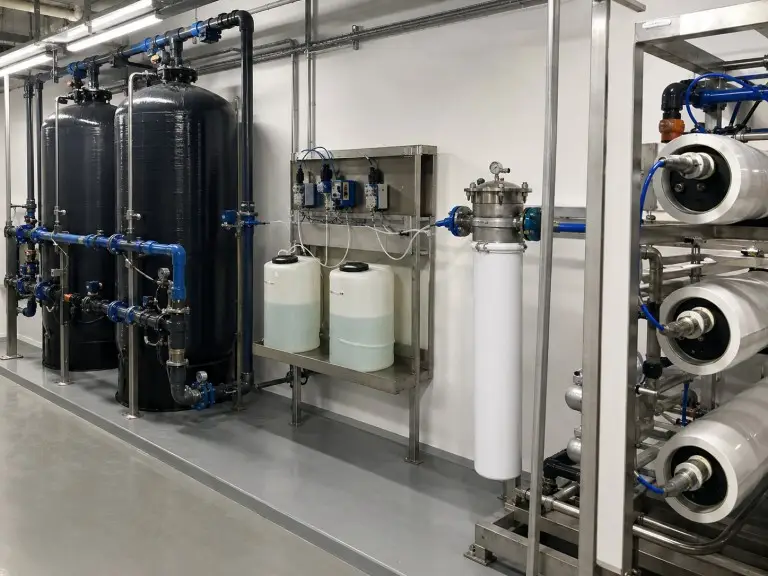
Engineering boundary. A project that uses a standard pretreatment package without checking iron, silica, and SDI against actual feed water chemistry carries the risk of fouling within the first operating period. We require a feed water analysis before confirming pretreatment scope and membrane selection.
Technical Specifications
Our brackish water RO systems are configured to operating pressure and membrane selection matched to the feed TDS range and recovery target.
| Parameter | Indicative Range | Notes |
|---|---|---|
| Feed TDS | 1,000-10,000 ppm | Source classification reviewed before membrane selection. |
| Product water TDS | Typically < 200-500 ppm | Depends on feed TDS, recovery, and membrane selection. |
| Operating pressure | 8-16 bar standard; up to 31-41 bar for high-TDS feeds | 31–41 bar refers to membrane pressure rating boundary for high-TDS brackish design, not the default operating pressure for standard BWRO systems. |
| System recovery | 75-85% for moderate-scaling feeds; 55-70% for high-scaling or high-silica feeds | Recovery target qualified against ion balance. |
| Salt rejection | Standard BWRO membrane class, 99.0-99.5% typical range | Confirmed at design feed TDS and temperature. |
| Membrane element | 4040 commercial or small industrial / 8040 industrial | Selected by capacity and site constraints. |
| Capacity range | 2-7,500+ m³/day | Modular expansion available. |
| Frame material | SS304 / SS316L / epoxy-coated carbon steel | Selected by feed water corrosivity and buyer specification. |
| Power supply | 380V/50Hz standard; 220V, 440V, 60Hz available | Confirmed at order stage. |
| Control | PLC + touchscreen standard; remote SCADA or monitoring optional | For large systems and remote-site installations. |
| Certifications | CE, ISO 9001 | ASME available on request. |
The values above are Hiju preliminary design targets for brackish groundwater RO projects. Final limits depend on membrane model, feed-water analysis, recovery target, temperature, scaling projection, and pretreatment design.
How we use the specification table
Feed water chemistry, operating temperature, recovery target, discharge constraints, and product-water standard are the five variables that determine the final configuration. Send us your water analysis report and we size each parameter to your actual source.
Application Industries
Brackish reverse osmosis systems cover municipal drinking water, industrial process water, and agricultural salinity reduction from saline groundwater sources. The feed water classification and product water target determine whether a single BWRO pass is sufficient or a downstream stage is required.
Municipal and Rural Drinking Water
Communities and municipal projects drawing from brackish groundwater use BWRO to reduce 1,000–5,000 ppm TDS feed to below 500 ppm potable output. We review downstream UV or chlorination before distribution.
Food and Beverage Process Water
Ingredient-grade and CIP-grade water from high-TDS sources may require BWRO before final polishing. Where the target is stricter than single-pass BWRO output, a bottled water plants route is evaluated.
Pharmaceutical and Electronics Pretreatment
BWRO is the first desalination stage for pharmaceutical manufacturing, semiconductor fabrication, and electronics cleaning when elevated-TDS feed must be reduced before polishing. We design integrated routes for deionized water filtration system applications.
Agricultural Irrigation
Agricultural operations use BWRO to reduce brackish well water from 2,000–6,000 ppm to below 500 ppm for drip or sprinkler irrigation in arid regions where soil salinity management is critical.
Hotel and Resort Supply
Hotels and resorts drawing from saline boreholes at 1,500–4,000 ppm TDS use BWRO to supply potable and service water when municipal supply is unavailable or insufficient.
Industrial Boiler Feed
Reduced hardness and TDS help protect heat exchange surfaces and reduce chemical consumption. We review the target specification because product water quality depends on boiler operating pressure.
Power Generation
Power stations use BWRO as the primary desalination stage for boiler makeup water and cooling water from high-TDS source feeds, typically followed by mixed-bed polishing or EDI for high-pressure boiler circuits above 40 bar.
When a Single Pass Is Not Enough
When the product conductivity target requires sub-1 µS/cm output, we integrate a double-pass RO system or EDI stage downstream of the BWRO unit.
RO family route
For a comparison of pressure classes, membrane selection, and output quality across tap water, brackish, and seawater feed ranges, see the industrial reverse osmosis system product family.
Concentrate Management
Concentrate management is integral to every brackish water RO system design for inland and arid-region projects. At 75–85% recovery, the reject stream reaches 3–7× feed TDS and discharge routing must be confirmed before we finalize recovery target and system sizing. Approximate concentrate TDS = feed TDS ÷ (1 − recovery): for example, a 3,000 ppm feed at 80% recovery produces concentrate of approximately 15,000 ppm.
Surface Discharge
Permitted surface water or irrigation canal discharge may be possible where local environmental regulations allow, based on concentrate TDS, ion composition, and receiving-body classification.
Deep-Well Injection
Deep-well injection is reviewed in arid-region geologies when suitable injection formations and regulatory approval are available. Injection well specifications depend on local hydrogeological conditions.
Evaporation Ponds
Evaporation ponds suit remote or landlocked sites where surface discharge is restricted and the climate supports evaporative disposal. Pond sizing depends on reject volume and local evaporation rate.
On-Site Effluent Connection
Industrial sites with an existing effluent treatment facility may be able to route concentrate into the wastewater system, subject to the facility’s TDS and volume acceptance limits.
Recovery and discharge trade-offs. When concentrate volume or TDS is a site constraint, we evaluate recovery target adjustments — accepting a lower system recovery to reduce concentrate concentration — or antiscalant-optimized programs that allow slightly higher recovery without exceeding scaling thresholds. Buyers in the Middle East, Central Asia, and inland African markets should include concentrate disposal constraints and any known regulatory limits in the initial inquiry, because concentrate TDS and discharge volume directly affect system sizing and recovery target.
Manufacturing Capability and Export Scope
We have manufactured water treatment equipment from our Qingdao facility since 2016, supplying brackish water treatment systems to buyers in more than 20 countries across Southeast Asia, the Middle East, Africa, and Central Asia.
Factory Scale
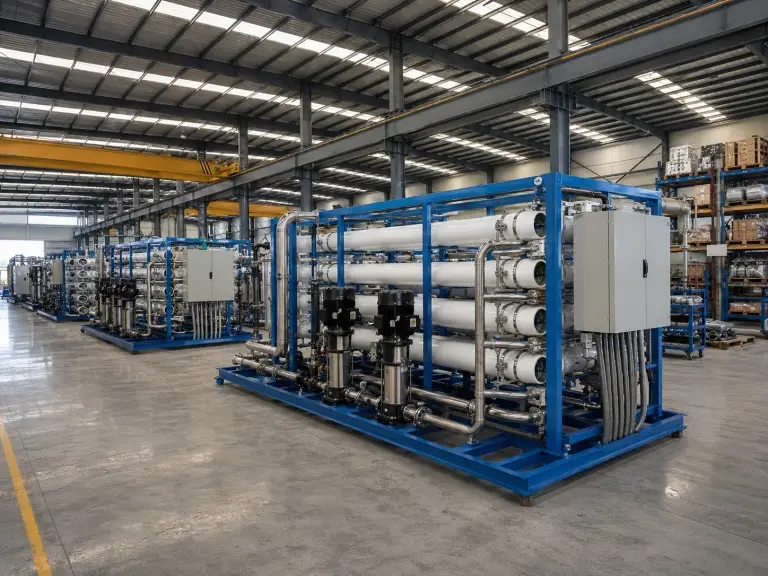
70,500 m² factory area with a 21,000 m² dedicated workshop for fabrication, assembly, pressure testing, and final inspection.
Certifications
CE marking and ISO 9001 certification held. ASME documentation available on request for projects requiring U.S. pressure vessel compliance.
Export Coverage
BWRO and water treatment systems exported to 20+ countries across Southeast Asia, the Middle East, Africa, South America, and Central Asia.
Export Configuration and OEM
Export projects configured for local voltage, frequency, and control panel language. OEM and ODM manufacturing available for private-label or branded skid supply.
What We Need to Size Your BWRO System
A complete feed water analysis and a clear permeate flow target let us propose a pressure class, recovery target, and pretreatment scope that the actual source water can support, rather than a generic sizing based on TDS alone that may not hold under field operating conditions.
- Feed water TDS in ppm, or full water analysis report if available.
- Iron and manganese concentrations in mg/L.
- Total hardness as CaCO3, plus sulfate and carbonate levels.
- Silica concentration in mg/L.
- pH and operating temperature range, including seasonal range if variable.
- SDI or turbidity if previously tested.
- Required permeate flow rate in m³/day or GPD.
- Target product water TDS or applicable quality standard.
- Recovery rate target if specified; otherwise we calculate it from the ion balance.
- Operating hours per day.
- Installation country and site location.
- Power supply: voltage, frequency, and phase.
- Preferred configuration: skid-mounted or containerized.
- Known concentrate disposal constraints or regulatory limits.
- End-use application: drinking water, process water, boiler feed, irrigation, or another use.
- Downstream polishing requirements if known: double-pass RO, EDI, or disinfection.
- OEM or ODM labeling requirements.
- Required certifications or country-specific documentation.