
Industrial Water Treatment Equipment — Pretreatment Filtration for RO and Process Systems
We design and manufacture industrial water treatment equipment for the complete water pretreatment filter train, covering the full water pretreatment sequence from coarse clarification at the inlet to fine-particle polishing at the membrane boundary. RO pretreatment is typically reviewed against low turbidity, SDI₁₅ below 5, and chlorine-free feed to protect polyamide RO membranes. Final inlet limits depend on the membrane manufacturer’s datasheet and pretreatment design.
Match Your Contaminant Profile to the Correct Filter Type
Industrial water treatment equipment selection begins from the contaminant type and concentration confirmed in the feed water analysis. The table below maps the primary contaminant to the correct filter type and the operating boundary that determines whether that filter stage is sufficient alone or must be combined with a preceding or following stage.
| Primary Contaminant | Recommended Filter Type | Key Operating Boundary |
|---|---|---|
| Turbidity, TSS, colloids | Multi-media filter | Reviewed for high-turbidity pretreatment; outlet turbidity and SDI depend on influent, loading rate, media, and backwash |
| Sediment, suspended particles ≥20 µm | Quartz sand filter | Inlet turbidity ≤20 NTU; coarse particle clarification |
| Residual free chlorine, organics, odor | Activated carbon filter | Free chlorine reduction reviewed by EBCT, carbon grade, flow, and replacement schedule |
| Fine particles, pre-membrane barrier | Cartridge filter housing | 1–50 µm nominal or absolute-rated cartridges; final selection per membrane supplier requirements |
| Dissolved iron and manganese | Iron & manganese removal filter | Reviewed by dissolved/oxidized form, pH, oxidation method, media, and outlet target |
| High-TSS continuous operation | Self-cleaning filter | Automated ΔP-triggered backflush; no scheduled media replacement |
When the feed water analysis shows dissolved iron above 0.3 mg/L alongside elevated turbidity, we position the iron removal filter upstream of the multimedia stage, not after it. Iron that bypasses this stage precipitates as iron hydroxide during multimedia backwash and progressively fouls the media bed. This staging sequence is an engineering judgment, not a catalog default.
Six Industrial Pretreatment Filter Lines
Our industrial pretreatment filter line covers six contaminant-removal types. Select a product to view process details, engineering parameters, and quote inputs.
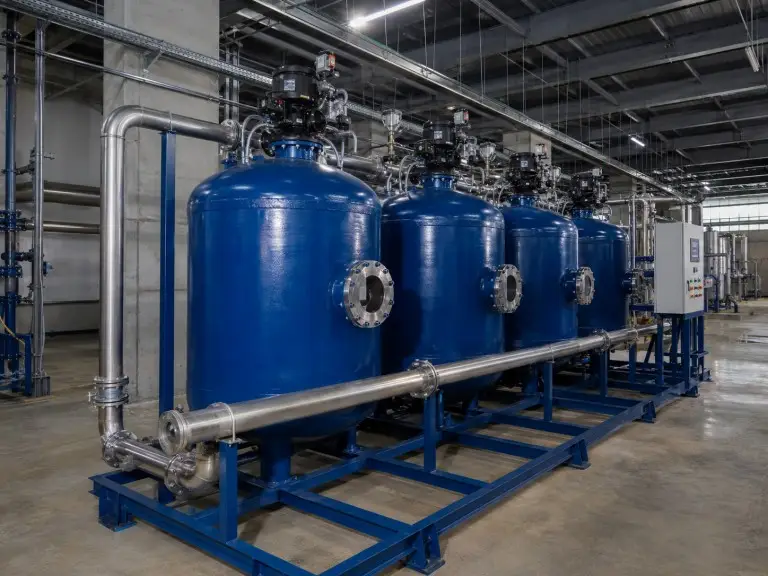
Multi Media Filters
Designed to support RO pretreatment SDI targets when media design and backwash are correctly reviewed.
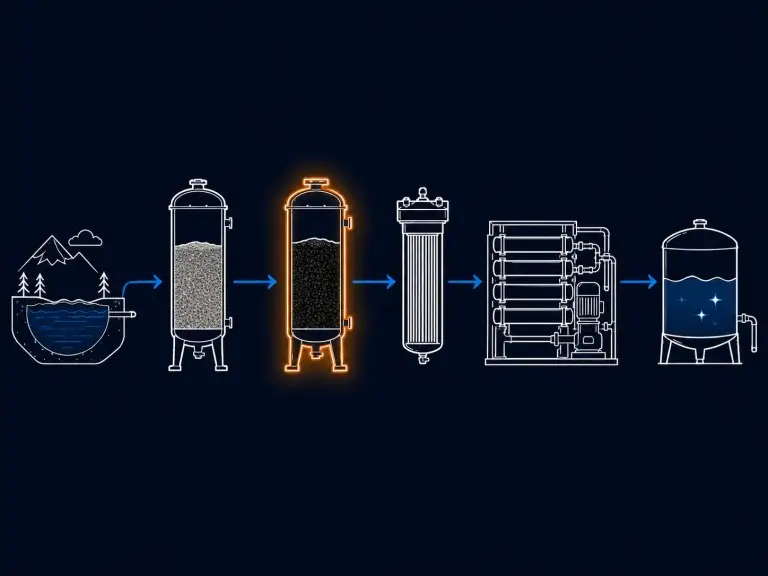
Activated Carbon Filters
Reviewed for free chlorine reduction before RO membranes; final outlet depends on carbon grade, EBCT, and flow.
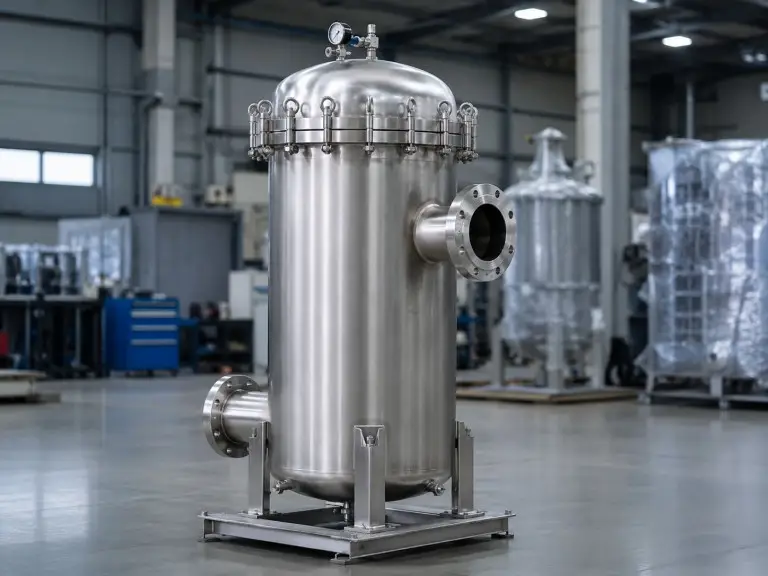
Cartridge Filter Housings
Nominal or absolute-rated cartridges; standard pre-RO security filter rating is 5 µm.
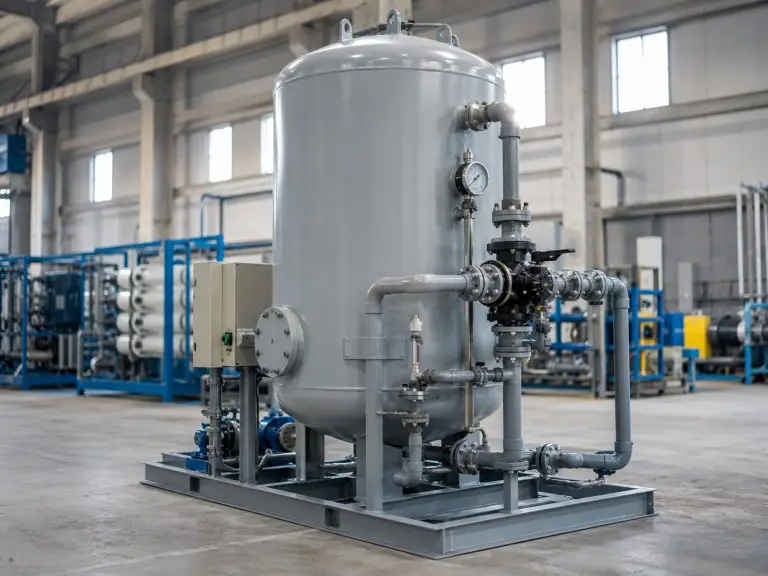
Quartz Sand Filters
Coarse particle clarification for municipal intake and surface water applications.
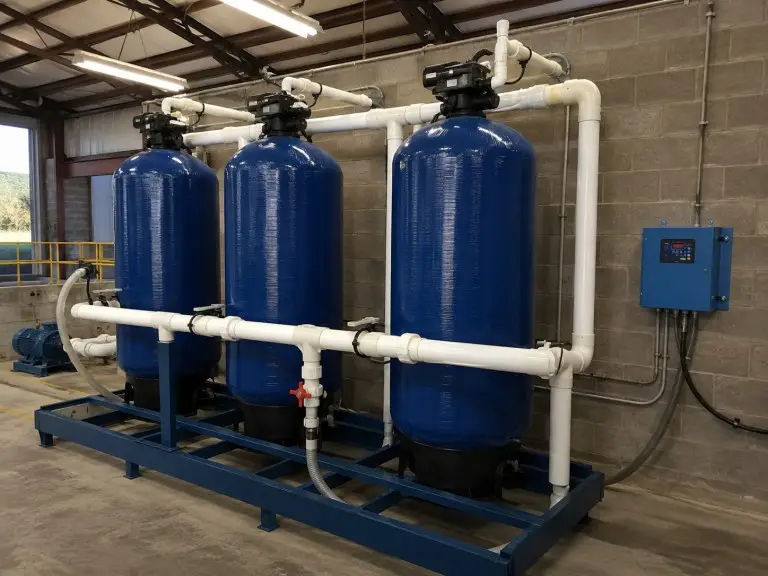
Iron and Manganese Removal Filters
Dissolved iron and manganese removal within design range for borehole and groundwater sources.
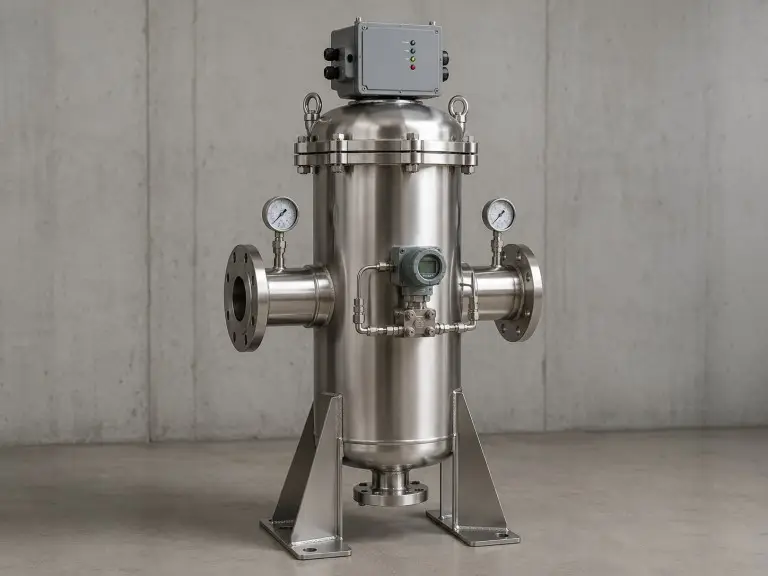
Self-Cleaning Filters
Automated backflush cycle completes without interrupting main flow for high-TSS continuous operation.
The Pretreatment Stage Sequence and Its Consequences
The industrial water pretreatment train is not a set of interchangeable filter options. Each stage has a defined function that protects the stage after it.
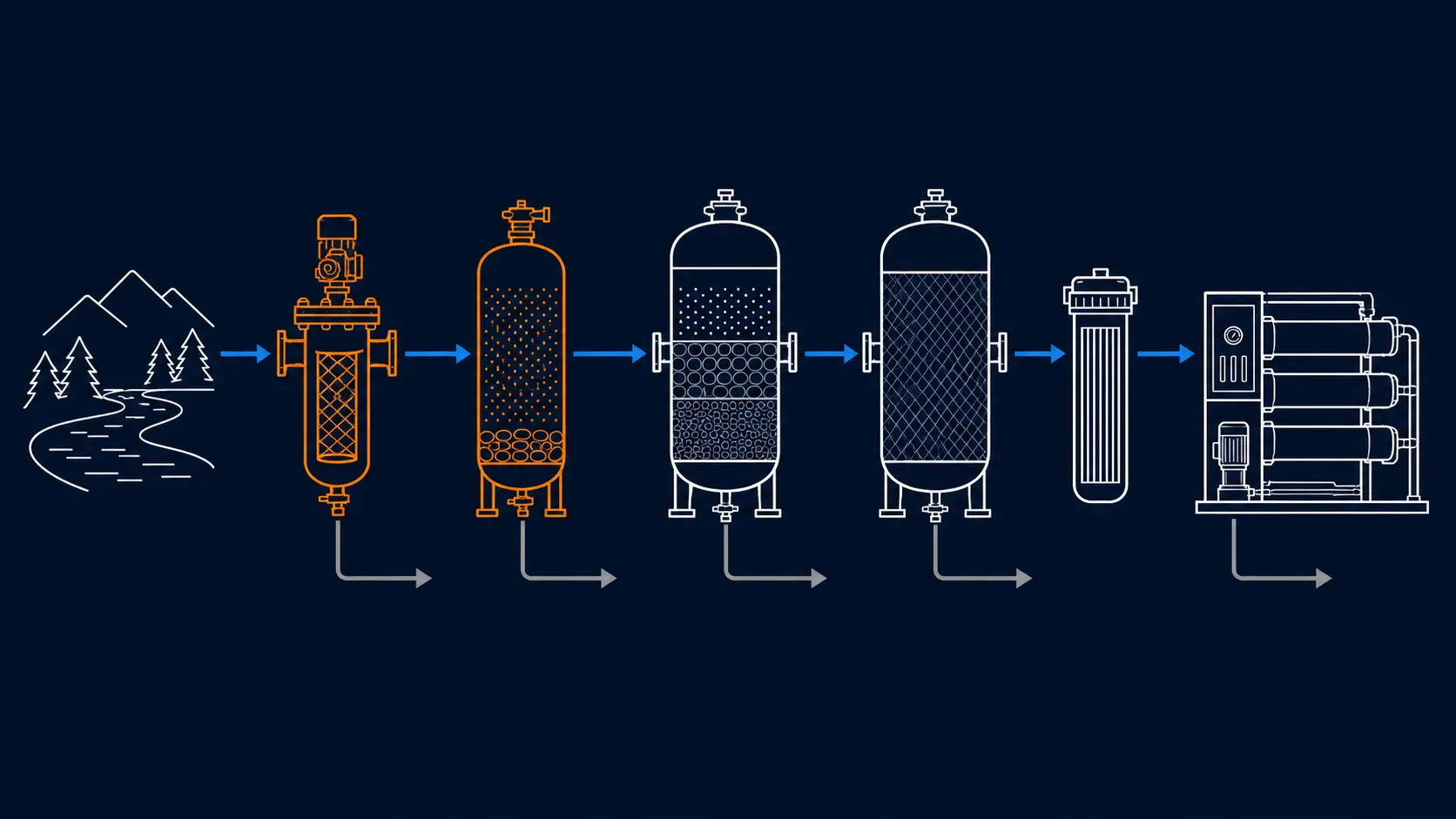
Turbidity and TSS Removal
Multi-media or quartz sand filtration removes suspended solids before carbon and cartridge stages encounter raw feed water. Carbon media exposed to high-turbidity water loses adsorption capacity as particulate matter occupies available sites.
Chlorine and Organics Removal
The activated carbon stage must receive clarified feed water from Stage 1 — this sequence is not reversible. Its function is to reduce free chlorine and remove dissolved organics that serve as nutrients for biofilm on RO membrane surfaces.
Fine Particle Barrier
Cartridge filter housings close the pretreatment train immediately upstream of the membrane system, capturing residual particles including media fines released during backwash. Standard pre-RO rating is 5 µm. See our filter cartridges and media supply line.
Optional — Iron and Manganese Removal
When feed water analysis shows dissolved iron above 0.3 mg/L or manganese above 0.1 mg/L, this stage is positioned upstream of the multimedia filter, not downstream. Iron that bypasses this stage precipitates as iron hydroxide during multimedia backwash and fouls the media bed progressively.
Optional — Self-Cleaning Pre-Filtration
For high-TSS inlet water with variable suspended solids loads — surface water intakes, cooling tower returns, process recycle streams — a self-cleaning filter ahead of the multimedia stage reduces the raw solids load. The automated flush cycle completes in under 30 seconds without interrupting main flow.
Industrial Water Treatment Equipment — Configuration Variables
Vessel type, material, control mode, and flow capacity for any pretreatment filter in our line are determined by four confirmed inputs: feed water source and turbidity range, downstream equipment inlet specification, site pressure and drain conditions, and applicable export certification requirements — not by catalog defaults or product familiarity.
| Variable | Typical Range or Options | Selection Note |
|---|---|---|
| Operating pressure — FRP vessel | 0.6–1.0 MPa | Standard for most industrial prefiltration applications |
| Operating pressure — carbon steel or SS vessel | 1.0–1.6 MPa or custom | Required for high-pressure feed or corrosive duty |
| Tank material | FRP, epoxy carbon steel, 304SS, 316SS | Food-contact or corrosive duty may require SS, depending on product-contact status and buyer requirements |
| Backwash control | Manual / timer-automatic / ΔP-triggered | Surface water with variable turbidity: ΔP-triggered recommended |
| Process control mode | Manual / semi-automatic / fully-automatic PLC | PLC integrates with central plant control systems |
| Flow rate (m³/hr) | Project-specific | Must be stated as peak hourly flow, not average daily consumption |
| Downstream equipment type | RO, boiler, UV, food process, cooling system | Determines the effluent quality threshold for each filter stage |
Vessel material selection affects both pressure rating and chemical compatibility. For food and beverage applications where vessels contact product water, 304SS or 316SS may be required depending on product-contact material standards and buyer validation requirements. For standard industrial prefiltration where cost efficiency is the primary driver, FRP vessels rated to 1.0 MPa are the appropriate choice for the majority of applications.
Pretreatment Requirements by Source Water Type and Industry
The filter train configuration depends on the source water type and the downstream equipment’s inlet quality requirement.
Industrial RO Pretreatment
The most common application for our industrial water treatment system pretreatment package — protecting RO membranes from turbidity, free chlorine, and fine particles. Multimedia → carbon → cartridge is the minimum train for municipal and surface water sources.
Food and Beverage Process Water
Process water meeting chemical and microbiological quality standards. Our food and beverage water treatment systems use 316SS vessels where product-contact surfaces require food-grade materials, with final cartridge filtration to 1–5 µm.
Boiler Feed Water
Our boiler feed water treatment packages reduce turbidity to ≤1 NTU and dissolved iron below 0.1 mg/L before the softener or deaerator. Feed water quality at the boiler is a cumulative result of every upstream stage.
Municipal and Community Water Supply
Surface water and borehole sources for municipal and community drinking water systems carry seasonal turbidity from 5 to 100 NTU. Quartz sand or multimedia clarification as the primary stage, with iron removal added where analysis indicates.
Industrial Groundwater — Elevated Iron
Boreholes in the Middle East, Southeast Asia, and Sub-Saharan Africa frequently contain dissolved iron between 0.5 and 3.0 mg/L. Iron and manganese removal filters are configured as the first treatment stage, upstream of both multimedia clarification and membrane equipment.
Common Specification Errors to Review Before Sizing
These errors follow a consistent pattern: selecting filter type by product familiarity rather than contaminant analysis, then encountering the consequence at operating cost rather than at design stage.
Specifying by Product Name Instead of Contaminant Analysis
Selecting a multimedia filter when the primary problem is dissolved iron above 0.3 mg/L. Multimedia filtration removes suspended particles, not dissolved iron. The correct starting point is to classify contaminant type from the water analysis before selecting filter type.
Sizing to Average Flow Instead of Peak Flow
A filter sized to average daily flow operates above design loading during peak hours. Turbidity breakthrough occurs sharply once surface loading crosses the design threshold. Pretreatment filters are sized to peak hourly flow.
Removing Carbon Stage to Reduce Capital Cost
If municipal feed water carries measurable free chlorine — confirmed by water analysis — RO membranes suffer irreversible oxidative damage to the polyamide layer. No cleaning procedure restores a degraded membrane. The carbon stage costs a fraction of membrane replacement.
Using FRP in Food-Contact or High-Pressure Applications
FRP is appropriate for standard industrial prefiltration below 1.0 MPa where food-contact requirements do not apply. Using FRP in food-contact circuits or at pressures approaching the rated limit introduces compliance risk. Vessel material is confirmed against application type and regulatory requirements.
05 — Fixed Timed Backwash for Variable-Turbidity Surface Water
A fixed timed cycle calibrated for dry-season turbidity will under-backwash during wet season when inlet turbidity climbs from 5 to 50+ NTU. Under-backwash causes media compaction and flow channeling, reducing effective filtration area. For variable-turbidity surface water, differential-pressure-triggered backwash is the standard control mode.
Manufacturing Credentials and Export Compliance
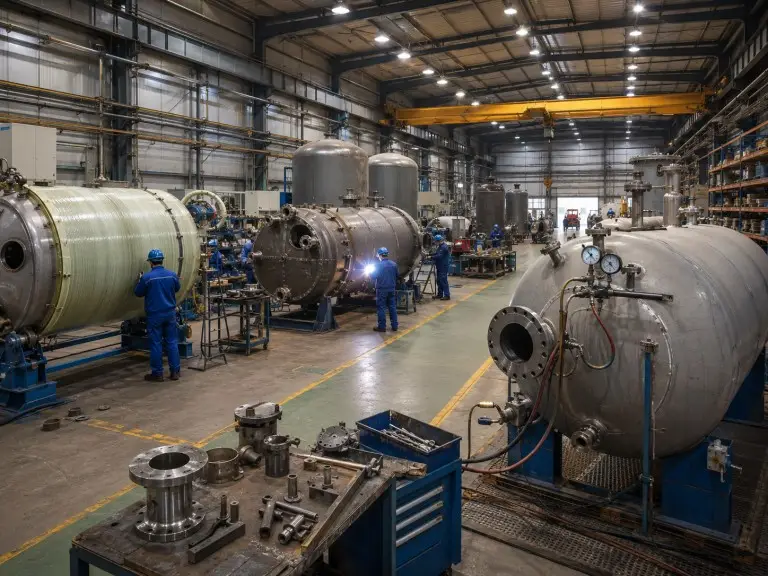
Our industrial water treatment equipment vessels are manufactured by Hiju in a 21,000 sqm fabrication workshop within our 70,500 sqm production facility in Qingdao — staffed by 28 engineers and 78 technicians who handle custom vessel design, pressure vessel fabrication, and pressure testing for export projects across more than 20 countries and regions since 2016.
CE-related documentation is prepared per project scope. ASME-stamped vessel documentation is available where the project specification requires it. ISO 9001 governs the quality management system across all production stages.
OEM and ODM production is available for distributors and system integrators who supply local markets: this includes custom branding, modified vessel specifications, and custom documentation packages aligned to destination-country requirements.
CE per Project
Pressure equipment directive
ASME Where Specified
Pressure vessel code
ISO 9001:2015
Quality management