
UV Disinfection Water Treatment.
Industrial Ultraviolet Sterilizer Systems.
UV disinfection water treatment inactivates bacteria, viruses, Giardia, Cryptosporidium, and other waterborne pathogens by exposing them to UV-C radiation at 253.7 nm — without adding chemicals, generating disinfection byproducts, or altering water mineral content. Ultraviolet disinfection systems are sized from one engineering condition: UV Transmittance (UVT). When incoming water does not pass enough UV-C light through to the pathogen, additional lamp wattage cannot compensate.
How UV-C radiation inactivates pathogens
UV-C light at 253.7 nm is absorbed directly by the DNA and RNA of microorganisms, disrupting the molecular bonds that govern replication. The pathogen cannot reproduce, eliminating infectious risk at the point of treatment. No residuals form, no chemical reactions occur downstream, and water chemistry is unchanged: taste, odor, and mineral balance are unaffected. This makes ultraviolet water disinfection systems a chemical-free alternative to chlorination and ozonation where residual disinfection is not required.
Nuisance organism control only; limited regulatory acceptance.
Common industrial design target for general process-water disinfection where local regulations do not specify a higher dose.
Common Class A / primary disinfection design target; specified for higher-risk drinking water, food and beverage, and pathogen-control applications when validated against actual flow rate and UVT.
A UV dose of 40 mJ/cm² inactivates the large majority of common waterborne bacteria, viruses, and protozoa under appropriate UVT conditions. We confirm dose delivery against your actual measured flow rate and UVT before supply; dose is a project calculation, not a product label printed on the chamber.
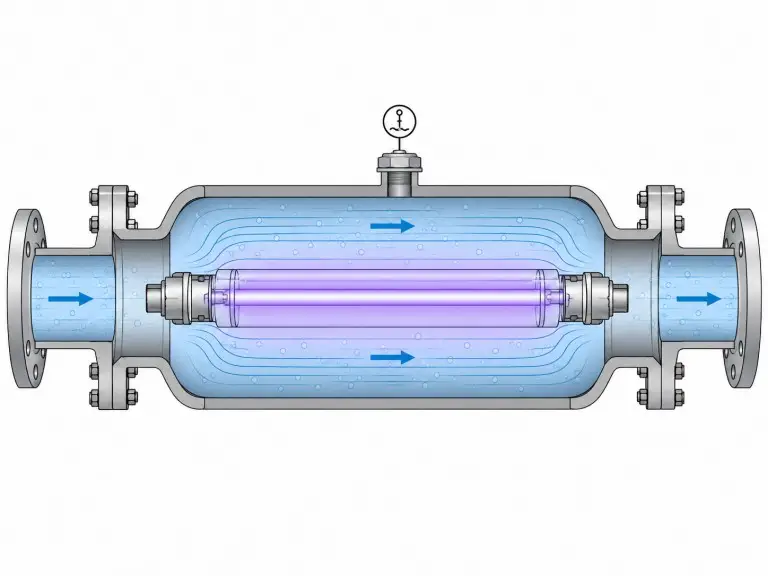
Fit conditions and pre-treatment requirements
A UV disinfection system for water treatment performs reliably within a defined water quality envelope. Outside that envelope, when UVT is too low, iron content is too high, or turbidity is uncontrolled, the UV chamber may not deliver the design dose regardless of lamp power.
Iron above 0.3 mg/L
Oxidized iron deposits on the quartz sleeve within weeks of commissioning. Once the sleeve is coated, UV-C transmission drops and the intensity alarm may be the only signal that dose delivery has fallen.
Turbidity above 1–5 NTU
Industrial UV systems should receive pre-filtered water at ≤ 1 NTU for reliable dose delivery at rated flow. Tannins and dissolved color depress UVT independently of turbidity and iron.
UVT below 75%
Low-UVT water may require a larger validated reactor, additional lamps, reduced rated flow, or a different lamp configuration. We confirm UVT and flow before sizing because lamp wattage alone does not guarantee dose delivery.
UV sterilization does not remove dissolved chemicals, heavy metals, hardness, color, or turbidity. It is a terminal disinfection step after filtration, softening or RO, and any chemical conditioning the upstream train requires. It also does not provide residual disinfection after the chamber.
Where contamination risk is located in stored water rather than the inline flow stream, tank self cleaning sterilizers address the storage-phase boundary.
Where incoming water carries iron, color, or dissolved oxidation demand that UV cannot address, ozone water treatment systems provide upstream oxidation capacity as a complementary stage.
Lamp types and configuration options
We configure industrial UV water treatment systems with three lamp technologies across our product range. Lamp type is selected based on flow rate, ambient temperature range, and target dose, not from application label alone.
| Lamp Type | Wavelength | UV-C Efficiency | Power Range | Recommended Scope |
|---|---|---|---|---|
| Low Pressure (LP) | 254 nm monochromatic | ~35-40% | 5W-150W | Small-medium flow; controlled indoor temperature; energy-efficiency priority |
| LP High Output (LPHO) | 254 nm | ~30% | 60W-300W | Medium-large flow; space-constrained installations |
| Amalgam | 254 nm | ~35% | 120W-1,000W | Large industrial and municipal flow; variable or uncontrolled ambient temperature |
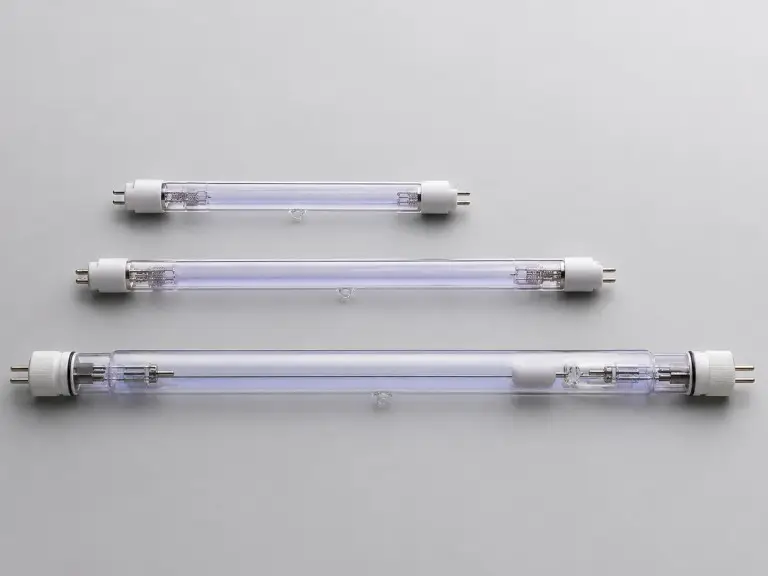
For industrial export projects where flow rates are high and ambient temperatures vary seasonally, we configure amalgam lamp systems. Standard LP lamps produce peak UV-C output within a relatively narrow lamp wall temperature range; outside that band, UV-C output drops measurably.
Medium Pressure (MP) UV, operating at 1,000W to 30,000W across a polychromatic 200-400 nm spectrum, is a separate product application for TOC reduction, chloramine destruction, or ozone residual elimination. MP UV is not interchangeable with germicidal LP or amalgam systems for standard pathogen inactivation.
Single or Parallel
Single-lamp chamber vs. multi-lamp parallel array for high-flow applications.
Mounting Orientation
Vertical or horizontal chamber mounting based on site piping layout and headroom.
Sleeve Cleaning
Manual quartz sleeve cleaning vs. auto-wiper for high-iron or high-hardness water.
Control Output
Local UV intensity display, PLC alarm output, or SCADA remote monitoring.
Technical specification variables
All values below are project-review variables. UV sterilizer configuration is determined by water analysis, flow rate, and application requirements; we do not publish fixed-flow SKU sizing tables because a table entry at a given flow rate is only valid at the UVT for which it was calculated.
| Parameter | Typical Range / Engineering Notes |
|---|---|
| UV-C Wavelength | 253.7 nm / 254 nm (germicidal peak) |
| UV Dose | 16 / 30 / 40 mJ/cm², selected per application and applicable regulatory standard |
| Flow Rate | Sized per project in m³/h or GPM, primary sizing input |
| UVT Prerequisite | Measured at operating conditions; minimum 75% for standard LP at industrial flow rates |
| Chamber Material | SS 304 standard / SS 316L for chloride-bearing or chemically aggressive environments |
| Quartz Sleeve | High-purity quartz, UVT >= 90% at 253.7 nm |
| Lamp Power | LP: 5W-150W; LPHO: 60W-300W; Amalgam: 120W-1,000W |
| Lamp Lifespan | Typically 8,000-12,000 hours, operation mode and ambient temperature dependent |
| Operating Pressure | Typically <= 10 bar (150 PSI), confirm per project hydraulic profile |
| Inlet/Outlet Connection | 1/2″ NPT to 6″ flange, type and size scaled to flow rate |
| Pressure Drop | Typically < 0.3 bar at rated flow |
| Control Type | Local UV intensity display / PLC + alarm / SCADA remote, project-variable |
| Cleaning Mechanism | Manual quartz sleeve cleaning / auto-wiper, specified per water quality |
| Power Supply | 110V / 220V / 380V; 50/60 Hz |
| Certifications (Hiju) | CE, ISO 9001; ASME available on request |
High-pressure RO permeate applications where system pressure downstream of the high-pressure pump exceeds standard limits require pressure-rated flanged chambers specifically scoped to the hydraulic conditions of that stage of the treatment train.
OEM and ODM production is available across all lamp types, chamber sizes, and control configurations for system integrators and project engineering firms sourcing UV sterilizer units for resale or private-label system packaging.
UV disinfection water treatment — application scenarios
UV disinfection systems for water treatment are specified where the disinfection point is the moving flow stream and dose can be confirmed from UVT, peak flow, and chamber geometry.
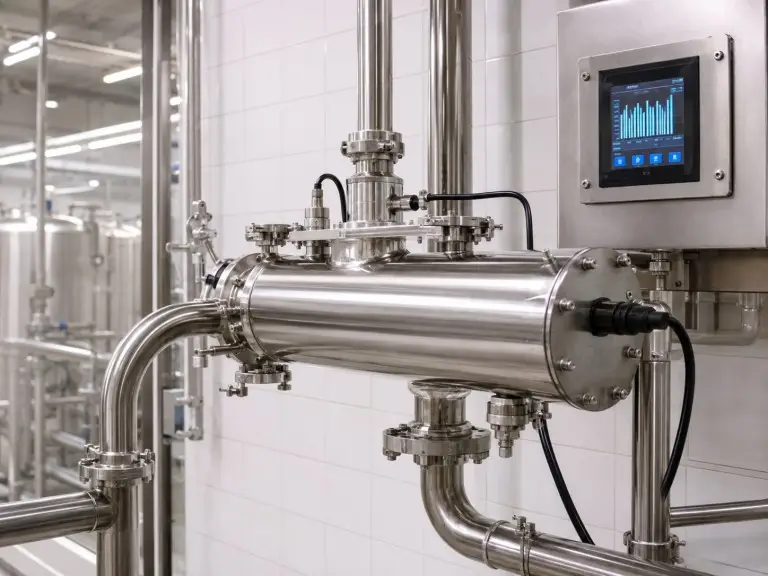
Food and Beverage Processing
Dairy processing lines, beverage bottling, brewing, and juice production typically require 40 mJ/cm² as a regulatory minimum. UVT must be verified at actual process-water temperature and composition because water temperature and dissolved organics both affect transmittance and lamp output.
Drinking water bottling plant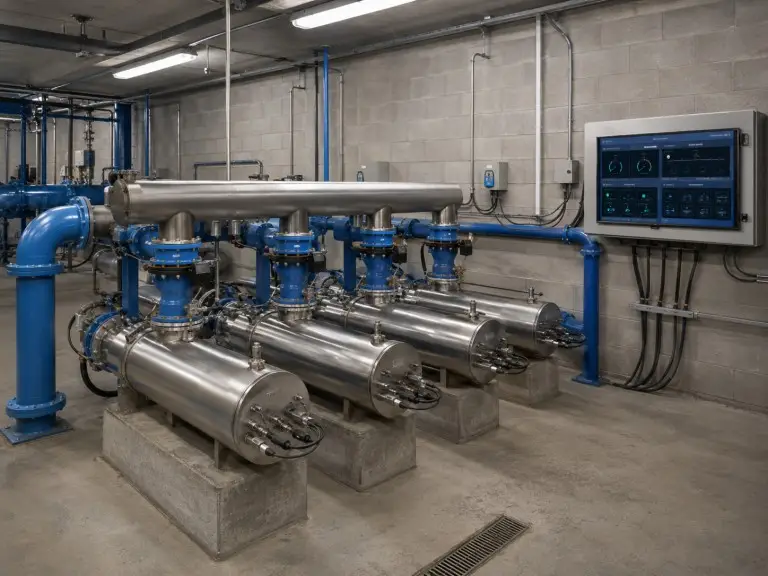
Municipal and Community Drinking Water
Community drinking water projects in markets without reliable chlorination infrastructure frequently specify UV as the primary or sole disinfection barrier at the point of treatment. A 40 mJ/cm² dose is commonly specified for higher-risk drinking water applications and Cryptosporidium-control requirements.
Water filtration system for drinking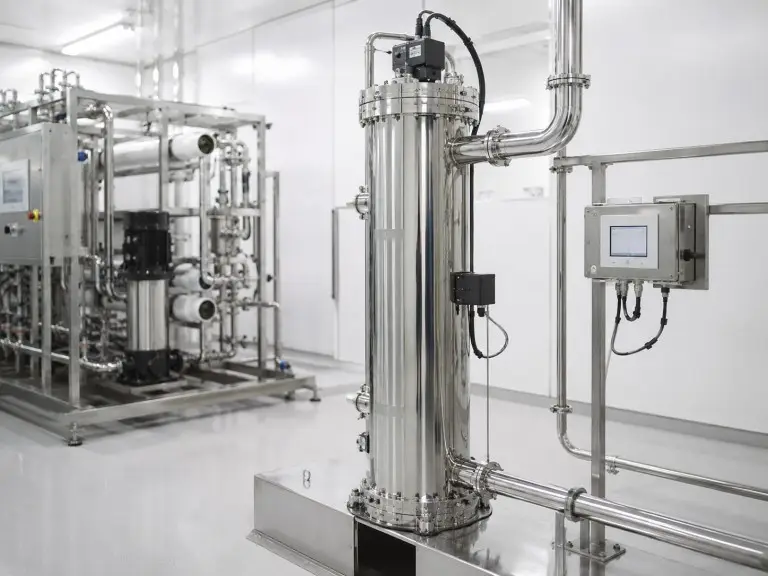
Pharmaceutical and Ultrapure Water Systems
UV sterilizers serve as final polishing disinfection in pharmaceutical, laboratory, and semiconductor ultrapure water trains after RO, EDI, or mixed-bed deionization. TOC reduction or volatile organic compound destruction requires MP UV, which we scope separately.
Final compliance must be confirmed against the user’s process specification, validation protocol, and applicable local standard.
Aquaculture and Fish Hatchery Operations
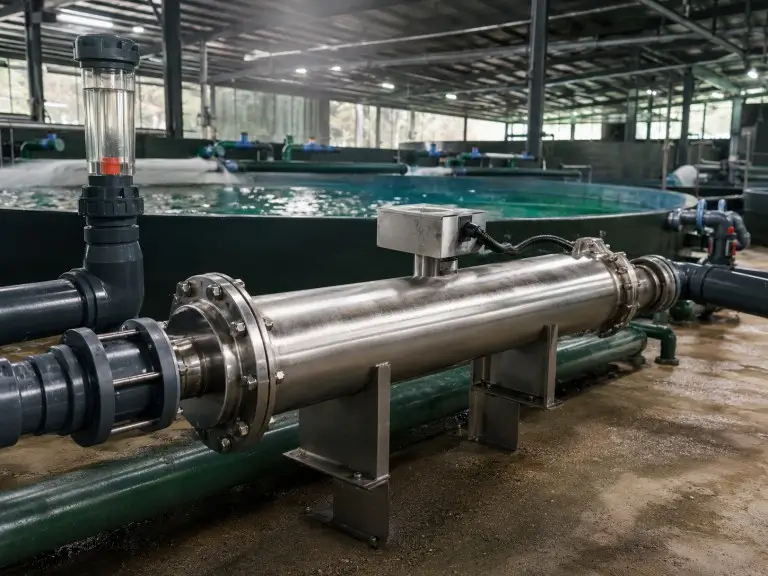
Aquaculture applications require UV disinfection of makeup water and recirculating system flows to control bacterial and viral load across the production cycle. Dose requirements and flow rates differ significantly between species and life stage.
Industrial Process Water and Cooling Tower Inlet
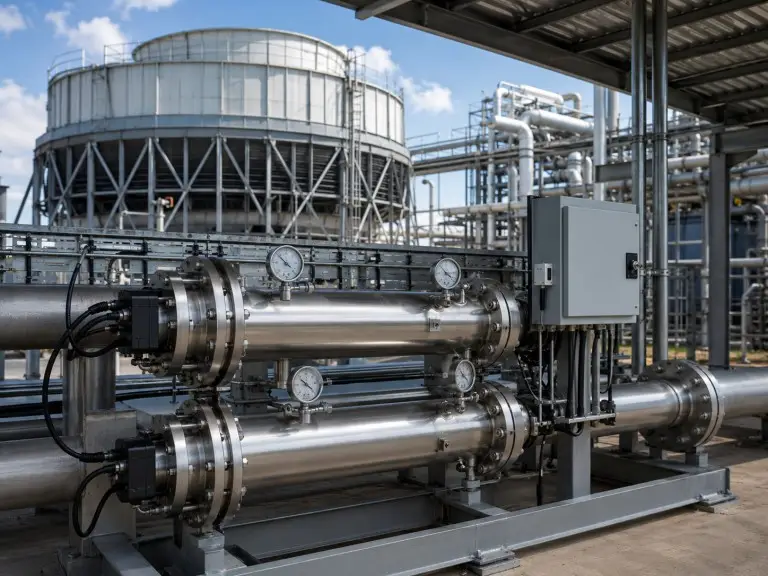
Industrial process water applications often specify 30 mJ/cm² where regulations do not mandate 40 mJ/cm². Operating pressure, connection size, and chamber orientation are the primary mechanical scope variables.
Wastewater Tertiary Treatment
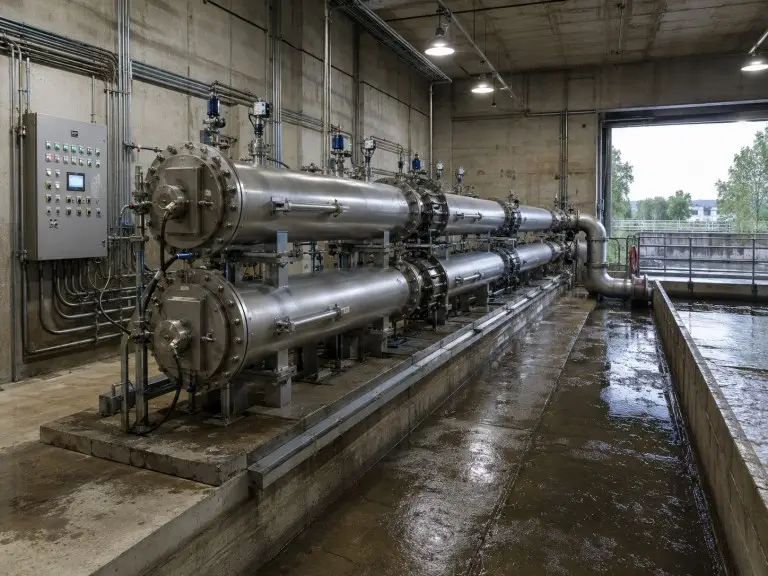
Wastewater tertiary UV disinfection requires 40 mJ/cm² or higher depending on discharge standards. UVT of secondary effluent is seasonally variable and must be measured under worst-case wet-season conditions.
Common engineering mistakes to prevent before UV sizing
The mistakes below cause UV water treatment systems to underperform because the system is evaluated from lamp wattage, assumed source category, or incomplete treatment boundary rather than measured operating inputs.
Using lamp wattage as a performance indicator
Wattage is electrical input. UV dose is germicidal energy delivered at your flow rate and UVT. A high-wattage lamp operated at excessive flow or against low-UVT water will not deliver the required dose.
Assuming UVT from water source type
Groundwater, surface water, RO permeate, and secondary effluent all shift with season and upstream process changes. We require laboratory-measured UVT at operating conditions before finalizing lamp selection.
Removing pre-treatment to reduce project cost
A UV chamber installed without iron removal upstream will foul the quartz sleeve in the first operating months. Without turbidity pre-filtration, the chamber fails during any turbidity event.
Assuming UV protects post-treatment storage
UV has zero residual activity downstream. Storage tanks, headers, and distribution piping after the chamber are unprotected against biological re-growth, dead legs, or contamination entry.
Specifying standard LP lamps for outdoor high-ambient installations
LP lamp UV-C output declines outside its optimal lamp wall temperature range. Amalgam lamp configurations maintain stable output across a wider temperature range and are the correct specification for outdoor or high-temperature process environments.
Maintenance and operating logic
UV water treatment systems operate continuously, and the two components that determine ongoing dose delivery, the quartz sleeve and the UV lamp, both degrade in ways that are invisible from outside the chamber. Planned maintenance intervals must be driven by your actual water quality, not a generic calendar schedule.
Quartz sleeve cleaning
In hard water or water with elevated iron, calcium carbonate scale and iron oxide deposits reduce UV-C transmission. Cleaning every 3-6 months is typically required under these conditions, and a fouled sleeve can cut transmission by 30-50%.
Lamp replacement
Continuous industrial operation typically falls in the range of 8,000-12,000 hours. We recommend replacement on measured intensity drop rather than a fixed calendar date.
UV intensity sensor and alarm
The sensor measures real-time UV-C output inside the chamber. Industrial systems without a functioning intensity sensor are operating without a dose compliance indicator.
Pressure drop
Pressure drop across UV chambers is typically below 0.3 bar at rated flow. Verify it against the full hydraulic profile, especially in low-pressure or gravity-fed systems.
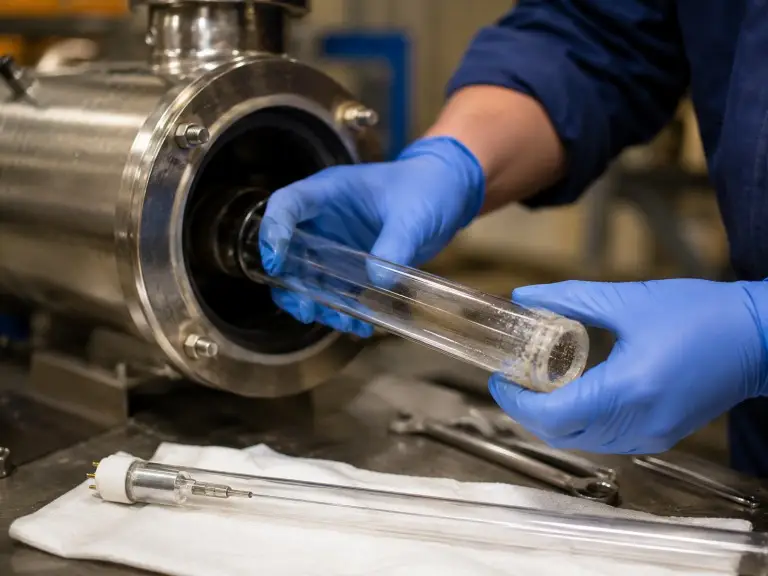
Factory-built systems with engineering review
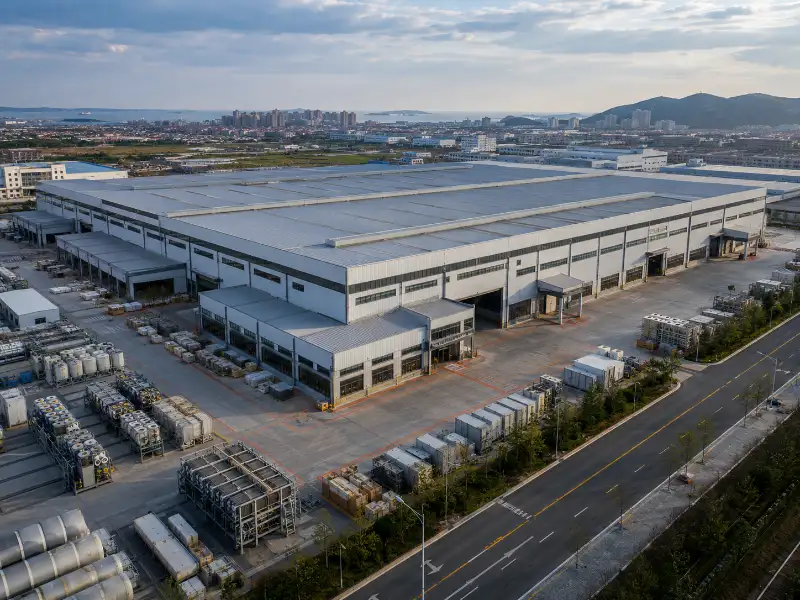
Every UV sterilizer is assembled and tested at our Qingdao facility. Our engineering team reviews your water data, confirms dose delivery at your specified flow rate and UVT, and handles export documentation for CE-required markets.
Engineering Review
Every project receives dose calculation, lamp selection, and chamber sizing review based on your measured water data before production begins.
OEM / ODM Support
Private-label production, custom chamber configurations, and system integration across all lamp types and control platforms.
Export Documentation
CE certification, ISO 9001 quality documentation, and ASME compliance support for international shipments across 20+ export markets.
Quote input checklist
Our engineers review your upstream equipment list alongside your UVT measurement. What sits before the UV chamber determines whether your target dose is achievable at your specified flow rate.
- Raw water UVT (%) — laboratory-measured at operating temperature
- Target flow rate — m³/h or GPM; peak and average values if duty is variable or batch-driven
- Application — food and beverage, pharmaceutical, municipal, industrial process, aquaculture, wastewater tertiary, or other
- Target UV dose or standard — 40 mJ/cm², 30 mJ/cm², or project-specific regulatory requirement
- Target pathogens — general waterborne bacteria, Cryptosporidium, virus, or combined spectrum
- Chamber material preference — SS 304 or SS 316L for chloride environments or aggressive chemical contact
- Inlet/outlet connection — nominal pipe size; NPT or flanged
- Control requirement — local UV intensity display, PLC alarm output, or SCADA remote integration
- Power supply — voltage and frequency: 110V, 220V, 380V; 50 or 60 Hz
- Upstream pre-treatment — filtration type, softening, RO, iron removal, and confirmed upstream train position
- Site environment — indoor or outdoor; min/max ambient temperature; hazardous area classification if applicable
- Destination country — required for export certification compliance review
- OEM/ODM requirements — private-label production, system integration scope, or third-party component requirements