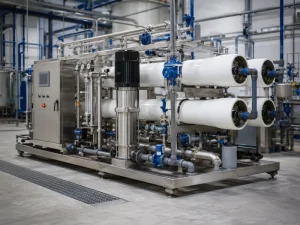
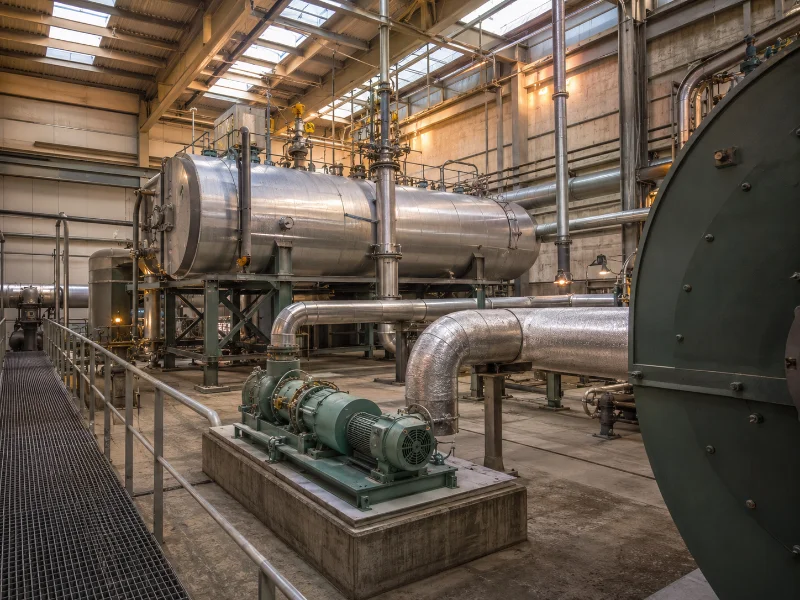
RO water does remove minerals. An RO membrane rejects dissolved ions by charge and size, so calcium, magnesium and sulfate leave with the concentrate, along with the sodium, nitrate and other solids the system was bought to take out. How much leaves depends on the feed water, the pressure and temperature it runs at, the age of the membrane, and the recovery it is set to. Whether that is a problem depends on what the water is for. At a drinking tap it raises questions about taste, diet, and how the water behaves in the pipes. At a boiler feed line, the same removal is the whole point.
Does RO Water Remove Minerals Evenly, or Some More Than Others?
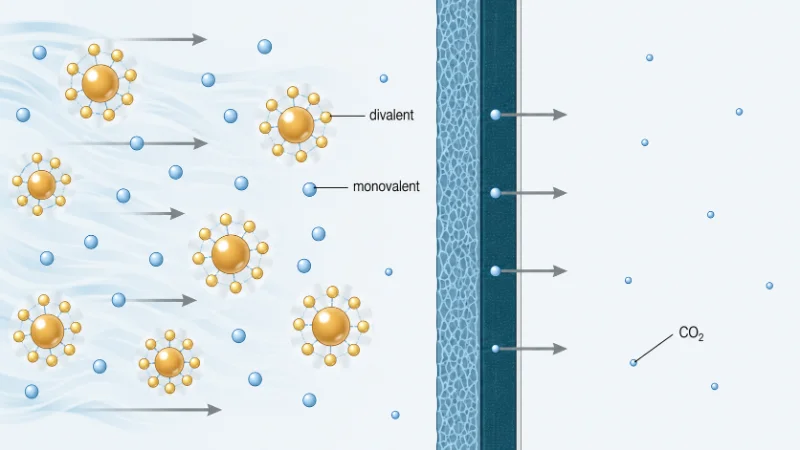
An RO membrane removes dissolved minerals unevenly, and how much of any one of them it holds back depends on the ion’s charge and size, the membrane type, the feed pH, and how the system is run. Polyamide RO membranes usually hold back divalent ions such as calcium, magnesium and sulfate more fully than monovalent ones like sodium, potassium and chloride, under the same conditions. The reason is physical. A doubly charged ion carries a larger hydration shell, and the membrane surface repels it more strongly, so it has a tougher time getting across than a small singly charged ion.
There is no universal ranking, though. How much of any single ion gets through also shifts with the membrane chemistry, the feed pH and strength, the pressure, the temperature and the recovery. Treat it as a tendency, not a fixed league table.
So the minerals people tie to healthy water are usually the ones RO takes out most fully, while some of the sodium stays. Hardness drops faster than salinity.
| What’s in the feed water | How the membrane treats it | What that leaves in the permeate |
|---|---|---|
| Divalent ions (calcium, magnesium, sulfate) | Rejected most completely; charge and hydrated size both resist passage | Very low hardness; most of the mineral loss happens here |
| Monovalent ions (sodium, potassium, chloride, fluoride, nitrate) | Rejected substantially, but generally less completely than divalents | Low but non-zero salinity; residual TDS skews monovalent |
| Dissolved gases (carbon dioxide, oxygen) | Largely pass through; uncharged and small | Slightly acidic, poorly buffered water |
| Particulates and colloids | Should be removed by pretreatment ahead of the membrane, not by it | Not where the mineral question lives; solids that reach the membrane foul it |
| Dissolved organics | Rejection varies with molecular weight, charge and polarity, not by size alone | Variable; a specific reduction claim needs testing or certification to state |
Carbon dioxide explains most of the taste and pH complaints. It crosses the membrane freely and turns back into carbonic acid on the clean side. That is why RO water often reads acidic on a pH strip even though nothing acidic went in. Most of the bicarbonate that would have buffered it is gone.
Is Demineralized Water the Same as Unhealthy Water?
Water stripped of its minerals raises two separate questions: how much of a person’s daily calcium and magnesium really comes from water rather than food, and how the low-alkalinity permeate behaves in the pipes it runs through.
On the first, current World Health Organization guidance sets no health-based minimum for calcium, magnesium or total dissolved solids in drinking water. WHO frames the issue as one of contribution. Water is one input to total mineral intake alongside food, and usually the smaller one, though it can matter where the diet is already thin. WHO also treats the long-term effects of drinking very low-mineral water as insufficiently evidenced to support a general recommendation either way. So for any one household, what decides it is the diet in that house. A water report never shows that.
RO permeate is usually low in alkalinity, so it has little capacity to buffer a pH change, and it carries the carbon dioxide the membrane let through. Whether that turns into a corrosion problem depends on the permeate’s pH, its dissolved gas, contact time, temperature and the metals or plastics it touches. Water headed for a tank or a distribution line gets assessed for stabilization on that basis, and pipe material is selected against the finished water chemistry.
A related mistake shows up whenever a handheld TDS meter gets read as a mineral report. The meter estimates dissolved solids from conductivity using a conversion factor the manufacturer selects, so it cannot tell calcium from sodium, or either from nitrate. A reading that drops sharply confirms dissolved solids left. The call on putting minerals back then rests on a number that was never about minerals.
Why Does the Mineral Removal Figure Change from One System to the Next?
Mineral rejection in an RO system shifts with the feed water, the pressure, the temperature and the age of the membrane, so a datasheet percentage describes a test condition, not a fixed property of the water. Recovery moves rejection as well. Where to set it trades permeate volume against reject water, a sizing question with its own economics.
Membrane datasheets publish a nominal salt rejection measured under a set test: a given feed solution at a given strength, pressure, temperature, pH and recovery. Change any of those and the number moves.
Temperature is the clearest case. Warmer feed pushes more water through the membrane, and salt passage rises with it, so the same system makes measurably different water in summer and winter with nothing else touched. Pressure works the other way. It drives more water across while the salt load stays about the same, which dilutes what does get through. Push recovery higher and rejection usually falls, because the concentrate the membrane sees turns saltier along the vessel.
When permeate quality drifts upward over months, the membrane and the pretreatment ahead of it get examined before anything downstream does. Fouling, chlorine damage the carbon stage failed to stop, and a leaking O-ring on a pressure vessel all show up as the same reading on a meter, and each of these RO system problems calls for a different correction.
For point-of-use systems, third-party certification is what settles this. NSF/ANSI 58 covers RO drinking water treatment systems. It addresses material safety, structural integrity and verified reduction claims including total dissolved solids. Its scope is home and similar point-of-use units fed by water already known to be microbiologically safe, so it does not certify the design of an industrial RO train. Within that scope, a certified reduction claim has been tested to a set protocol. A percentage on a marketing page has not.
Does It Matter That RO Strips the Minerals Out?
Mineral removal from RO permeate is judged by what the water feeds downstream, so a drinking tap and a boiler feed line reach opposite verdicts on the same water.
At a drinking tap, the minerals stop being the contaminant. The questions turn into ones no rejection percentage can answer: whether the water tastes flat to the people drinking it, and whether their diet already covers the calcium and magnesium they would get from it. Corrosion in the pipes sits under both, and it is the one noticed last.
In process water the removal is usually the whole point. What counts as clean enough varies by process, though. A boiler wants hardness gone because calcium and magnesium form scale on heat transfer surfaces, and scale turns fuel into wasted heat. Silica, alkalinity and pressure usually constrain the same feed water alongside it. Pharmaceutical and electronics plants run to conductivity limits among other specifications, which is another way of saying dissolved ions are a contaminant there. Food and drink lines strip minerals out to keep batch chemistry the same across seasons, then often put minerals back to hit a taste target.
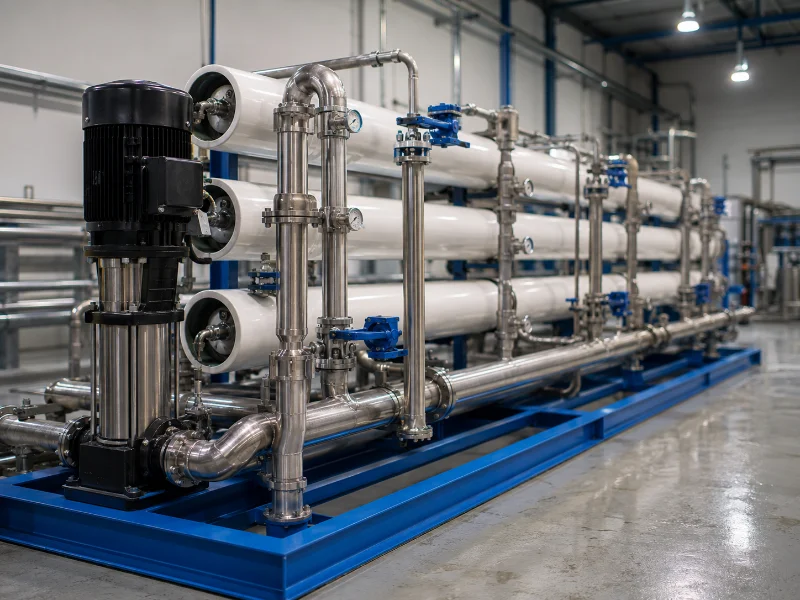
There is a version of this question where the honest answer is that RO is the wrong tool. If the supply already meets the drinking water standard that applies to it, and the only complaint is chlorine taste, a carbon filter certified to NSF/ANSI 42 for aesthetic effects handles exactly that. It also leaves the minerals alone. RO earns its place when the target includes something a carbon filter is not certified to reduce: nitrate, sodium, or a TDS figure a process specification will not accept.
Should RO Water Be Remineralized?
Remineralizing RO water is decided by where the water is going and what it will touch on the way, so a drinking tap, a storage tank and a process line each set a different target. Three approaches cover most of what is done at the point of use, and they are not equal.
| Approach | What it does | When it fits | Main limitation |
|---|---|---|---|
| Mineral cartridge (calcite / magnesium media) | Redissolves some calcium and magnesium; raises pH and buffering | Drinking water where taste or pipe corrosivity is the concern | Media depletes; dose is not precisely controllable |
| Blending a bypass stream | Mixes a measured fraction of pretreated feed back in | Feed already reasonably clean; target is a TDS, not zero | Returns everything in the feed, not only the wanted minerals |
| No remineralization | Leaves permeate as produced | Process water running to a conductivity or hardness spec | Downstream materials must tolerate aggressive water |
Bigger drinking water systems have more levers than a cartridge. Stripping the dissolved carbon dioxide out raises the pH that gas was holding down. Dosing CO₂ back in does the opposite job deliberately: it makes the water aggressive enough to dissolve limestone in a calcite contactor, which puts calcium and alkalinity back in together. Calcium and magnesium salts can also be dosed directly, and alkalinity and pH adjusted chemically. Those are system-level design decisions, set against a finished water target and the distribution materials.
Blending deserves the caution. It returns the feed water’s whole composition, so a supply with nitrate or sodium problems returns those in proportion to whatever calcium it returns. Blending works when the feed was mostly fine and the RO went in for one specific contaminant. It stops working when the feed was the problem.
Where the pipes drive the decision rather than the taste, the target gets set against the finished water’s pH, alkalinity and calcium, plus the materials in the tank and the line. That takes a lab report.
Where the RO Mineral Question Usually Goes Wrong
The costliest version of this question gets answered twice in the same purchase. An RO system bought to solve a problem the supply may not have had, then a remineralizer bought to undo what the RO was bought to do.
None of that changes the short answer. RO water does remove minerals, it takes the divalent ones most fully, it lets dissolved gas through, and the figure for how much it removes belongs to a test condition.
Mineral complaints and mineral specifications describe the same water and call for opposite corrections. A household’s pipe material and a boiler’s working pressure change the answer while the water stays the same.
When we compare a source water report against what a system actually has to make, the variable that settles the most arguments is the one people supply last: what the water feeds. Answer that first. How reverse osmosis works and the sizing logic behind an industrial RO system both follow from it.
FAQ
No, and no meter will. Ask the lab for an ion panel instead: calcium, magnesium, sodium, chloride, sulfate, alkalinity, and whatever contaminant the system went in for. Run it on the feed and the permeate the same day, or you are comparing two different waters. It costs more than a meter, and it is the only report that names what left.
RO reduces fluoride substantially, though as a monovalent ion it gets through more than calcium or magnesium does. For point-of-use systems, fluoride reduction is one of the optional claims that can be certified under NSF/ANSI 58, so a certified unit’s data sheet states a tested figure rather than an estimate. Whether that reduction is wanted is contested, and it is a separate question from whether the system delivers it.
No. Neither one adds minerals, because both act on the water and not on what is dissolved in it. Boiling drives off dissolved gas and boils away some of the volume, so the solids that stay sit in less water than before. Minerals come back only if something puts them there.
The idea runs well ahead of the evidence, and it turns on a swap that is easy to miss. The research on low-mineral water, WHO’s included, measures intake: what a supply adds to the calcium and magnesium a person already gets from food. Intake is not the same as loss. Showing that low-mineral water pulls minerals back out would take a different kind of study than the intake work provides. Anyone weighing this for a health reason is asking about their whole diet, and that question belongs with a clinician.
Often, and the fix is harder to pin down than the cause. Where flatness is the real complaint, a taste panel settles it better than a meter does, because the point at which flat turns unpleasant varies by person and by what they are used to drinking. Run the panel on two or three doses rather than one, and let the people who will drink it pick. That is how the dose gets a target.