News · Jul 2026
Industrial Reverse Osmosis Pros and Cons: A Buyer’s Decision Guide
Reverse osmosis (RO) is a pressure-driven membrane process that reduces dissolved salts and a wide range of dissolved contaminants from a feed…
Read more
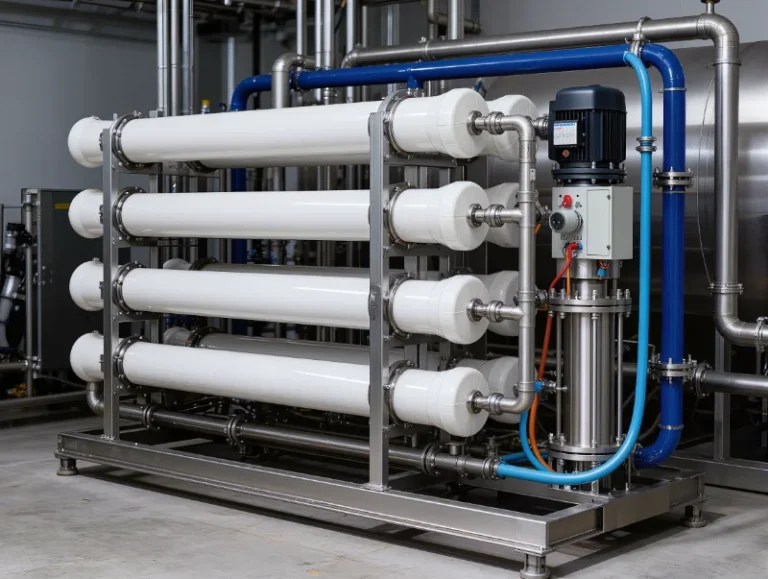
Reverse osmosis (RO) is a pressure-driven membrane process that reduces dissolved salts and a wide range of dissolved contaminants from a feed…
Read more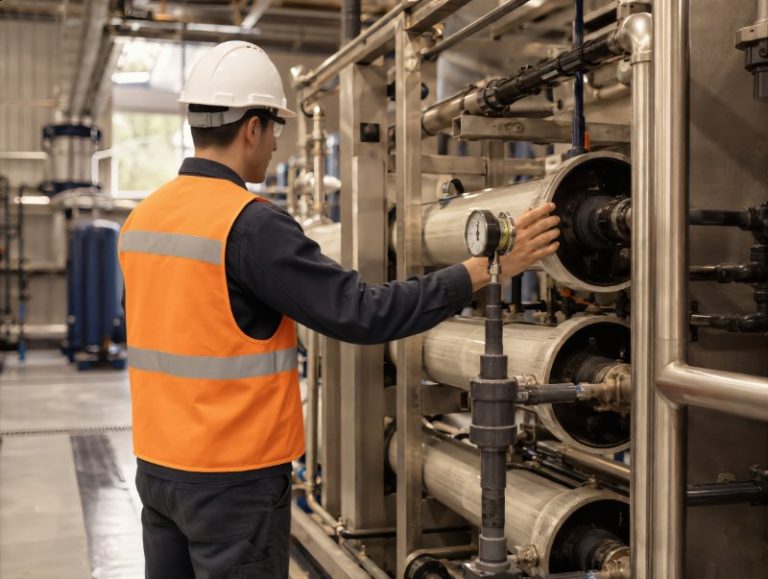
Industrial reverse osmosis systems fail in a narrower set of ways than most operators expect. Each failure mode points to a specific…
Read more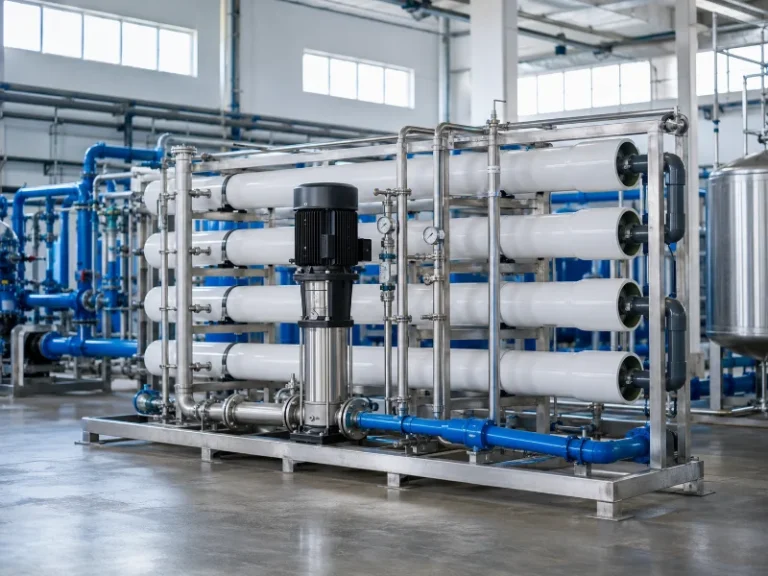
Reverse osmosis (RO) is a pressure-driven process that forces water through a semi-permeable membrane, leaving dissolved salts and many contaminants behind in…
Read more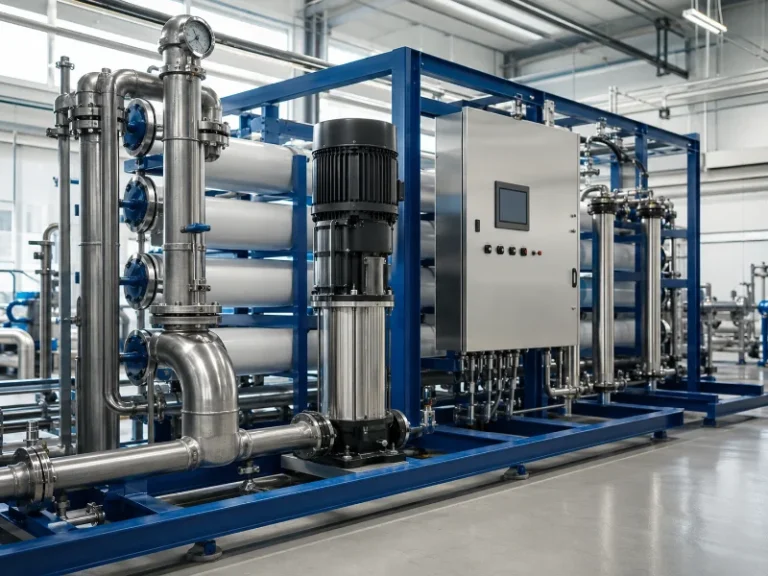
Energy is one of the largest ongoing operating costs in most high-pressure reverse osmosis (RO) systems. Membrane fouling is the factor that…
Read more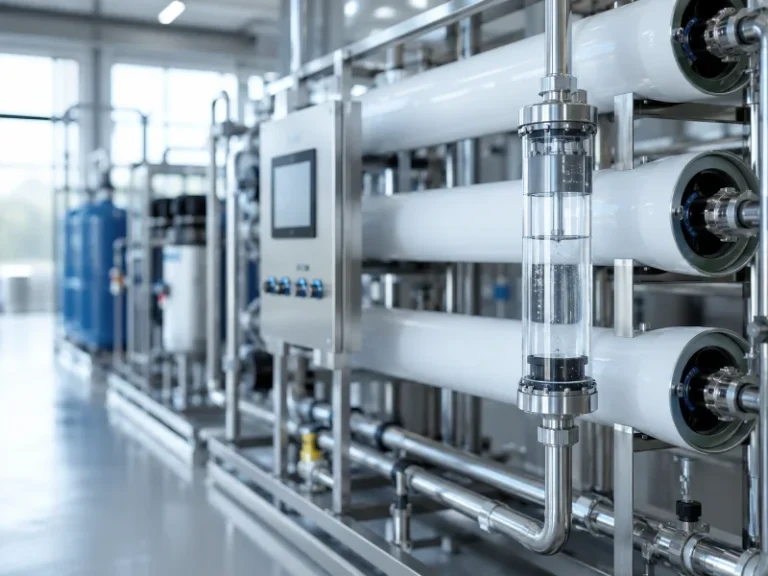
Yes, reverse osmosis can remove nanoplastics from drinking water when the membrane, seals, and downstream parts are intact. But no certification mark…
Read more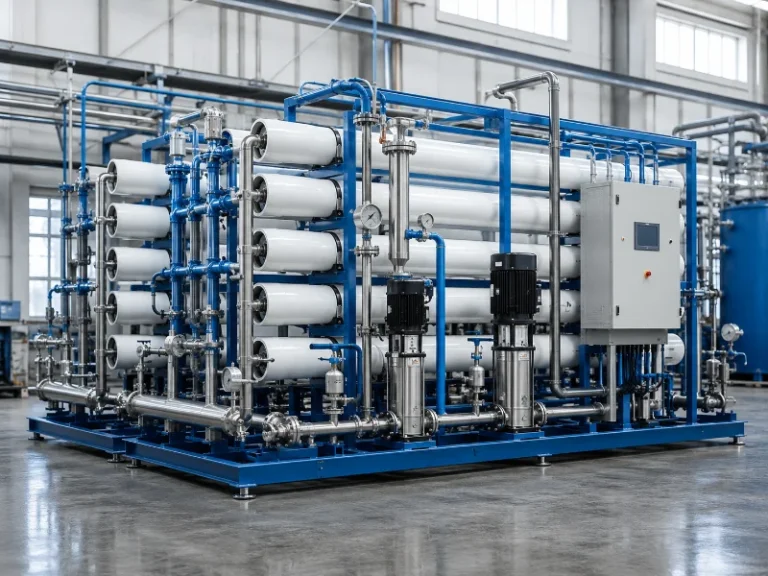
An industrial reverse osmosis system usually runs from around $15,000 for smaller configured skids (up to ~10,000 GPD) to $100,000–$300,000 for mid-scale…
Read more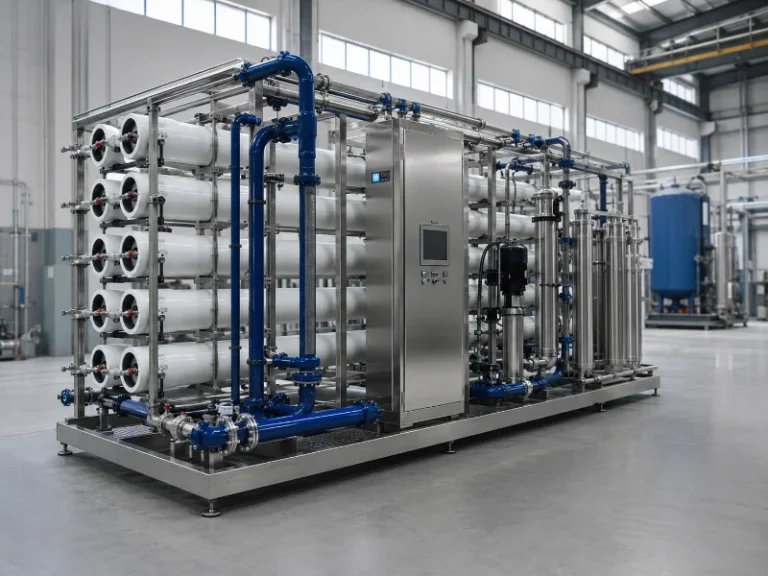
A reverse osmosis water filter for microplastics removes them by physical size exclusion. The membrane blocks particles thousands of times larger than…
Read more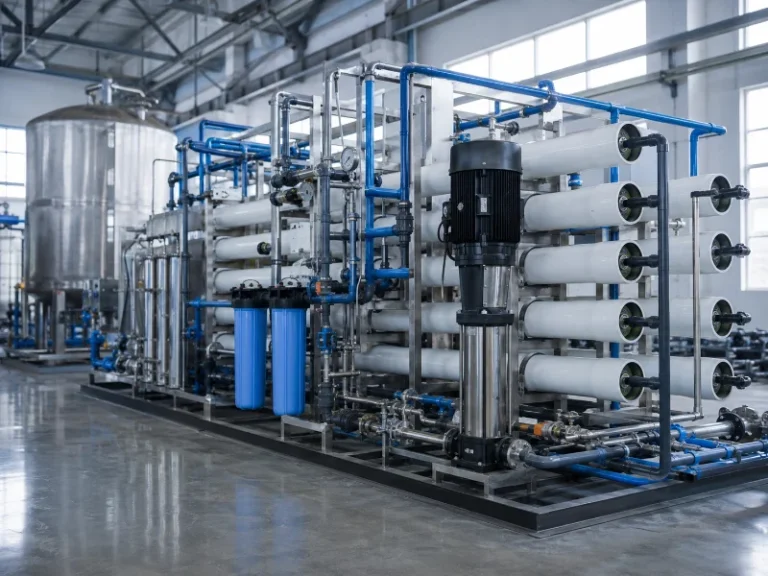
Reverse osmosis works by forcing water through a semi-permeable membrane under pressure. The membrane blocks dissolved salts, organics, and most other contaminants.…
Read more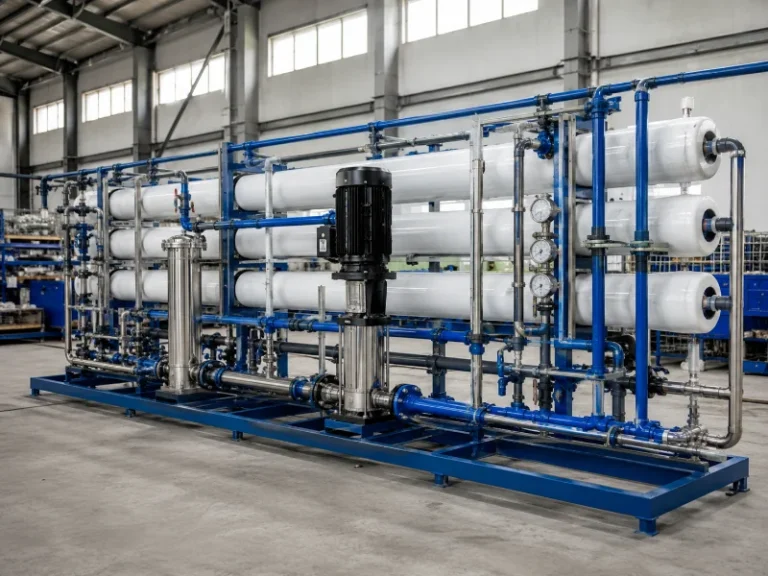
Reverse osmosis is a pressure-driven process that forces feed water through a semi-permeable membrane. The membrane separates water molecules from dissolved salts,…
Read more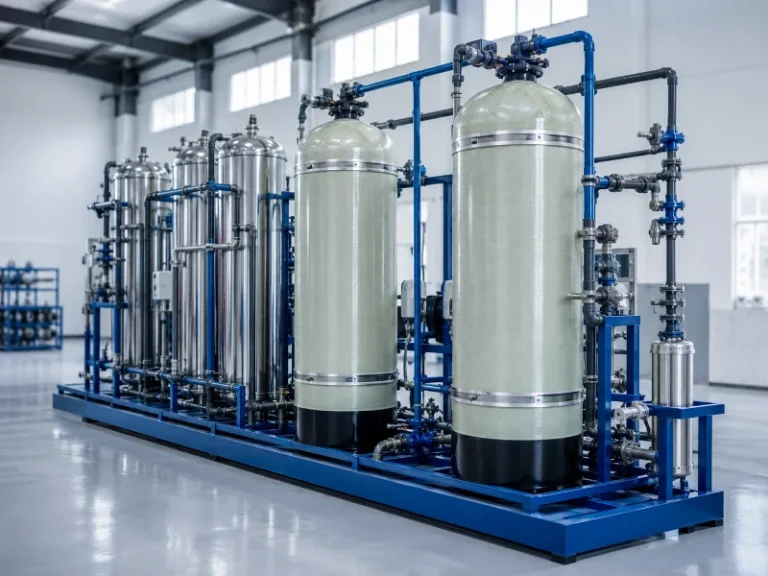
A cation is a positively charged ion and an anion is a negatively charged ion. The difference comes down to electrons: an…
Read more