The lifespan of an offshore water treatment system is rarely a single number—it is a long-term capital decision, and buyers reasonably want a service-life figure before they specify one.The honest answer is a range, not a single number. An offshore system is an assembly of parts, and they wear at very different rates under salt, vibration, and near-continuous load. Every interval in this guide is a planning range, not a warranty. The figures help you budget replacements, but they always depend on the source water and duty the system actually sees. We break the question down the way our engineering team does on a live inquiry: by component, by operating condition, and by the water the system has to treat.
Typical service life of an offshore water treatment system
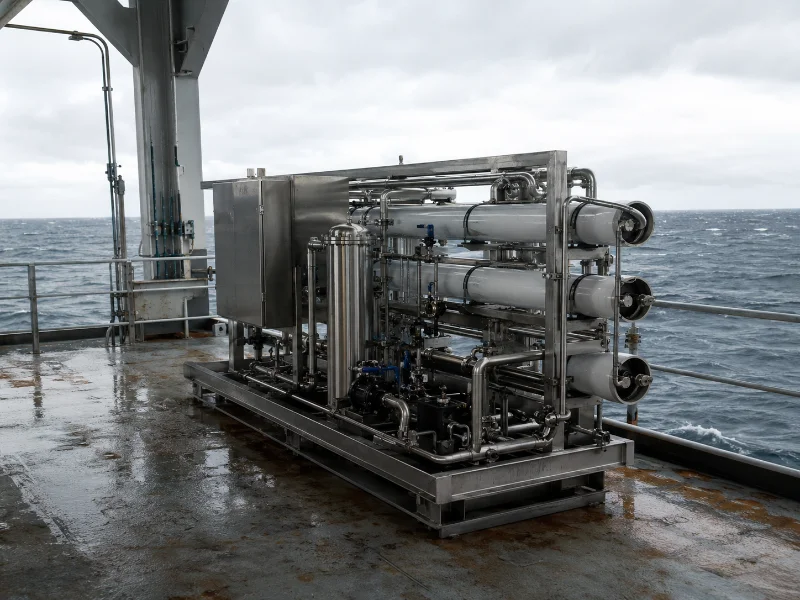
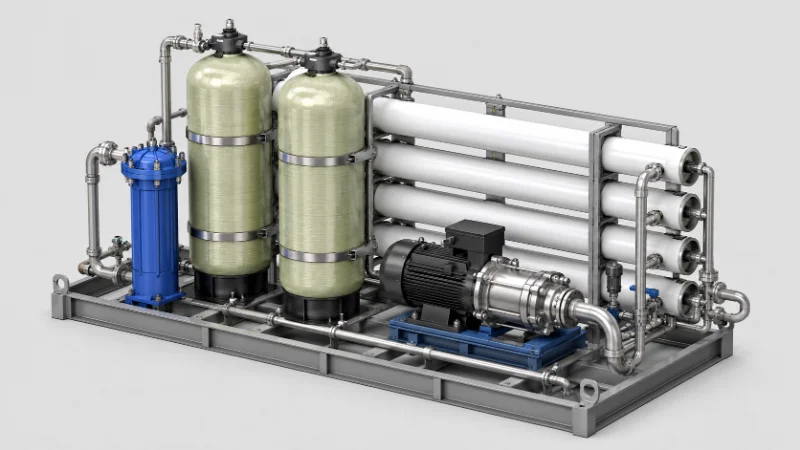
A properly specified offshore water treatment skid is usually planned around a 10-to-15-year structural service life. The consumables inside it follow much shorter replacement intervals. That structural figure describes the durable backbone: pressure vessels, membrane housings, skids, frames, and control cabinets. It does not describe the cartridges, UV lamps, RO membranes, seals, and pump wear parts that turn over several times across the same span. Marine seawater desalination systems are commonly cited in the 10-to-15-year band at the structural level. Lighter-duty watermakers run shorter, especially where build quality or maintenance is weaker.
Read that band as a planning anchor, not a specification or a guarantee. Before confirming any configuration, we review the source water chemistry, the platform’s electrical standard, and the expected run hours. Each one moves the achievable life up or down. A unit sized for intermittent yacht use will not age like one running continuously on a production platform.
Why an offshore system has no single lifespan number
An offshore water treatment system has no single lifespan, because its parts fail on independent clocks. Treating the whole unit as one number is the most common planning mistake we see. Membranes degrade with fouling and cleaning cycles. High-pressure pumps wear with run hours and cavitation. UV lamps lose output on a fixed hourly curve. Vessels and frames mostly survive on corrosion control. Quote a buyer “twelve years” and they will under-budget the membrane and lamp replacements that fall due long before then.
In the field, the part that forces an early intervention is rarely the one buyers expect. On continuously running offshore units, the high-pressure pump and the membrane elements usually need attention first. The pressure vessel they sit in is often still sound. When an operator assumes one replacement date for the whole skid, the result is usually an avoidable production gap. The consumable that actually expired was never on the maintenance calendar. We plan around staggered intervals instead, so a single worn component never takes the whole system offline.
Service life by component
Component service life on an offshore system depends on each part’s exposure and duty. A replacement plan has to be built part by part, not from a single system age. The figures below are the planning intervals we work from, along with what actually drives wear at sea. Treat them as anchors. The real interval for any unit depends on source water and run hours, and should be confirmed against operating data.
| Component | Planning interval | What drives wear offshore |
|---|---|---|
| Cartridge / pre-filters | Weeks to months; replace by differential pressure, turbidity, and intake solids load rather than calendar alone | Sediment load, intake turbidity |
| RO membrane elements | Commonly 3–5 years in offshore SWRO duty, shorter or longer with SDI, pretreatment, cleaning frequency, recovery, and oxidant exposure | Fouling, cleaning cycles, oxidant damage |
| UV lamps | Commonly ~9,000 operating hours, roughly one year of continuous use; some industrial platforms use 12,000–14,000-hour lamps depending on model and validation | Fixed output decay, run hours |
| High-pressure pump | Follow OEM interval; some SWRO high-pressure pumps allow service intervals on the order of 8,000 hours and major overhauls near 25,000 hours under specified conditions | Run hours, cavitation, suction pressure, seal and bearing wear, vibration |
| Membrane housings / pressure vessels | 10+ years where material grade, pressure rating, seals, and corrosion protection remain sound | Material compatibility, corrosion control |
| Skid / frame / control cabinet | 10–15+ years when coating, enclosure rating, ventilation, vibration control, and salt protection are designed for offshore exposure | Coating integrity, salt exposure, vibration |
Membrane replacement in particular should not be driven by age alone. Operators normally compare normalized permeate flow, salt passage, and stage pressure drop against the clean baseline rather than the calendar. Cleaning is commonly triggered when normalized flow falls by about 10%, salt passage rises by 5–10%, or normalized pressure drop rises by 10–15%. Once cleaning no longer restores performance, replacement becomes the more reliable call. We design housings and skid layout so membranes, lamps, and cartridges stay reachable. A part that is hard to reach effectively ages faster, because deferred service is the rule on a crewed platform, not the exception.
What determines how long an offshore system actually lasts
The achievable lifespan of an offshore system is set less by equipment grade than by three site conditions: corrosion exposure, mechanical vibration, and source water quality. Continuous salt-laden air and chemical cleaning cycles attack metal faster than any onshore equivalent. That makes corrosion-resistant material and coating selection a baseline offshore requirement, not an upgrade. We specify materials and protective coatings against recognized references rather than by habit. ISO 21457 covers materials and corrosion control; NORSOK M-501 and ISO 12944 cover coating systems. Vibration from platform machinery fatigues seals and loosens connections. Mounting and damping decisions made at design time surface years later as either reliability or early failure.
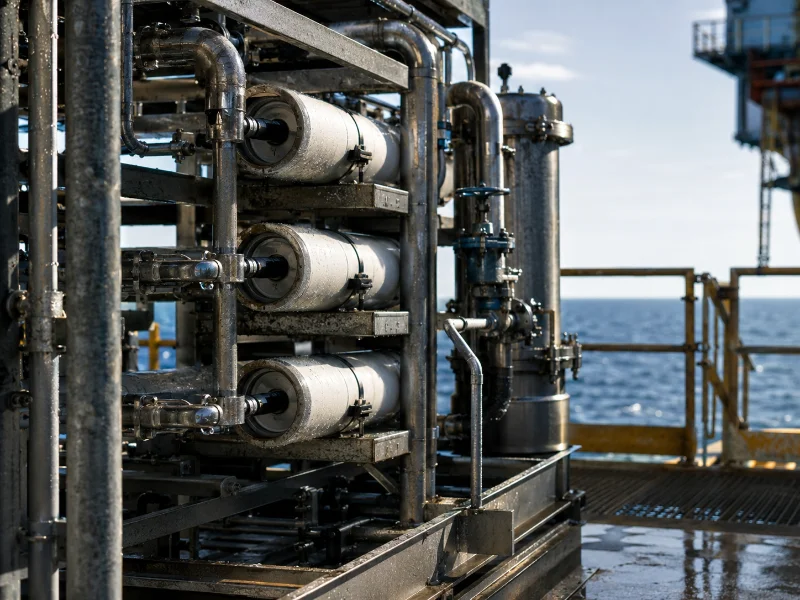
Source water is the variable that quietly governs everything downstream, and it is the data we ask for first. The parameters below move component life most directly. Collecting them before specification is what separates a system that reaches its service-life range from one that fails early:
| Feed-water / duty parameter | Why it affects lifespan |
|---|---|
| TDS / salinity | Sets RO pressure, membrane and pump load |
| SDI / turbidity | Governs membrane fouling risk |
| Oil & grease / hydrocarbons | Raises fouling risk on platform intakes |
| Iron / manganese | Drives membrane fouling and rising pressure drop |
| Hardness / scaling index | Sets antiscalant dosing and safe recovery |
| Free chlorine / ORP | Oxidants degrade polyamide RO membranes |
| Temperature / UVT | Affects flux, pressure, and UV dose and lamp life |
| Run hours / duty cycle | Sets pump, membrane, lamp, and cartridge intervals |
A system correctly pretreated for its real intake routinely outlasts an over-specified system fed dirty water with weak pretreatment. Operating pattern closes the picture. A platform that cannot afford shutdowns needs stronger pretreatment to protect its membranes. An intermittently used unit tolerates lighter pretreatment, but it faces standing-water and lay-up risks instead. Neither pattern is harder on the equipment by default. They fail in different ways, and the maintenance plan has to match the one the site actually runs.
Standards that govern offshore service-life decisions
Four choices decide how long an offshore system lasts: materials, coatings, electrical design, and water quality. Recognized standards govern each one, and naming the right ones early prevents specification gaps that shorten service life. Electrical installations on mobile and fixed offshore units generally fall under the IEC 61892 series. Hazardous-area zones bring ATEX, IECEx, or IEC 60079 requirements into the enclosure and instrument design where applicable. Materials and corrosion control commonly reference ISO 21457, with protective coatings selected and inspected against NORSOK M-501 or ISO 12944.
For any potable-water duty, treated water should be verified against the WHO Guidelines for Drinking-water Quality, or the stricter national, flag, or class requirement that applies. ISO 15748 (parts 1 and 2) covers potable-water systems on ships and marine structures. Class and flag rules from bodies such as DNV, ABS, BV, or Lloyd’s Register may also apply, depending on the vessel or platform. Which of these binds a given project depends on its destination market and classification. We confirm the applicable set against the specific site before issuing a specification, rather than assuming a generic offshore profile.
Maintenance practices that extend offshore service life
Maintenance is the single largest lever over offshore service life. Done consistently, it adds years to a system; skipped, it strips them away. Three practices carry most of the benefit: scheduled replacement of pre-filters and membranes rather than run-to-failure, a membrane cleaning system matched to the fouling rate, and protection from corrosion and standing water during idle periods. Each targets a specific wear path, and skipping any one tends to surface as a premature failure elsewhere.
We align maintenance intervals to a unit’s real duty, not a generic calendar. A continuous platform and a seasonal installation accumulate wear at different speeds. Continuous monitoring of conductivity, differential pressure, and TDS lets an operator catch fouling and membrane decline before they force an unplanned stop. The systems that reach the top of their service-life range are almost always the ones where small problems were corrected early. They are rarely the ones that ran untouched until something failed.
Signs an offshore system is reaching end of service life
End-of-life on an offshore system shows up as a pattern of symptoms, not a single failure. Reading that pattern early is what separates a planned replacement from an emergency one. Several signals point to core components past their useful interval. Product-water output falls at normal pressure. Conductivity or TDS rises, and cleaning no longer corrects it. Normalized salt passage keeps climbing after a clean. Pumps or housings need repeated repair. Water quality instruments surface these trends early, well before a symptom becomes a shutdown. A diverter valve dumping off-spec water more often is another practical tell that the membranes can no longer hold standard.
We compare these symptoms against a unit’s service history before recommending replacement versus refurbishment. Many systems can be extended with targeted component swaps rather than full replacement. Whether a given unit is worth refurbishing depends on the condition of its vessels and frame, the availability of replacement parts, and how far the core components have drifted from baseline. These are variables judged case by case, not ruled by age alone.
Planning for real service life
The right way to budget an offshore water treatment system is around three variables, not a single headline lifespan: component intervals, site operating conditions, and source water. Membranes and lamps turn over on their own hourly schedules. Vessels and frames survive on corrosion control and material grade. Pumps track duty hours. A system specified, pretreated, and maintained against its actual intake will routinely outlast one bought on price and run on a generic plan.
As a water treatment plant manufacturer rather than a trading company, we confirm the applicable standards, review the feed-water analysis, and verify replacement access before confirming a configuration. Those variables decide where a system lands in its service-life range. Our engineering team handles every stage in-house, from specification through final hydraulic pressure testing. The access, materials, and pretreatment that govern long-term life are settled at the design stage, not discovered in service.
To get a service-life estimate grounded in your actual conditions, send your feed-water analysis, target water standard, required capacity, operating hours, platform voltage and frequency, hazardous-area classification, and installation location. Our engineers will review the intake chemistry and duty profile, confirm a system configuration matched to the lifespan you need, and flag the project-specific variables that should be verified before installation.
FAQ
Offshore RO membrane elements generally last 3 to 5 years. Where a unit lands in that range depends on fouling rate, cleaning frequency, pretreatment quality, recovery, and oxidant exposure. Platforms with strong pretreatment and steady operation reach the upper end; units fed high-turbidity or oily intake water reach the lower end sooner.
Cleaning follows performance data, not a fixed calendar. The real driver is how fast the feed water fouls the membranes, so high-solids, oily, or biologically active offshore intakes need cleaning far more often than clean seawater. Tracking normalized performance is what tells an operator the moment a clean is actually due.
No single standard covers the whole system. The applicable set depends on the platform, flag, and destination market, because electrical, material, coating, and potable-water requirements each pull in their own references. Class society and hazardous-area rules apply where relevant. The practical step is to confirm the binding set for your specific site before the system is specified.
Offshore service exposes equipment to salt corrosion, vibration, and continuous load all at once, which onshore systems rarely face together. Identical equipment will generally wear faster at sea unless it is built and pretreated for the environment. Corrosion-resistant materials, standards-based coatings, and duty-matched pretreatment close most of that gap.
The structural backbone — vessels, housings, and frame — can pass 15 to 20 years with disciplined corrosion control and good material selection. The consumable parts inside it will have been replaced several times by then. Reaching that age depends more on maintenance consistency and material grade than on the original purchase price.
Note: the service-life figures here describe the manufactured treatment equipment: skids, vessels, membranes, and UV units. They do not cover how the system is integrated into a specific platform’s piping and discharge arrangement. That integration is a separate engineering review we run per project against the destination market’s requirements.