
Ozone Water Treatment Systems — Industrial Ozone Generator Solutions
We size ozone output to your water chemistry and flow rate – not to a catalog number. An ozone system for water treatment correctly matched to your feed water conditions, application, and contact reactor performs predictably against your treatment target; one selected from a standard output table can miss the CT requirement during demand peaks or be over-specified at unnecessary capital cost. For projects where ozone is not the correct technology, our broader water disinfection systems range includes UV sterilizers and tank self-cleaning units.
How Ozone Works: Generation, Contact, and Decay
Inside a corona discharge cell, high-voltage electricity converts oxygen into ozone. That ozone transfers into your water through a contact reactor – and then decays within minutes, leaving no chlorinated by-products and no distribution residual. Whether the system is described as an ozonator for water treatment or an ozone generator, all corona discharge designs share this same three-stage operating principle, and understanding it determines how we size the ozone water treatment system.
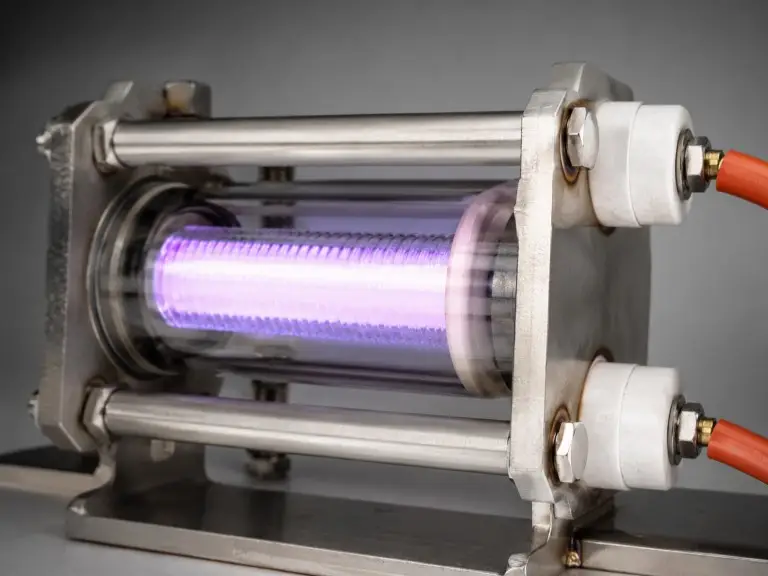
Generation: The Corona Discharge Cell
High-voltage electrode gap converts O2 to O3 in the feed gas stream before gas enters the water circuit. Feed gas dryness is non-optional: moisture suppresses ozone formation and degrades dielectric electrode surfaces.
1-3% air feed vs. 6-15% oxygen feed. Higher concentration means less gas volume must be dissolved per gram delivered.
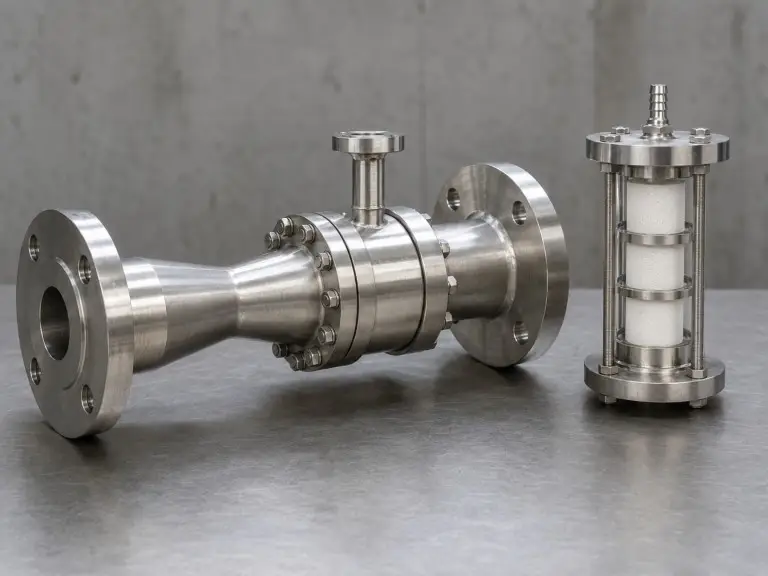
Contact and Mass Transfer: Getting Ozone Into the Water
Ozone has a higher oxidation potential than chlorine and can achieve disinfection or oxidation targets with shorter contact times in suitable water conditions, but it must transfer from gas phase to liquid before it can react with dissolved contaminants.
Generator (g/h) = Flow (m³/h) x Dose (g/m³) / Transfer Efficiency
A 50 m³/h food processing line requiring 1.5 mg/L dissolved ozone at 85% transfer efficiency requires approximately 88 g/h installed capacity.
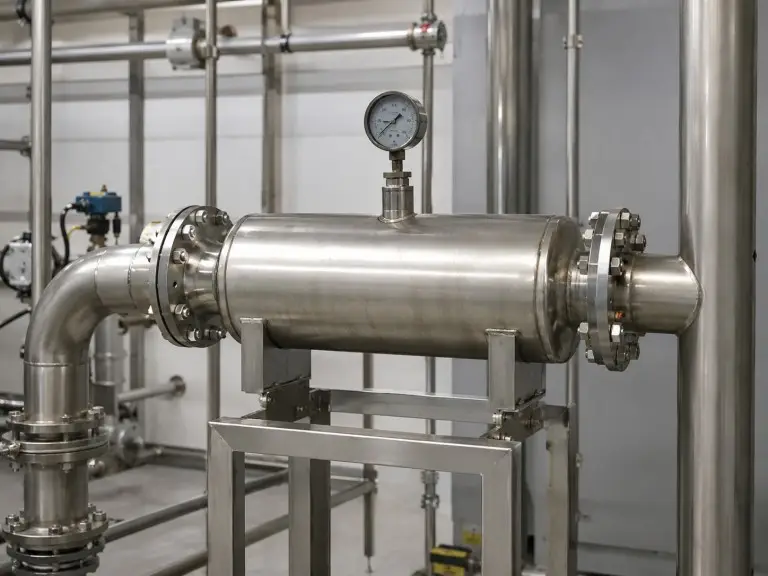
Decay and Off-Gas: The Short Half-Life Is a Design Variable
Half-life in water is approximately 20-30 minutes at 20°C and neutral pH, shorter at elevated temperature or higher pH. Ozone leaves no chlorinated by-products, but it also provides no residual beyond the contact zone.
Undissolved ozone must not enter the facility atmosphere. A catalytic destructor is required.
These three stages are the engineering basis for every generator sizing decision. The application matrix below translates those variables into project-level dose and contact-time guidance by use case.
Ozone Water Treatment Systems — Match Application to Dose and Contact Time
Industrial ozone generator output for water treatment cannot be selected without knowing the ozone dose your application requires and the contact time your site layout allows. The parameters below are preliminary engineering references, not regulatory guarantees. Final ozone dose and CT must be validated from water analysis, target organism, T10 contact time, dissolved ozone residual, pH, temperature, and local compliance requirements.
Specify ozone when…
- Source water contains dissolved iron above 0.5 mg/L or manganese above 0.1 mg/L requiring oxidation before downstream filtration.
- Taste, odor, or color must be removed without producing chlorinated disinfection by-products.
- Industrial or recycle water requires COD or color reduction before discharge or reuse.
- Chemical-free disinfection is required for food, beverage, pharmaceutical, or aquaculture applications. (Final compliance for pharmaceutical applications must be confirmed against the user’s process specification, validation protocol, and applicable local standard.)
- Biofilm or Legionella control in cooling circuits requires a non-chlorine oxidant.
- Simultaneous oxidation and disinfection are required in a single contact stage.
Ozone is not the correct selection when…
- The only objective is pathogen inactivation in clean, post-filtered water below 1 NTU – UV disinfection water treatment systems are simpler.
- A persistent residual is required throughout a long distribution pipeline.
- Source water contains bromide at levels requiring bromate formation review, and bromate must be held below applicable limits without additional AOP management.
- In-tank sterilization of a building hot or cold water storage vessel is primary – use a dedicated tank self cleaning sterilizers.
| Application | Typical Ozone Dose (mg/L) | Minimum Contact Time | Recommended Contact Reactor |
|---|---|---|---|
| Drinking water – taste and odor removal | 0.5-2 mg/L | 6-8 minutes | Diffuser column or venturi + static mixer |
| Drinking water – iron and manganese oxidation | 1-3 mg/L | 5-10 minutes | Diffuser column, downstream filtration required |
| Bottled water and packaged beverage | 1-2 mg/L | 5-8 minutes | Bubble diffuser or nanobubble |
| Food and beverage CIP and process water | 1-3 mg/L | 5-10 minutes | Venturi injection loop |
| Industrial wastewater – COD and color reduction | 3-10 mg/L | 10-20 minutes | Multi-stage diffuser column or nanobubble |
| Cooling tower – Legionella and biofilm control | 0.2-0.5 mg/L residual | Continuous side-stream | Venturi injection, side-stream loop |
| Aquaculture recirculating systems | 0.5-1.5 mg/L | 3-5 min + degassing | Degassing column after contact |
| Municipal wastewater – secondary effluent polishing | 5-10 mg/L | 15-20 minutes | Multi-stage diffuser column |
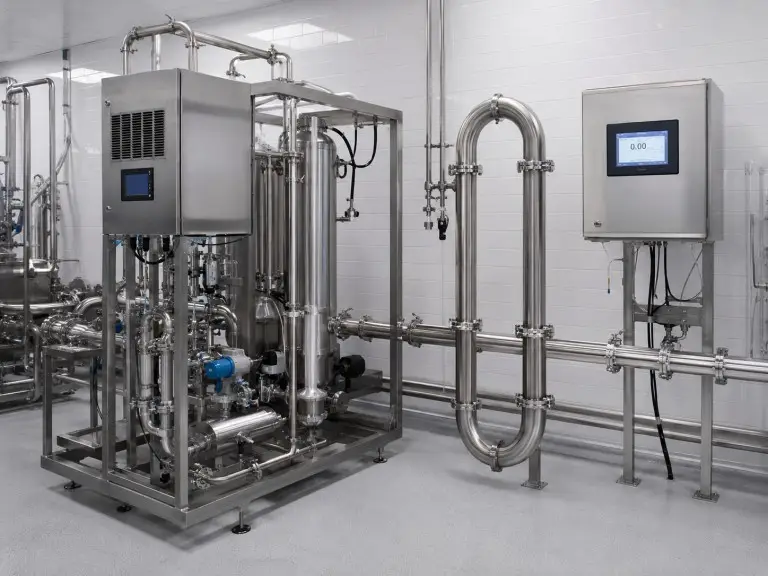
Bottled water dose management
For bottled water and sensitive beverage lines, we begin system design at 1-2 mg/L dissolved ozone with 5-8 minutes contact time. A dose above 2 mg/L in certain beverages risks oxidizing flavor precursors in fruit-based, malt-based, or hop-sensitive products.
Iron/Mn filtration requirement
Ozone oxidizes dissolved iron and manganese into insoluble precipitates at 1-3 mg/L applied dose. Those precipitates pass through without downstream filtration, so iron and manganese removal with ozone requires a filter stage following the contact zone.
CT compliance baseline
For drinking water CT compliance, the target dissolved ozone at the contact zone outlet is typically 0.3-0.5 mg/L residual with a minimum 6-8 minutes contact time. We reference EPA, WHO, or national standards during engineering review.
For food and beverage processing projects, application-specific guidance from raw water pre-treatment through product water compliance targets is covered on our drinking water bottling plant solutions page. For municipal and community projects, our water filtration system for drinking solutions page covers source-to-distribution system integration. Contact our engineering team or reach us via WhatsApp to open a project discussion from this table.
Feed Gas and Contact Reactor: Two Decisions That Shape System Cost
Two decisions precede every ozone water treatment system specification: what gas will feed the corona discharge cell, and what contact reactor will transfer ozone into the water. Both choices affect system footprint, capital cost, operating economics, and CT documentation capability.
A. Feed Gas: Dry Air or Oxygen from PSA
Dry Air Feed
Atmospheric air is filtered, cooled, and dried through a desiccant molecular sieve before the corona discharge cell. Output concentration is approximately 1-3% O3 by weight, so more gas volume must be dissolved per gram of ozone delivered.
Appropriate for intermittent or lower-output applications, sites where oxygen supply infrastructure is impractical, and projects where upfront capital cost is the primary constraint.
Oxygen Feed from PSA/VPSA
PSA/VPSA oxygen feed produces ozone at 6-15% by weight. Less gas per gram reduces contact reactor volume and off-gas destructor load, and the higher capital cost can be offset by smaller footprint and lower operating cost per gram.
For continuous duty above approximately 80 g/h, we evaluate PSA oxygen feed against dry-air options; above 100 g/h sustained output, oxygen-fed is usually more cost-effective over system life.
Below approximately 80 g/h or for intermittent duty, dry-air feed is the practical default. Above 80 g/h continuous, we evaluate oxygen feed – at sustained output above 100 g/h, we present the economic comparison for both options rather than defaulting to one on the buyer’s behalf.
B. Contact Reactor: Venturi, Diffuser Column, or Nanobubble
| Reactor Type | Mass Transfer and Best Fit | Design Boundary |
|---|---|---|
| Venturi Injection Loop | Ozone gas is drawn through a venturi constriction; fine bubbles dissolve in a downstream static mixer. Transfer efficiency is approximately 80-90% at 2-4 bar line pressure. | Fast to commission and space-efficient, but CT documentation depends on pipe residence time downstream of the mixer. |
| Bubble Diffuser Column | Ozone rises through a vertical water column from diffuser elements. Extended bubble residence produces higher CT per gram of ozone than venturi injection at equivalent flow. | Preferred for municipal drinking water and export bottled water. T10 hydraulic factor must be calculated from column geometry and verified at commissioning. |
| Nanobubble Generator | Sub-micron bubbles remain in suspension longer and expose more interfacial area, improving transfer where conventional bubbles coalesce and escape. | Specified for aquaculture recirculating systems and industrial wastewater above approximately 200 mg/L COD when diffuser performance is insufficient. |
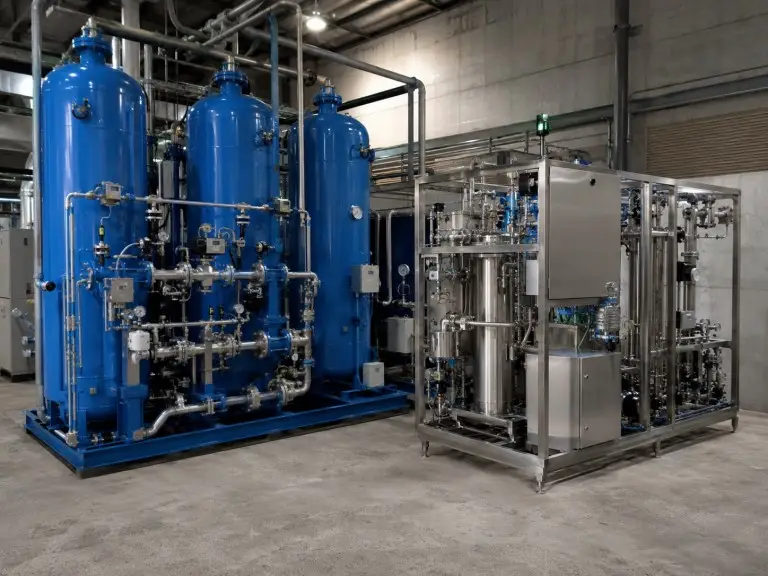
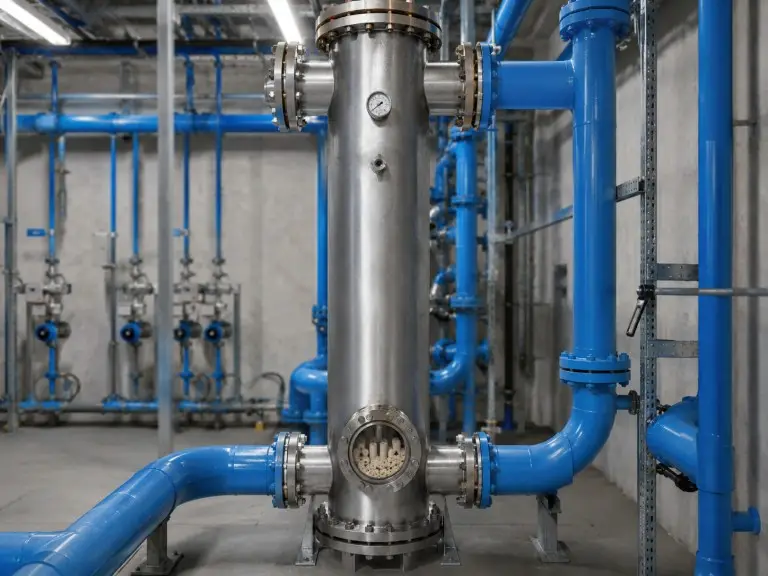
Corona Discharge Generator – Technical Parameters
The parameters below cover the operating envelope for our corona discharge generator range. Output capacity and gas concentration are confirmed after engineering review – ozone water treatment systems are sized from project variables, not pre-selected from a product number.
| Parameter | Specification |
|---|---|
| Generation method | Corona discharge, high-frequency power supply |
| Feed gas | Dried atmospheric air or PSA/VPSA concentrated oxygen – specified per project |
| Output range | Small commercial to industrial and municipal scale – g/h to kg/h, confirmed per project |
| Ozone concentration in feed gas | ~1-3% by weight (air feed); ~6-15% by weight (oxygen feed) |
| Dissolved ozone target (drinking water) | 0.3-0.5 mg/L residual at contact zone outlet |
| Back pressure | Up to 4 bar, model and contact system dependent |
| Cooling method | Water-cooled for high-duty continuous operation or air-cooled for intermittent / smaller-scale service |
| Power supply | AC 220V/50Hz or AC 380V/50Hz; high-frequency inverter integrated |
| Off-gas treatment | Catalytic destructor – standard inclusion; 99%+ ozone destruction efficiency |
| Contact zone wetted materials | SS 316L, PTFE, PVDF, Viton (FKM), borosilicate glass |
| Certifications | CE, ISO 9001 |
| OEM / ODM | Available |
Cooling water quality affects heat exchanger performance on water-cooled units. Hardness above approximately 150 mg/L as CaCO₃ causes scale accumulation on heat exchanger surfaces over time, reducing cooling efficiency and increasing cell operating temperature. We include a cooling water quality requirement in every water-cooled system design and specify chemical dosing or softening where supply water hardness exceeds the threshold.
Off-Gas Safety and Destructor Design
Ozone off-gas is a design constraint, not a residual consideration. Any ozone that does not transfer from the gas stream into the water exits the contact reactor as a gas phase that must not enter the facility atmosphere – not during normal operation and not during peak demand.
The OSHA 8-hour TWA occupational exposure limit for ozone is 0.1 ppm. Ozone exposure above occupational limits can irritate the respiratory tract, especially in enclosed process rooms without ventilation or off-gas destruction. An undestructed off-gas stream from an industrial generator can accumulate to levels that present immediate respiratory risk to maintenance personnel.
Catalytic Destructor
Standard inclusion on all systems we supply. Converts O3 back to O2 across a heated catalyst bed, produces no secondary waste stream, and must be rated to generator peak output.
Thermal Destructor
High-temperature incineration unit for site conditions where catalytic media contamination risk is elevated. Higher energy cost than catalytic, used only when site conditions require it.
Activated Carbon Contactor
Backup destructor stage for small-capacity applications. Not rated as primary treatment for high-output systems, but useful as secondary assurance on sensitive-site installations.
Every system we supply includes a catalytic destructor sized to the generator’s peak output – not its typical operating load. A system that operates at 60% of rated output most of the time will still reach 100% output during startup, dose-control response, or peak demand. We do not supply ozone generators as standalone units without an off-gas treatment solution.
Five Sizing and Integration Mistakes That Affect Project Outcome
These five errors appear repeatedly in ozone water treatment systems inquiries from ozone generator manufacturers and integrators. Each one affects project outcome – from generator underperformance at peak demand to regulatory non-compliance that emerges after commissioning.
Sizing the generator to average daily flow rather than peak flow.
A generator sized to average flow underperforms during demand peaks. We ask for both peak and average flow and size the generator to peak output with turndown capability for average load.
Omitting bromide from the water analysis.
Bromate risk requires evaluation when source water contains measurable bromide. A water analysis without bromide data is incomplete for drinking water, bottled water, surface water, coastal groundwater, or desalinated blend sources.
Expecting full CT delivery from a short venturi injection loop.
A venturi nozzle followed by 3 metres of pipeline does not deliver 8 minutes of dissolved ozone contact time. CT is governed by hydraulic residence in the contact zone, not by ozone concentration at the injection point.
Using standard-grade elastomers and plastics in ozone-contact pipework.
Neoprene, EPDM, natural rubber, PVC, and ABS degrade rapidly under sustained ozone exposure. The entire wetted circuit must use compatible materials such as SS 316L, PTFE, PVDF, Viton, or borosilicate glass.
Expecting ozone to protect a long distribution network without secondary disinfection.
Ozone’s half-life is too short to maintain residual across a multi-kilometre distribution network. Municipal systems using ozone for primary bulk treatment normally maintain a secondary chlorine or chloramine residual for distribution.
What to Include in Your System Inquiry
Ozone systems are sized from first principles. The variables below determine generator output, contact reactor dimensions, feed gas configuration, and off-gas destructor capacity. Providing them allows us to return a specific engineering recommendation – not a product brochure and output range.
| Variable | Engineering Rationale |
|---|---|
| Flow rate – peak and average | Generator is sized to peak; turndown and control logic are designed to average. Batch or cyclic operation must be described. |
| Water quality analysis | Minimum: pH, turbidity, TDS, iron, manganese, COD or BOD. For drinking water, bottled water, or surface water, include bromide concentration. |
| Application and target water quality | State taste/odor removal, iron/Mn oxidation, pathogen CT target, COD reduction, biofilm control, bottled water compliance, or another objective. |
| Feed gas preference | State air-fed or oxygen-fed. If oxygen infrastructure exists, include available pressure and flow; if PSA integration is acceptable, say so. |
| Contact reactor constraint | Column height, footprint, inlet pressure, and inline-only requirements govern venturi, diffuser column, or nanobubble selection. |
| Site power supply | Voltage, phase, and available amperage must be confirmed before generator specification. |
| Downstream equipment | Media filtration, UV, chlorination, direct-to-product, and monitoring point determine the contact zone boundary and destructor outlet location. |
| Project destination and certification | CE is standard on export systems. Destination country and any known documentation requirements affect the export package. |
| Project timeline | Useful for aligning engineering review turnaround and production scheduling with procurement dates. |
Hiju Engineering: Factory Scale Behind Every Ozone System
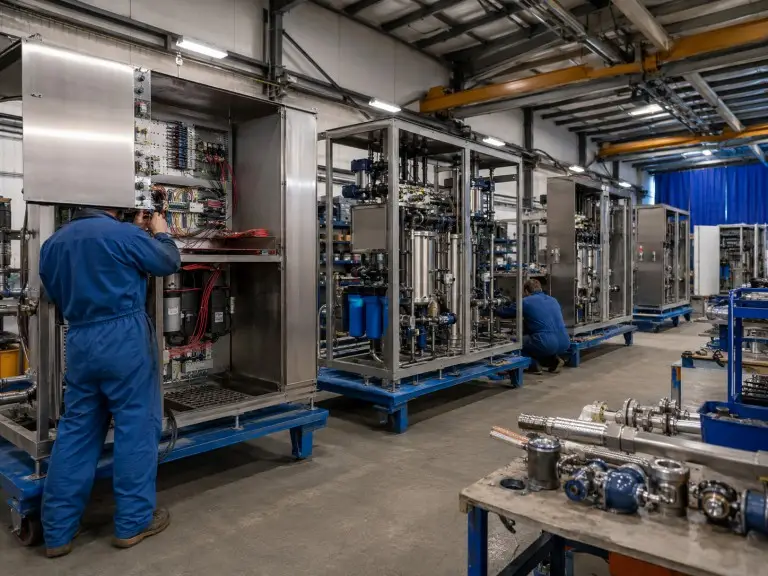
Factory Scale
Qingdao Hiju Thermal Power Co., Ltd was established in 2016. As experienced ozone generator manufacturers, our facility supports both small commercial ozone system fabrication and large-format industrial and municipal configurations within the same site and quality management system.
In-House Engineering
Our in-house engineering team carries out generator output calculation, contact reactor selection, CT compliance review, off-gas destructor sizing, and materials specification. That work is not deferred to a distributor or outsourced at quotation stage.
Export-Ready Certification
CE and ISO 9001 certifications are standard on export systems. We supply equipment to markets across Southeast Asia, the Middle East, Africa, South America, and Central Asia, with OEM and ODM supply available for regional distributors requiring branded units or adapted documentation.
Engineering Review Checklist
Ozone systems are sized from first principles. Providing the inputs below allows us to return a specific engineering recommendation.
- Flow rate — peak and average; batch or cyclic operation described
- Water quality analysis — pH, turbidity, TDS, iron, manganese, COD/BOD; bromide for drinking/bottled/surface/coastal sources
- Application and target water quality — taste/odor, Fe/Mn oxidation, pathogen CT, COD reduction, biofilm, bottled water compliance
- Feed gas preference — air-fed or oxygen-fed; PSA integration acceptable?
- Contact reactor constraint — column height, footprint, inlet pressure, inline-only
- Site power supply — voltage, phase, available amperage
- Downstream equipment — media filtration, UV, chlorination, monitoring
- Project destination and certification — country and documentation requirements
- Project timeline — procurement date alignment