
Water Disinfection Systems for Industrial and Municipal Applications
Selecting the right water disinfection system starts with three variables: whether the water is flowing or stored, whether the downstream process can tolerate a chemical residual, and whether oxidation is required alongside pathogen inactivation. From chlorination to ultraviolet (UV) irradiation and ozone treatment, each water disinfection technology addresses a different combination of these requirements. We manufacture physical disinfection equipment — UV sterilizers, ozone generators, and tank self-cleaning sterilizers — and provide the engineering review to match technology to your specific water condition.
What Is a Water Disinfection System
A water disinfection system is any engineered process that inactivates or destroys pathogenic microorganisms — bacteria, viruses, and protozoa — in a water stream to make it safe for its intended use.
Disinfection methods divide into two categories
Chemical Methods
Chlorination, chlorine dioxide injection, and chloramine dosing kill pathogens through oxidation. Because a chemical is added to the water, these methods leave a measurable residual behind in the treated stream.
Maintains a measurable residual that continues to suppress microbial regrowth through the distribution network.
Physical & On-Site Methods
UV irradiation inactivates organisms without adding any substance. Ozone is a chemical oxidant generated on site for strong primary disinfection and oxidation, but it decays quickly. In-tank recirculation sterilization treats stored water through UV or electrolytic loops.
Leaves no persistent residual — UV adds nothing to the water, and ozone decays before it can carry through a distribution network.
Three variables decide which water disinfection system fits
Residual required?
Municipal distribution networks usually need a persistent residual; many closed industrial processes do not.
By-products acceptable?
Food processing and pharmaceutical water typically cannot tolerate disinfection by-products.
Flowing or stored?
Continuous flow-through and static storage call for different classes of equipment.
Most industrial water disinfection specifications start with a water analysis report, a clear target pathogen log-reduction, and the discharge or process standard that applies.
Hiju manufactures physical water disinfection systems — UV sterilizers, ozone generators, and tank self-cleaning sterilizers. This page covers all major disinfection approaches, including chlorination, to help buyers make a complete technology comparison before confirming a specification.
How a water disinfection system works
Every disinfection technology shares one principle: deliver a validated lethal dose to the pathogens carried in the water stream, held for the required contact time. The numbered markers on the diagram match the legend below.
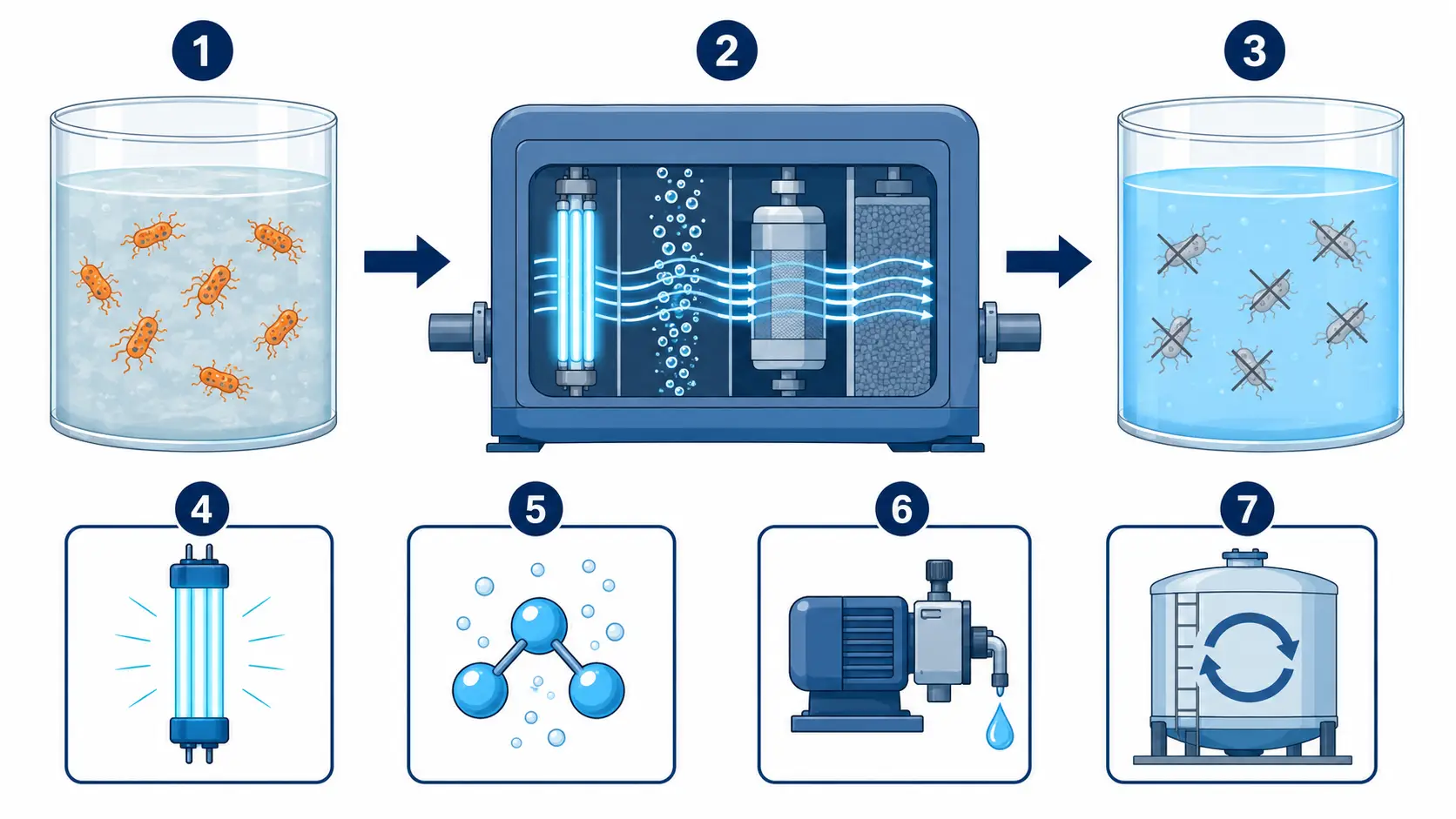
The disinfection process
- 1. Untreated water — Bacteria, viruses, and protozoa are present in the feed stream.
- 2. Disinfection system — A validated lethal dose is held for the required pathogen contact time — dose multiplied by contact time delivers the target log-reduction.
- 3. Disinfected water — Pathogens are inactivated to the target log-reduction and the water is safe for its intended use.
Four ways to create the disinfection barrier
- 4. UV irradiation — 254 nm — Germicidal photons disrupt pathogen DNA and leave no residual.
- 5. Ozone — O₃ oxidant — On-site oxidant for strong primary disinfection; it decays quickly.
- 6. Chlorination — chemical dosing — Oxidising chemical that carries a measurable residual downstream.
- 7. In-tank loop — recirculation — Recirculated UV or electrolytic disinfection for stored water.
Water Disinfection System Technologies Compared — UV, Ozone, Chlorination, and Tank Sterilization
Choosing between ultraviolet disinfection, ozone treatment, chlorination, and in-tank sterilization is an engineering decision driven by water condition, residual requirement, and downstream application sensitivity. The table below compares all four approaches across the variables that determine which technology fits a given project.
| Attribute | UV Sterilizer | Ozone Generator | Chlorination / Chemical Dosing | Tank Self-Cleaning Sterilizer |
|---|---|---|---|---|
| Mechanism | 254 nm ultraviolet radiation disrupts pathogen DNA/RNA | O₃ oxidation destroys cell walls; breaks down to O₂ | Sodium hypochlorite or chlorine gas oxidizes cell enzymes and proteins | Recirculation UV or electrolytic cell, in-situ |
| Primary fit | Flow-through continuous treatment | Oxidation + disinfection; taste/odor/color removal | Distribution-network residual disinfection; long-pipe municipal supply | Static stored water; biofilm and Legionella control |
| Pre-treatment gate | Turbidity ≤1 NTU; iron ≤0.3 mg/L | Filtration to reduce organic load before contact | Organic-load control to limit disinfection by-product (DBP) formation | Clean low-turbidity fill water |
| Key sizing variable | Flow rate (m³/h) + UVT% + UV dose (mJ/cm²) | Ozone dose (mg/L) + contact time (4–10 min) | Chlorine dose (mg/L) + contact time (CT value) + residual target | Tank volume (m³) + recirculation flow rate |
| Key strength | No chemical addition; no residual; low pressure drop | Can be designed for chlorine-resistant organism inactivation; removes taste/odor | Maintains measurable residual throughout distribution piping | No dosing chemicals; no chemical handling on site |
| Common misfit scenario | Not suited for storage tanks with no active flow — microbial regrowth and biofilm formation occur in stagnant water without residual disinfectant, and warm conditions increase Legionella risk | Not recommended for direct aquaculture contact water — gill damage occurs at dissolved ozone concentrations required for effective disinfection | Not recommended where disinfection by-products (THMs, HAAs) are regulated below standard limits or where chemical-free process water is required | Not suited for flow-through mains treatment |
Chlorination Reference Note
Hiju does not manufacture chemical dosing or chlorination systems. We include chlorination in this comparison because many projects evaluate chemical versus physical disinfection at the initial specification stage. For projects where a chlorination or chemical feed system is the confirmed requirement, we recommend sourcing from a dedicated chemical dosing supplier. For projects requiring a physical water disinfection system — UV, ozone, or tank sterilization — we provide application review and equipment configuration from our Qingdao production facility.
Three Physical Water Disinfection Systems, One Factory Source
We engineer and manufacture all three physical disinfection product families from our Qingdao facility. Buyers sourcing a complete disinfection train — or multiple technology types for different points in one system — work with a single engineering team instead of splitting across suppliers.
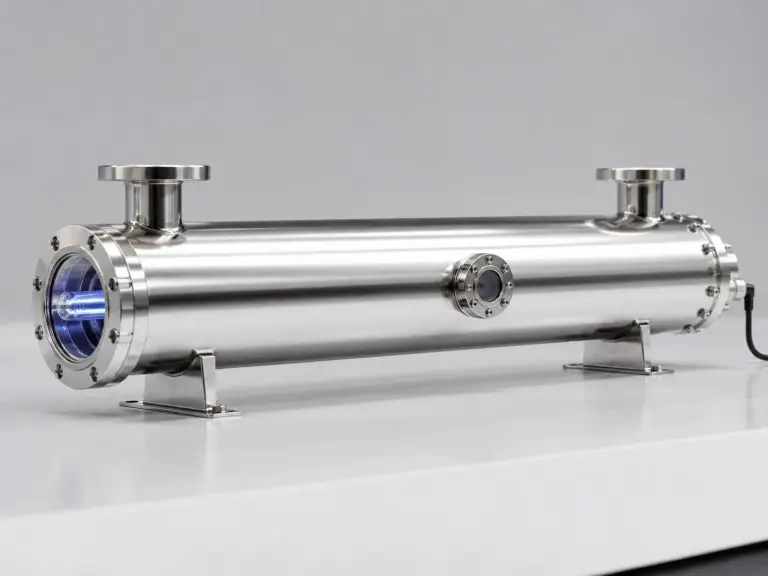
UV Sterilizers
Flow-through 254 nm UV inactivates bacteria, viruses, and protozoa with no added chemical. Sized from flow rate, UV transmittance, and the target UV dose.
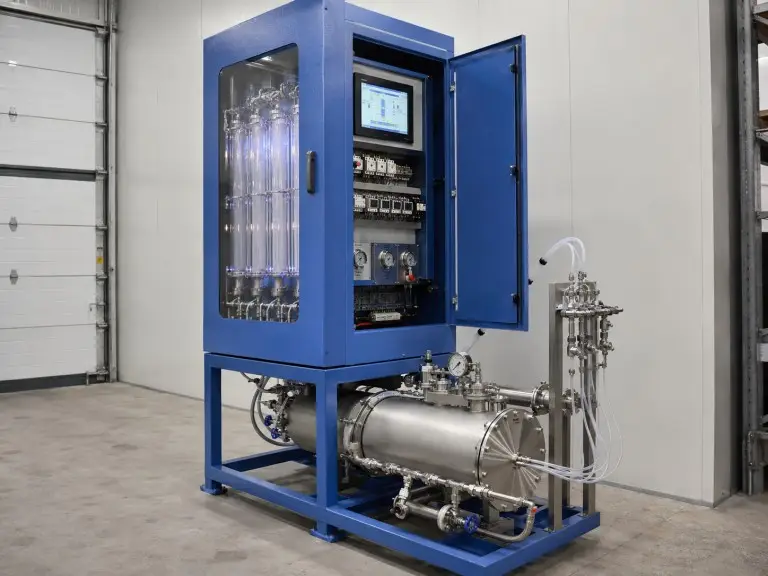
Ozone Generators
On-site corona-discharge ozone for strong primary disinfection and oxidation of taste, colour, iron, and manganese. Requires a sized contact chamber and indoor off-gas safety provisions.
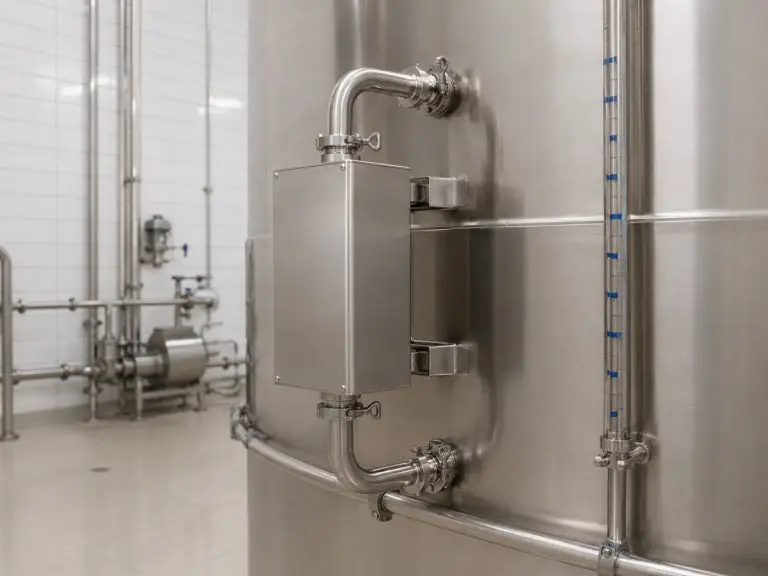
Tank Self-Cleaning Sterilizers
Recirculation-based UV or electrolytic disinfection for stored water with no active flow — controls Legionella and biofilm where flow-through UV cannot. Sized by tank volume and recirculation rate.
Industrial Water Disinfection Systems by Application Sector
Disinfection requirements differ by industry because the acceptable residual, the pathogen target, and the regulatory standard differ.
| Industry | Water Quality Requirement | Recommended Technology | Typical Market |
|---|---|---|---|
| Food & beverage production | No chemical residual in product-contact water; hygienic rinse; continuous flow verification output | UV sterilizer (SS316L chamber) | Southeast Asia |
| Aquaculture / hatcheries | No oxidant residual in direct fish-contact water; ozone may be reviewed for upstream or side-stream treatment with validated off-gassing and species-specific safety limits | UV sterilizer for direct contact water; ozone only as upstream/side-stream with residual monitoring | South America, Africa |
| Community & municipal drinking water | Protozoan inactivation (Cryptosporidium/Giardia); taste and odor removal; residual may be required in distribution | Ozone, UV, chlorination/chloramine, or multi-barrier design depending on source water, pathogen target, DBP limits, and residual requirement | Middle East, Africa |
| Hotel & resort water storage | Legionella prevention in holding tanks | Tank self-cleaning sterilizer | Southeast Asia, Middle East |
| Industrial process water | Contaminant profile varies by source water analysis | UV or ozone based on water analysis | All export markets |
| Pharmaceutical / electronics | Low-bioburden RO permeate polish; TOC reduction | UV sterilizer (low-bioburden / TOC reduction grade). | Southeast Asia |
| Industrial wastewater discharge | Effluent pathogen reduction before discharge to receiving water body; compliance with local discharge microbial limits | UV disinfection system (closed vessel or open channel depending on flow volume) or ozone for combined oxidation and disinfection | All export markets |
| Water reuse / reclaimed water | Reclamation-grade disinfection for non-potable reuse (irrigation, cooling, process water) | Ozone primary + UV polish; multi-barrier approach | Middle East, Southeast Asia |
Buyers working on bottled water plants and food processing projects — particularly in markets with strict food safety import requirements — typically specify UV systems with SS316L wetted surfaces and a continuous flow verification output. This ensures no chemical agent enters the product stream and the system can log dose delivery for internal or third-party audit purposes.
For water filtration system for drinking projects in the Middle East and Africa, ozone is frequently the primary disinfection method because surface water sources in those regions often carry Cryptosporidium and high turbidity loads that reduce chlorine effectiveness. The ozone contact chamber and tail-gas system are sized according to source water analysis, target output quality, and daily flow volume — we do not specify a standard ozone unit for these projects without reviewing water data first.
For direct fish-contact water in recirculating aquaculture systems (RAS) or hatcheries, UV is usually the safer default because it leaves no oxidant residual. Aquaculture water treatment differs from municipal or industrial use because sustained dissolved ozone concentrations above approximately 0.01–0.05 mg/L are harmful to most fish species. Ozone may be reviewed only as an upstream or side-stream treatment with validated off-gassing, contact time, residual monitoring, and species-specific safety limits.
For industrial wastewater treatment disinfection, UV and ozone are both proven technologies for effluent pathogen reduction before discharge. The choice depends on effluent quality — UV works well in pre-filtered effluent with adequate transmittance, while ozone provides simultaneous oxidation of residual organics alongside disinfection. System sizing for wastewater applications requires effluent flow rate, UVT% or ozone demand data, and the specific discharge pathogen limit set by local regulation.
Feed Water Conditions Every Water Disinfection System Depends On
Physical disinfection equipment requires feed-water quality compatible with the selected technology and target log reduction. Each technology has a different sensitivity profile, which we confirm from the water analysis before the unit is sized.
UV systems
- Turbidity and suspended solids — common design threshold around ≤1 NTU
- Dissolved iron — common threshold around ≤0.3 mg/L to limit quartz-sleeve deposition
- UV transmittance (UVT%) at 254 nm
- Actual limits depend on the UV reactor, dose target, and water matrix
Ozone systems
- Organic load and ozone demand
- Contact time available in the contactor
- Off-gas handling and ambient ozone control
Tank recirculation systems
- Clean stored water as the starting condition
- Hydraulic turnover rate of the stored volume
- Tank geometry and recirculation loop layout
Source water without upstream filtration
If your source water is surface water, raw well water, or pre-RO feed that has not passed through a multimedia or cartridge filtration stage, the disinfection system alone may not meet its rated output. We confirm the required pretreatment from the water analysis before sizing the disinfection unit. If a water analysis report shows turbidity or iron above the design threshold for the selected technology, we will identify the appropriate upstream industrial water treatment equipment before confirming any disinfection unit specification.
Four Specification Errors That Increase Disinfection Project Cost
UV Specified for a Static Storage Tank
An inlet-line UV sterilizer disinfects water only as it enters the tank. Once the water is static, microbial regrowth and biofilm can develop — there is no residual inside the tank, and Legionella risk rises with temperature, stagnation time, biofilm, nutrients, and low hydraulic turnover.
Correct approach. A tank self-cleaning sterilizer treats the full stored volume continuously through a recirculation loop. Specifying it upfront avoids a second equipment purchase and retrofit labour.
Ozone Specified for Direct Aquaculture Contact Water
Dissolved ozone residual in fish-contact water causes oxidative stress and gill damage at concentrations well below what disinfection requires. RAS and hatchery applications should use UV for direct-contact water.
Correct approach. If ozone pre-treats fish-facility water, the design must include an off-gassing contact chamber sized to bring dissolved ozone to safe levels before fish exposure — confirmed for the specific species and flow configuration.
UV System Sized Only by Flow Rate, Not by UVT%
A unit sized for 10 m³/h at 95% UV transmittance under-doses at the same flow rate if the actual site UVT% is 65% — humic acids, dissolved iron, or upstream filter bypass all reduce transmittance. A flow-rate-only quote can deliver insufficient dose.
Correct approach. We confirm UVT% or absorbance at 254 nm from water analysis data before fixing any UV configuration.
Ozone Generator Installed Indoors Without Tail-Gas Destruction
Ozone that does not transfer into water returns as off-gas to the surrounding air. In confined mechanical rooms it can accumulate above the 0.1 ppm safe ambient threshold without proper ventilation and exhaust treatment.
Correct approach. Tail-gas destruction, ventilation, and ambient ozone monitoring are commonly required by occupational-exposure rules and local building codes for indoor ozone generators — scoped with the unit, not discovered after delivery.
ISO 9001 Quality System — CE and ASME Documentation Available
Established in 2016, Hiju operates from a 70,500 sqm facility in Qingdao with a 21,000 sqm enclosed production and assembly workshop. Our disinfection equipment team includes 28 engineers and 78 technicians covering application review, configuration engineering, fabrication, pressure testing, and pre-shipment quality control.
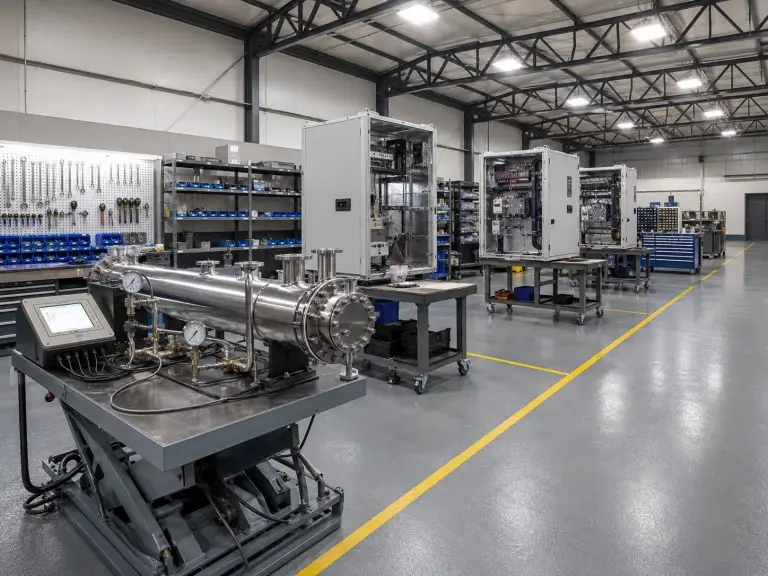
Documentation confirmed at order review
CE-related component or assembly documentation, ISO 9001 quality-system records, hydrostatic test records, and material certificates are prepared where the selected UV chamber, ozone contact vessel, or pressure assembly scope applies.
ASME pressure-vessel documentation
ASME documentation is available on request and applies to ozone contact chambers and UV sterilizer pressure vessels — pressure-containing components that some project specifications or destination-market procurement standards require.
OEM / ODM and export reach
OEM and ODM manufacturing is available for distributors and system integrators supplying branded disinfection equipment. We have exported to more than 20 countries and regions, with primary volume in Southeast Asia, the Middle East, Africa, South America, and Central Asia. Technical inquiries are answered with application-specific questions via WhatsApp, email, or the online form.
Disinfection Project Inputs
We confirm the required technology, sizing variables, and pretreatment scope from your project data before issuing a configuration recommendation.
- Water source and analysis — turbidity, iron, UVT%, organic load, target pathogen
- Flowing or stored — flow rate (m³/h) for flow-through; tank volume (m³) for stored
- Residual requirement — distribution network or process-internal use
- By-product tolerance — food / pharmaceutical / aquaculture chemical-free constraints
- Application sector — F&B, municipal, aquaculture, hotel, industrial, pharma, wastewater, reuse
- Target log-reduction and regulatory standard — discharge, drinking-water, or process spec
- Site environment — indoor/outdoor, ambient ozone safety, ventilation
- Documentation scope — CE, ISO 9001, ASME on request, destination market