Water treatment technology is not one machine but a sequence of physical, chemical, and biological steps, chosen to match a given source water to a defined output. The technology that makes potable city water differs from the one that feeds a boiler, desalinates seawater, or recycles factory effluent. The contaminants, the volumes, and the end use are different in each case.
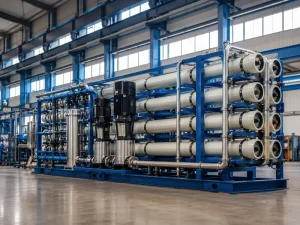
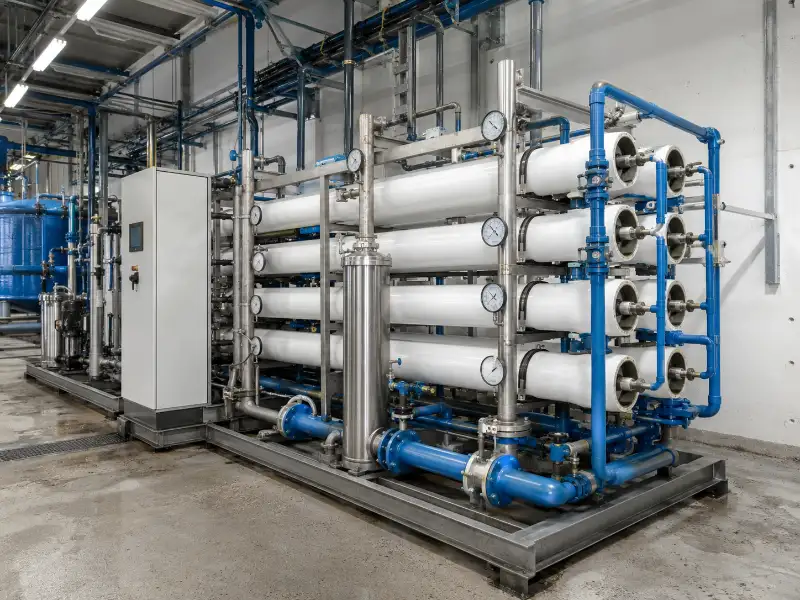
Most overviews list the technologies. Fewer explain how to choose. As a water treatment equipment manufacturer, we check every inquiry against the source water and the destination market before we confirm a system. This guide follows the same logic: what each technology does, what it removes, and which water and output variables point to one process. <!– IMAGE: water-treatment-technology-hero.jpg | alt: Industrial water treatment technology system with stainless steel reverse osmosis skids inside a manufacturing facility –>
What water treatment technology actually covers
Water treatment technology is the set of processes that remove contaminants from water, chosen to fit the source and the intended use. A clean aquifer may need only filtration and disinfection. River water or seawater needs several stages in sequence.
The processes fall into three families. Physical processes such as screening, sedimentation, and membrane filtration separate solids and dissolved matter by size. Chemical processes such as coagulation, oxidation, and chlorination change contaminants so they can be removed. Biological processes use microbes to break down organic load, mostly in wastewater.
We group these processes by function, not by product name, because a buyer first needs to know which function the water requires. A treated water profile that misses one contaminant class will pass every other test and still fail at the point of use.
Why more treatment stages is not automatically better
More treatment stages do not always make water cleaner or cheaper, because each stage targets one contaminant class. A process the source water does not need adds capital and running cost for no gain. Leaving out a stage the water did need is the costlier mistake, because the bill arrives later as failed equipment.
The usual reason a membrane system underperforms is pre-treatment filters built for cleaner water than the site delivers. If you underestimate the turbidity or organic load, the membranes foul first. They then need cleaning or replacement far sooner than the design assumed, and that cost lands after commissioning rather than in the quotation.
Operating cost sits in a few places: energy for the pumps and high-pressure membranes, chemicals such as antiscalant and coagulant, membrane and media replacement, and brine or sludge disposal. We check the raw water before we set the number and order of stages. Both an extra stage and a missing one show up after start-up.
The main water treatment technologies and what each one removes
The main water treatment technologies split into a few functional groups, each matched to a specific contaminant type. The table below shows what each group removes and the source water that calls for it.
| Technology group | What it primarily removes | Typical source-water trigger | Common application |
|---|---|---|---|
| Screening, coagulation, clarification | Suspended solids, turbidity, color, algae | High-solids surface water | Intake pretreatment |
| Membrane filtration (MF, UF, NF, RO) | Particles down to dissolved salts, by pore size | Colloids, pathogens, hardness, or dissolved solids | Drinking water, process water, reuse |
| Activated carbon adsorption | Chlorine, organic compounds, taste and odor | Chlorinated or organically loaded feed | Polishing for potable and process water |
| Disinfection (UV, ozone, chlorination) | Bacteria, viruses, protozoa | Microbiological contamination | Final disinfection in most systems |
| Desalination (RO or thermal) | Dissolved salts and minerals | Seawater or brackish source | Coastal and arid-region supply |
| Biological treatment (including MBR) | Organic load, nitrogen, phosphorus | Wastewater with high organic content | Municipal and industrial wastewater |
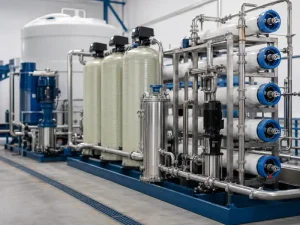
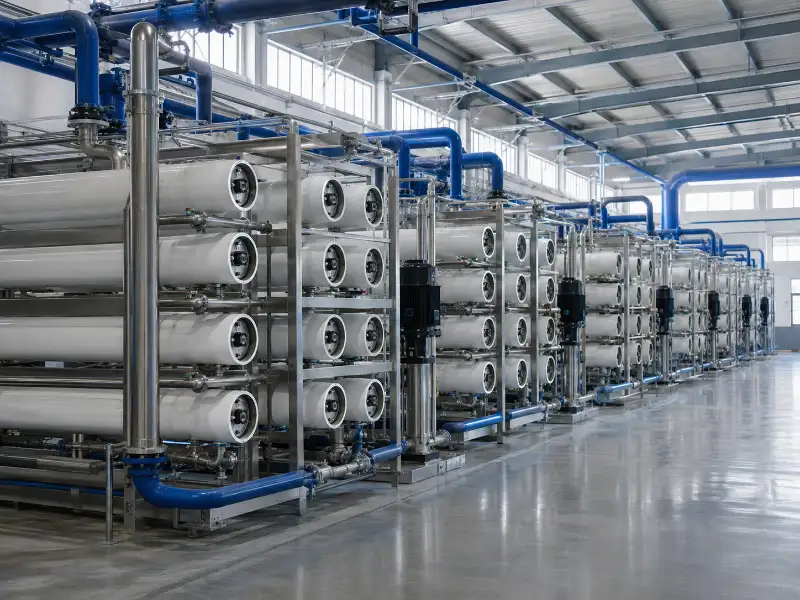
Membrane filtration is the most flexible group, because it separates contaminants by pore size. Microfiltration and ultrafiltration hold back particles, colloids, and pathogens but let salts pass. Nanofiltration removes hardness and larger organic molecules. Reverse osmosis removes most dissolved salts. Rejection and recovery still depend on membrane type, feed chemistry, temperature, pressure, and pre-treatment, so two reverse osmosis systems on different feed water will not give the same output. We design and build reverse osmosis systems, membrane housings, and complete skids. We choose the membrane stage to meet the target output.
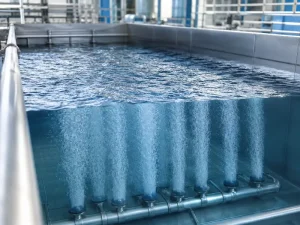
Adsorption, disinfection, and biological treatment each fill a narrower role. Activated carbon removes chlorine, organics, and taste and odor as a polishing step, and its capacity is set by the organic load. Disinfection inactivates pathogens and is almost always the last stage. Ultraviolet and ozone act fast and leave no chemical residual, while chlorine leaves a residual that protects water through the network. Biological treatment is mostly used for wastewater and nutrient removal, though some drinking-water plants use it for contaminants such as iron, manganese, or ammonia.
How source water and target output decide the technology
Source water and the required output decide which technologies you need, more than any ranking of one process against another. The same contaminant that is fine for irrigation water can rule out boiler feed or drinking water. The work starts with a water analysis and a clear output target, not a shortlist of equipment.
A useful first analysis groups the parameters by what they decide:
- Physical: turbidity, suspended solids, SDI, temperature — set the pre-treatment and the membrane operating limits.
- Salinity: total dissolved solids, conductivity, chloride — decide whether you need reverse osmosis or desalination, and how many passes.
- Scaling and metals: hardness, alkalinity, silica, iron, manganese — decide softening, antiscalant, or iron and manganese removal.
- Organics: TOC, COD, BOD, oil and grease — decide activated carbon, biological treatment, or a membrane bioreactor.
- Microbiology: bacteria, coliform, virus risk — decide ultraviolet, ozone, or chlorine, and whether you need a residual.
- Operational: flow rate, recovery target, discharge limit — set the system size, the brine and sludge handling, and the cost.
The output target sets how far each stage must go, and a standard usually defines that target. Drinking-water projects follow the national regulations, or WHO guideline values where local rules point to them. Industrial process water must meet equipment limits, such as boiler, cooling-tower, food-grade, or electronics needs. Reuse and discharge projects must meet local permits. A target salt level decides whether a single-pass system is enough, or whether you need a double-pass RO system. A drinking-water target also adds disinfection that an irrigation target does not.
Read from the source-water side, the same logic gives a typical train and a short list of parameters to confirm first.
| Source water | Common problems | Typical treatment train | Key parameters to verify |
|---|---|---|---|
| Groundwater | Hardness, iron, manganese, microbes | Oxidation or aeration + filtration + softening or RO + disinfection | Iron, manganese, hardness, alkalinity, bacteria |
| Surface water | Turbidity, algae, organics, pathogens | Coagulation + clarification + media or UF + carbon + disinfection | Turbidity, TOC, algae, coliform |
| Brackish water | High TDS, hardness, scaling | Pretreatment + antiscalant + RO + remineralization and disinfection | TDS, SDI, silica, hardness |
| Seawater | High salinity, biofouling, boron | Screening + UF or media + seawater RO + post-treatment | Salinity, SDI, boron, temperature |
| Industrial wastewater | COD, oil, metals, nutrients | Chemical precipitation or DAF + biological or MBR + RO for reuse | COD, BOD, oil, metals, nitrogen, phosphorus |
A general guide cannot size or sequence these processes for one site. The recovery rate, the number of reverse osmosis passes, and the pre-treatment train all depend on a verified water analysis and the local rules. That is why we treat each system as a project-specific engineering review. On brackish groundwater, the key variables are usually TDS, hardness, silica, and SDI. On surface-water reverse osmosis, an underrated turbidity or organic load is the common cause of early membrane fouling.
Combining technologies into a treatment train
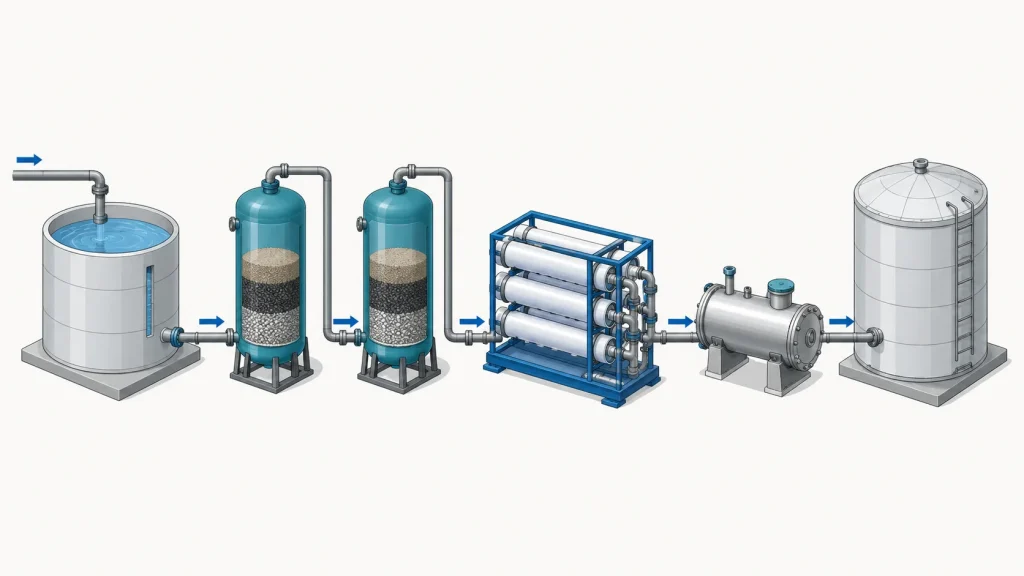
A treatment train combines several technologies in sequence, so each stage prepares the water for the next. The order matters as much as the choice, because a process out of sequence can damage downstream equipment or waste capacity. The source-water trains above share one shape: solids and organics first, the main separation or desalination stage in the middle, and disinfection last.
The sequence reflects where problems show up. Pre-treatment sits ahead of the membrane stage to protect it from fouling. Disinfection sits at the end, so it inactivates any organisms picked up during treatment before the water leaves the plant. We design the train around the measured profile, not a standard layout, because the stage you can skip on one feed water is the stage that fails on another. So we verify the real solids and organic load reaching the membranes before we size the pre-treatment.
Where this leaves your decision
Choosing water treatment technology comes down to three things: the source water you start with, the output you must meet, and the sequence that links them. The technologies are well proven, so the engineering is in matching and ordering them, not in finding one best process.
In practice, we check the raw water and the destination market before we confirm any system, because the same equipment behaves differently on different feed water. The recovery rate, the number of stages, and the pre-treatment all follow from that analysis, not from a standard template. As a water treatment plant manufacturer, our engineers review the source water, the site electrical standards, and the destination needs as part of that work.
If you are scoping a system, send us your water analysis, the flow rate you need, the target use, and the local discharge or drinking-water standard. Our engineers will review the source-water risks, the pre-treatment, the membrane choice, and the recommended train before we propose a system.
Frequently asked questions
The main types are screening and clarification, membrane filtration, adsorption, disinfection, desalination, and biological treatment. Membrane filtration itself covers microfiltration, ultrafiltration, nanofiltration, and reverse osmosis. Each type handles a different contaminant class, and most real systems use several together.
Start with a water analysis and a clear output target, not with a list of technologies. Once you know the contaminants and the target, each contaminant class points to a process. You then sequence the processes into a train sized for your volume and recovery.
The difference is pore size and what each one lets through. Ultrafiltration removes particles, colloids, and pathogens but lets dissolved salts pass. Nanofiltration removes hardness and larger organic molecules. Reverse osmosis removes most dissolved salts and is the basis of desalination.
No. Matching the process to the contaminant matters more than how advanced any single unit is. A stage the source water does not need adds cost for no gain, while a missing stage shows up as fouling or failure after start-up.
Reverse osmosis removes dissolved salts by forcing water through a semi-permeable membrane that holds the salts back. The rejection rate varies by membrane and feed conditions. For seawater and brackish sources, this is the process desalination is built on.