
Water Treatment Parts & Accessories for Industrial Systems
Industrial water treatment systems fail at their weakest component. We manufacture and supply eight categories of water treatment parts and accessories from one facility, so pressure ratings, connection standards, materials, and control interfaces can be checked as one coordinated engineering package.
Water Treatment Parts and Accessories
We manufacture and supply the following water treatment parts and accessories. Each category routes to a dedicated product page with operating specifications, configuration options, and selection guidance.
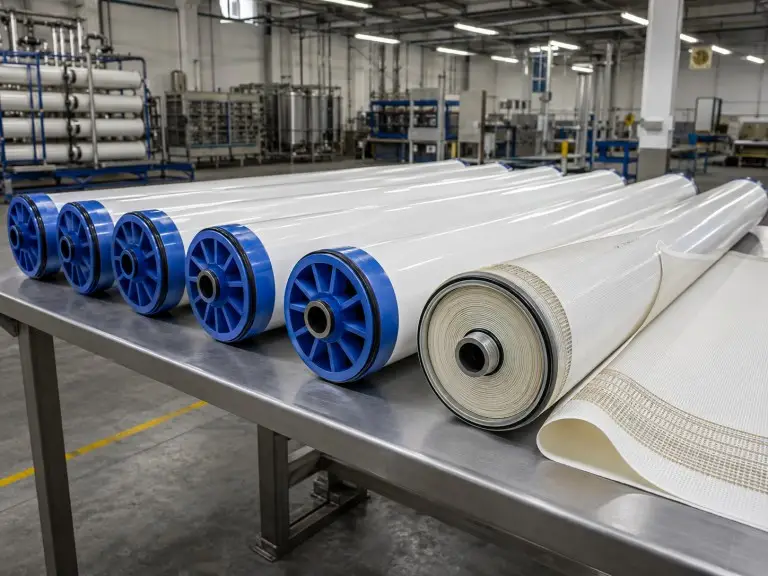
Reverse Osmosis Membranes
Spiral-wound TFC elements for brackish and seawater RO systems.
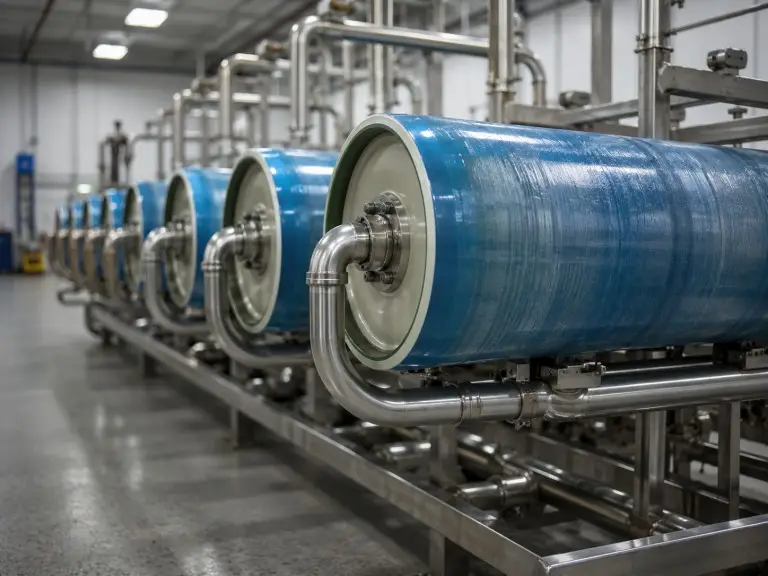
Membrane Housings
FRP and stainless steel pressure vessels for 4040 and 8040 elements.
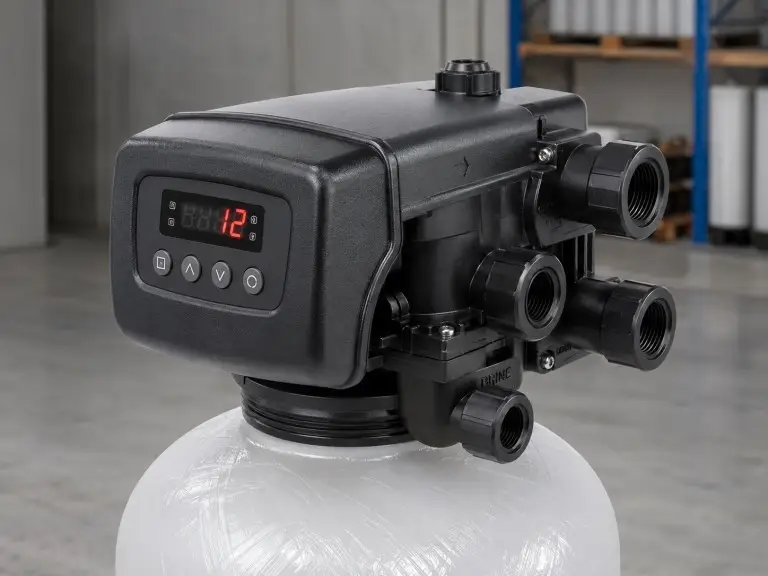
Control Valves
Softener, filter, and process control valves with timer or demand-metered regeneration.
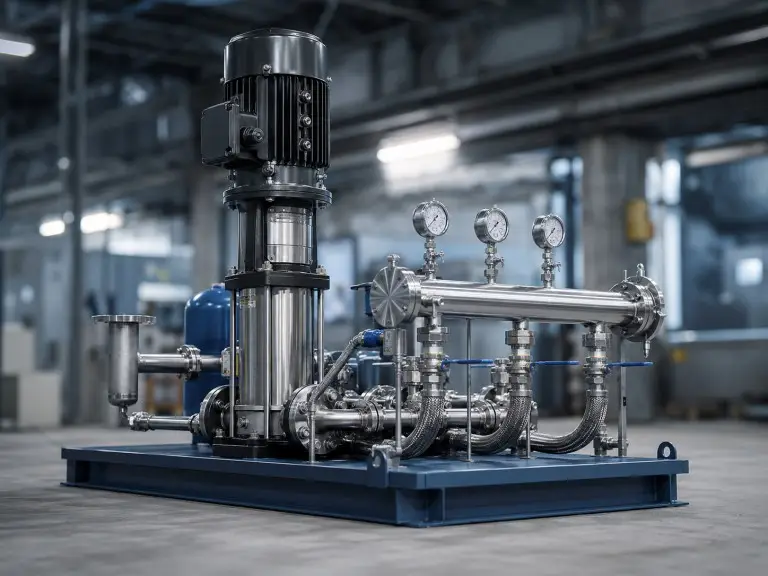
Pumps for RO Systems
High-pressure pumps matched to membrane count, recovery rate, and feedwater osmotic pressure.
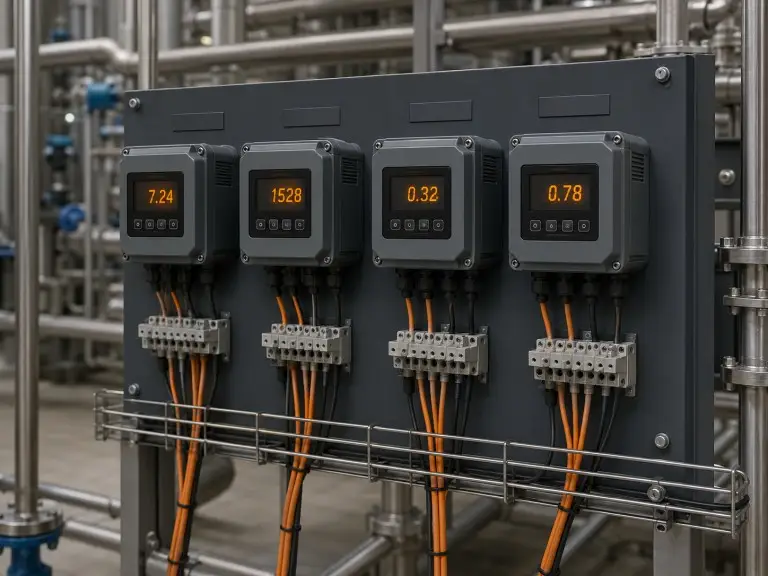
Water Quality Instruments
Inline monitoring sensors and transmitters for RO product water, pre-treatment, and distribution.
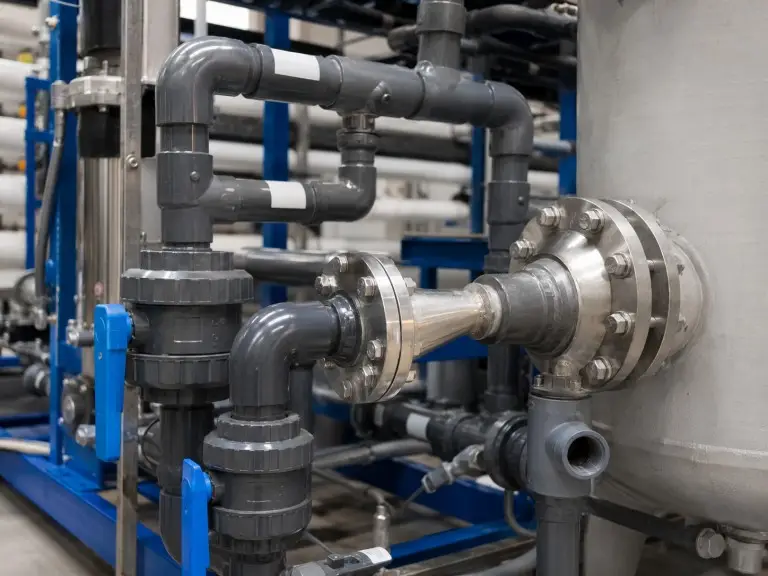
Pipeline Fittings
Pipe fittings, flanges, and adapters matched to treatment train pressure and material requirements.
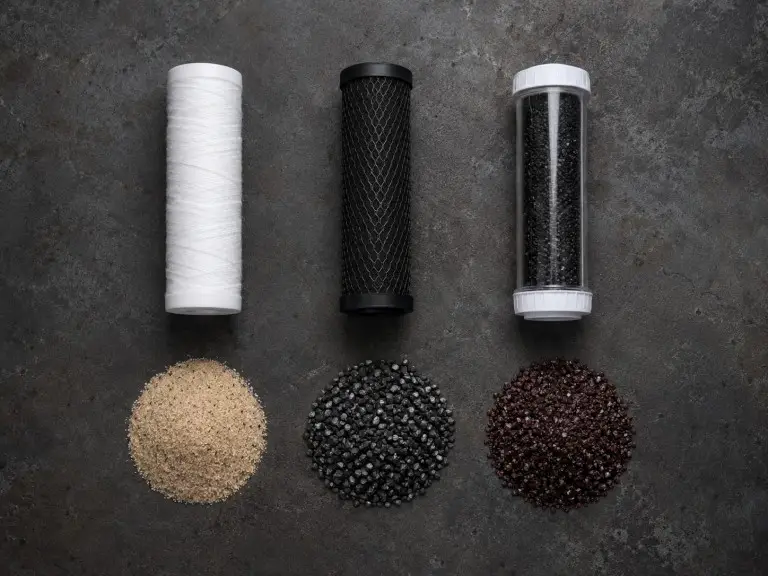
Water Treatment Media and Filter Cartridges
Security pre-filter cartridges and bulk media for sediment, carbon, and specialty applications.
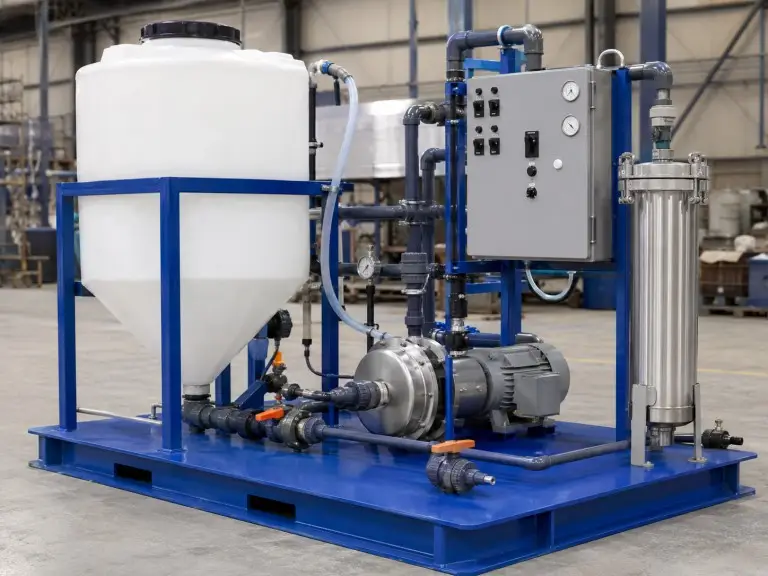
CIP Cleaning Systems for RO Membranes
Recirculation cleaning skids with chemical dosing, temperature control, and flush sequencing.
Every Component Ships to a Common Engineering Standard
Sourcing eight component categories from eight suppliers creates a coordination problem. Operating pressure, flow rate, material compatibility, connection standard, and control interface must be consistent across the full treatment train, not evaluated independently for each purchase order.
| Variable | Engineering Threshold / Standard | Consequence of Mismatch |
|---|---|---|
| Operating Pressure | Pump delivery head must not exceed housing pressure rating or downstream fitting PN class. | A 25-bar pump with a 150 psi FRP housing is a design error that creates a safety hazard; we flag this before manufacturing and shipment. |
| Flow Rate | Pump m³/h output, valve Cv/Kv rating, and membrane element count must match the same design flow. | An undersized valve creates upstream pressure buildup, elevated transmembrane pressure differential, and accelerated membrane fouling before a visible alarm appears. |
| Material of Construction | TFC membranes require zero free chlorine; standard FRP housings are limited to 45°C; SS housings sustain CIP circuits to 80°C. | Free chlorine above 0.1 ppm degrades TFC irreversibly, and feedwater above the FRP temperature limit removes standard vessels from the selection set. |
| Connection Standard | NPT, BSP, or flanged DN must be uniform across valves, fittings, pump ports, and housing end connectors. | Mixed thread standards cause avoidable field rework; we pre-tap and pre-drill to the buyer-specified standard before shipment. |
| Control Interface | 4-20mA analog or Modbus RS-485 digital output must match instruments, actuated valves, PLC inputs, and controllers. | A signal mismatch creates a controller blind spot, allowing product water quality drift to continue until a lab sample confirms the exceedance. |
Mismatched Parts Don’t Fail Gracefully
The failure modes from component mismatch are not random. They follow predictable patterns our engineering team encounters when buyers come to us after field problems have already developed.
Pressure Rating Mismatch
A seawater RO pump delivering 60 bar to a 300-psi-rated FRP vessel does not create slow degradation; it can create sudden housing failure at startup. Buyers replacing pumps must confirm the installed housing pressure rating before specifying pump delivery pressure.
Wrong Flow Coefficient (Cv/Kv)
An undersized multiport valve can restrict softener backwash below the fluidization velocity needed to expand the filter bed. The bed compacts, suspended solids harden into a layer, and full media replacement may be required instead of a normal backwash cycle.
Instrument Signal Incompatibility
A 4-20mA conductivity sensor wired to a Modbus-only controller produces no reading. In ultrapure water service below 1 μS/cm, that blind spot can let product quality exceedances pass undetected at the output stage.
We manufacture these components in-house so pressure ratings, connection standards, flow coefficients, and signal interfaces are coordinated during design and confirmed during quality inspection before shipment, not discovered during commissioning at a project site thousands of kilometres away.
Components Matched to Your Treatment Train
The eight component categories do not serve every application equally. Treatment objective and source water conditions determine which components carry the performance risk and which operate in a supporting role.
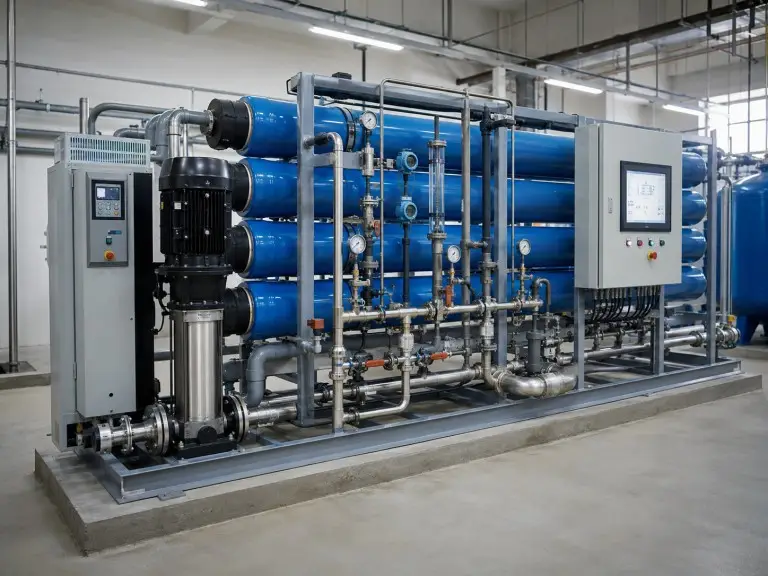
Industrial RO Systems and Post-Treatment
RO membranes form the rejection barrier, housings must match pump delivery head, and instruments monitor conductivity, flow, and pressure. The sizing chain is source water TDS and recovery target to operating pressure, pump KW, housing pressure rating, and element count.
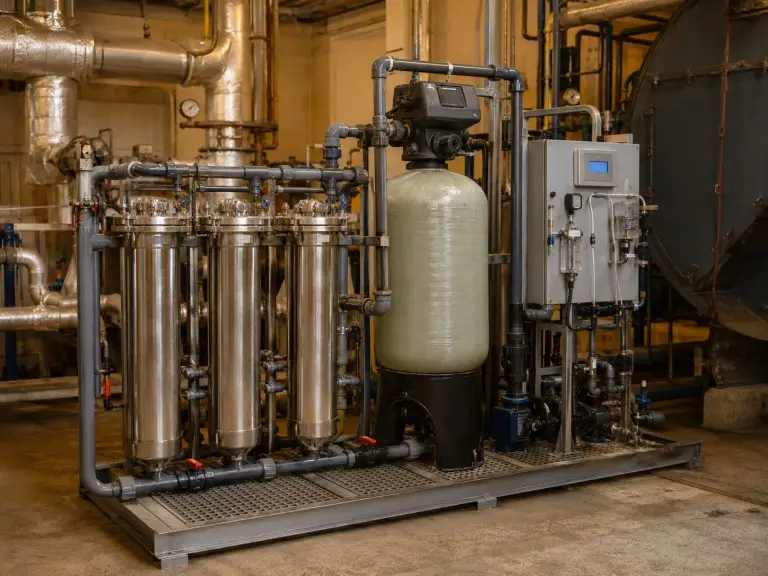
Boiler Feedwater Treatment
Security pre-filters, regeneration valves, and conductivity monitoring affect boiler tube integrity and blowdown frequency. Regeneration valve Cv/Kv must be sized to cycle flow rates, which differ from service flow by valve type and tank diameter.
Boiler feed water treatment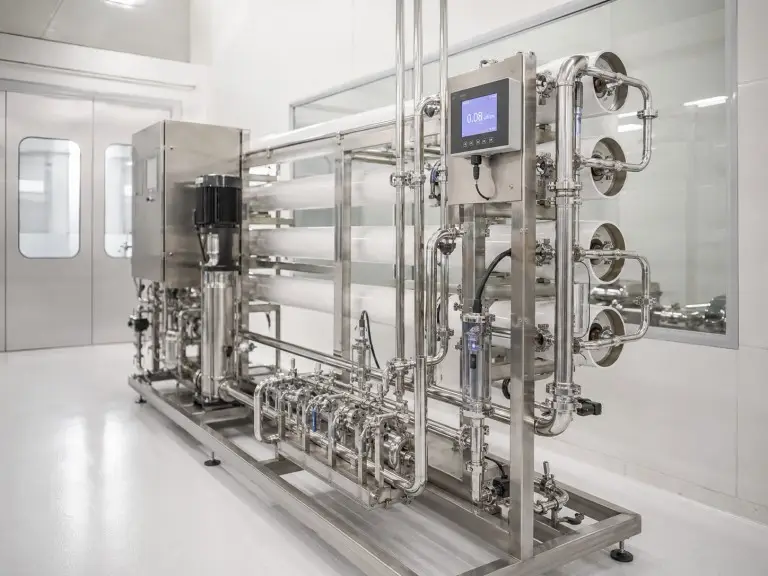
Pharmaceutical and Electronics Ultrapure Water
High-rejection membranes, CIP cleaning, and conductivity monitoring below 1 μS/cm are load-bearing. A CIP skid without inline pH monitoring cannot confirm full chemical flush before product water collection resumes.
Deionized water filtration systemOne Factory, Eight Coordinated Component Families
Our Qingdao facility manufactures all eight categories under a single CE and ISO 9001 quality system, with OEM and ODM scope across all categories.
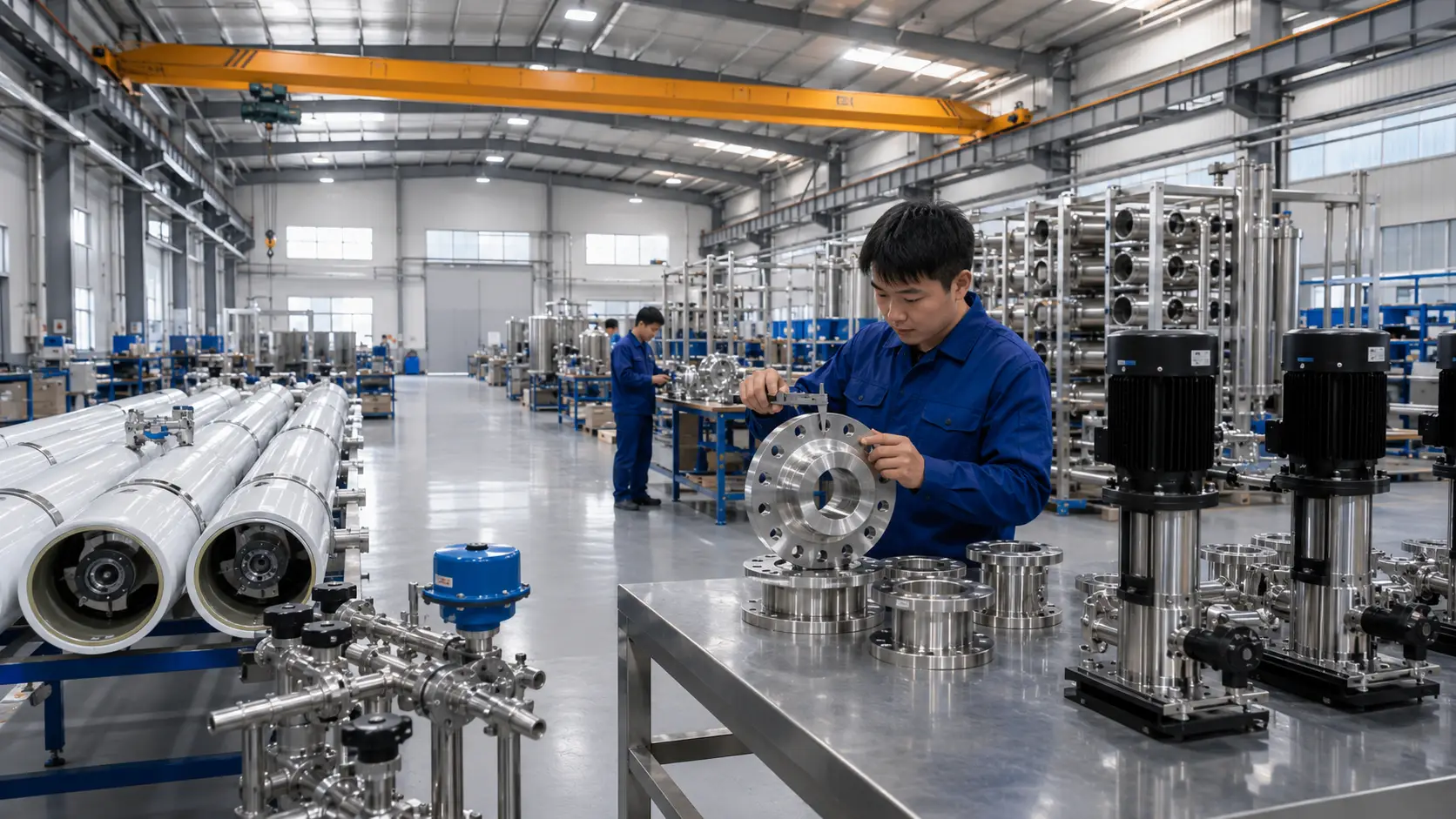
In-House Manufacturing
All eight component categories are fabricated, tested, and inspected at our Qingdao facility under one ISO 9001 quality system, eliminating cross-supplier coordination risk.
OEM / ODM Across Categories
Custom labeling, packaging, modified connection dimensions, non-standard pressure ratings, proprietary end-cap configurations, and project-specific documentation packages.
Export-Ready Documentation
CE Declaration of Conformity, ISO 9001 quality certification, factory test reports for performance-critical components, material certificates, and packing lists with component serial numbers.
Component Review Checklist
Send installed specifications and we confirm whether our water treatment parts are direct replacements or require adaptation.
- Component categories needed — membranes, housings, valves, pumps, instruments, fittings, cartridges/media, CIP
- Treatment train context — industrial RO, boiler feedwater, pharma/electronics, municipal, F&B
- Design pressure and flow — system operating pressure (bar/psi); design flow rate (m³/h)
- Material requirements — TFC chlorine constraint, FRP temperature limit, SS for CIP
- Connection standard — NPT, BSP, ANSI / DIN / JIS flanged, DN range
- Control interface — 4-20mA analog or Modbus RS-485 digital; PLC make/model
- OEM / ODM scope — labeling, packaging, modified specs, custom documentation
- Documentation package — CE, ISO 9001 records, material certificates, third-party inspection